Your Title Isn't the Point: Megan Robinson on Leadership Moments and Building Better Construction Culture
Your next leadership moment is probably coming in the next meeting, and most people will miss it. Jesse sits down with Megan Robinson, founder and CEO of E Leader Experience, for a funny and candid conversation about why leadership isn’t reserved for superintendents and executives. Megan has coached everyone from C-suite leaders to frontline individual contributors. She argues that the most important leadership happens peer to peer, in the moments when everyone is staring at someone else to s...

 Apple Podcasts

 Spotify

 Overcast

 Castro

 PocketCasts

 RSS Feed

 Amazon Music

 Audible

 iHeartRadio
Your next leadership moment is probably coming in the next meeting, and most people will miss it.
Jesse sits down with Megan Robinson, founder and CEO of E Leader Experience, for a funny and candid conversation about why leadership isn’t reserved for superintendents and executives. Megan has coached everyone from C-suite leaders to frontline individual contributors. She argues that the most important leadership happens peer to peer, in the moments when everyone is staring at someone else to speak up.
Along the way they get into:
- Why “follower” might be the wrong word, and what influence looks like instead
- When leading by force works, and the resentment it can leave behind
- The “a-hole tax” every subcontractor knows and too many GCs don’t
- Why your supervisor shapes most of your experience at work, and what that means for retention in a talent race
- Why introverts don’t need to put on the “dictator costume” to get results
- Why isolation is behind so much of what the industry is struggling with, and how to build connection without forced small talk
- Why a lean process rollout without people skills “is gonna suck just like it sucked before”
Megan also leaves you with a challenge you can act on today. It takes about 30 minutes, and it might be the highest-impact thing you do this month.
00:00 Leadership Choice vs Force
00:24 Meet Megan Robinson
02:30 Community and Leadership Moments
03:42 Leading Without a Title
06:12 Direction and Influence Tools
09:29 Toolbox and Tough Calls
11:16 Why Change When It Works
12:54 Professional Skills in Construction
15:11 Asshole Tax and True Costs
19:18 Employer of Choice Leadership
21:52 Collaborate Not Compete
22:37 Community Beats Isolation
24:59 Practicing Real Connection
26:30 Workplace Connection Tactics
28:19 Peer Groups That Stick
29:42 Reach Out to The Hardest Person
30:45 Leadership Before Lean Tools
33:06 Marketing Meets Process Thinking
35:56 Where to Find Megan
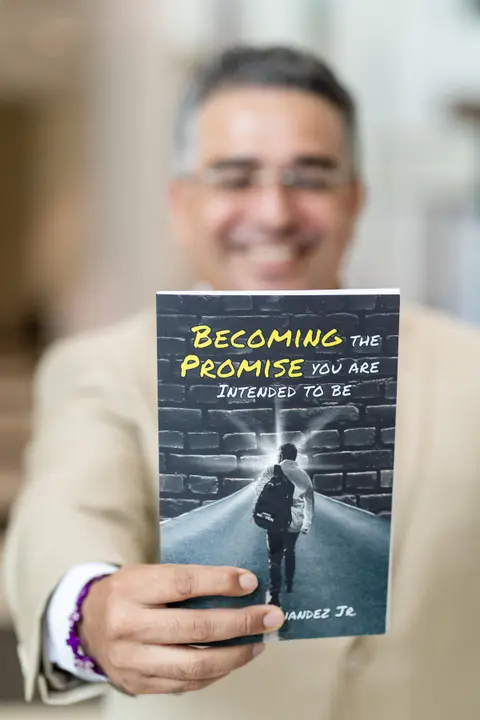
37:20 Becoming the Promise
help build this bad boy: https://forms.cloud.microsoft/Pages/ResponsePage.aspx?id=wX2AaaPQYkKikh3gYkDr84XnfLTtYsJLsKXkx0TlQAdUM0ozRkszMlJLTk5ZWklZRlJURFdJTko2WS4u
Download the free PDF copy of Becoming the Promise You are Intended to Be
00:00 - Leadership By Choice And By Force
00:24 - Meet Megan And Leadership Without Titles
06:12 - Direction, Influence, And A Full Toolbox
12:06 - Professional Skills That Save Projects
19:18 - Retention, Wellbeing, And Authentic Leadership
26:11 - Community And Connection As A Skill
34:10 - People Skills That Make Processes Work
40:56 - The Promise You Are Intended To Be
Leadership By Choice And By Force
SPEAKER_00There's there's following by choice and there's following by force. And those are different styles of leadership, different tools. They are both leadership, you could say. They're both a flavor of it. One's more effective than the other. One has more longer-term impacts. And look, there's different situations where you need to use different tools.
Meet Megan And Leadership Without Titles
SPEAKER_01What is going on, LM family? I have another super awesome guest. Well, I'm kind of going out on a limb because I don't really know her except for a 10 or 15 minute conversation we had at LCI Congress in Atlanta. And it was clear to me, like, man, I gotta get to know this person because she got style, she's got games she don't play. She is the founder and CEO of eLeader Experience. And her mission is to close the leadership gap by hooking leaders up with the mindset, tools, and community they need to succeed. And y'all already know I got all kinds of opinions and ideas of leadership, and mostly from doing it wrong. I suspect that our guest, Miss Megan Robinson, knows how to do it right out the gate. So we're gonna get to know Miss Megan. Now, if this is your first time here, you are listening to the Learn In Missteps podcast, where you get an inside look at how amazing human beings just like you are sharing their gifts and talents to leave this world better than they found it. I'm Jesse, your selfish servant, and we're about to get to know Miss Megan. Miss Megan, how are you?
SPEAKER_00I'm fan freaking tastic, Jesse. Thank you for asking.
SPEAKER_01Oh, I gotta your energy, your courage, like your willingness just to go is ultimate for real. I'm like, oh, this is gonna be, I'm gonna have to like rein myself in because that energy does it, it's rare. I'll just say that.
SPEAKER_00Oh, we met at the as you mentioned at the LCI conference in the speaker ready room. I don't know if we're both going through our notes. We're like, we'll be fine, ignoring that. You seem interested. Let's chat.
SPEAKER_01Exactly. I'm like, then I wonder if I was rude because you're prepping, I'm prepping. I'm like, yeah, this is we'll just figure that out.
SPEAKER_00We'll be
SPEAKER_01fine. Yeah, it was so awesome. Okay, so I like to start the conversation with a super easy question.
SPEAKER_00Okay,
SPEAKER_01and here it is. What is the value of community? I mean, it's in like your mission statement. Why is it important? What's the big deal about it?
SPEAKER_00I love community. I want to correct it a little bit if that's okay. Our official mission is to make leadership more accessible and attainable regardless of title, position, or experience. And that's really everyone has the ability to show up with leadership. I call it leadership moments. Sometimes you're ready for it, sometimes you're
SPEAKER_01not.
SPEAKER_00We want to make sure that you're a little bit more prepared. So when those moments show up, because we all know they will, has nothing to do with what your title is or how long you've been on something. When those moments show up, you have an opportunity to act. And that's really what we focus on is making that leadership accessible because we all are leaders.
SPEAKER_01Okay. And so from that perspective, we might do a little U-turn here, and I'm okay with it. I can go
SPEAKER_00back to community if you want to.
SPEAKER_01No, we'll come back to it. What I'm hearing is the perspective of leadership in Meganland is it's an individual personal situation, not a formal position or title.
SPEAKER_00Oh, yeah. I think we
SPEAKER_01all
SPEAKER_00know, of course, the examples of when there's I think the peer-to-peer relationship is the most opportunistic on having leadership skills, on the opportunity to really stand up and understand how to collaborate well. It's not when you have a peer next to you that you are all of a sudden the leader or you're looking for someone else to follow. It's a matter of how are you going to meet that situation where it's at, to say the things that you need to say, to show up with kindness, with empathy, to listen to the other person. And I don't ever want to say to be the bigger person. It's not about being a bigger person. It's about leading the situation and being comfortable doing that.
SPEAKER_01Okay. And why did you decide to define it or view it that way?
SPEAKER_00Because we have those leadership models. Because you can be in a meeting and you've seen it with the superintendents there, and no one's looking at them. They're all pointing to someone else. They're waiting for someone else to say something, right? It's the finger pointing. Absolutely. And it has nothing to do with who has the most positional power. Though that's leadership right there. And those are the opportunities that I see too many people abdicate from it and want to step back and don't identify as a leader. And so they don't lean into those moments and they don't do what's necessary. And they want to say that's their job, that's their responsibility. And 99% of the time, you have a role to play in that. And that is leadership. And because we don't identify that way, because we don't lean into those opportunities, we miss that. And we're not contributing as best we can. We're not getting the results, frankly, we want. We're less satisfied and we're disengaged.
SPEAKER_01Oh my God. 100%. It's very comfortable and a great way to conserve energy to blame and point fingers. But that don't change nothing. Like it's come on, man. You keep complaining, you ain't doing nothing about
Direction, Influence, And A Full Toolbox
SPEAKER_01it. So you get the question like, where do I start? I want to be a leader. How do I start? How do I become a leader? These types. I get these types of conversations, questions, rather. Yeah. And I'm kind of short about it. My answer is number one, you gotta have a direction. Number two, you gotta have a follower. You know, like you can have a thousand followers, but if you have no direction, you're not taking anybody anywhere, including yourself. So I'm totally on board with the like the self-theme first.
SPEAKER_00Yep.
SPEAKER_01Um, what are your thoughts? Is that too too Jesse?
SPEAKER_00No, it's great. I I love that's one of my superpowers, is oversimplifying things. I'm gonna agree with you definitely with the you want to have a direction. If you don't know where you're going, if you don't know what you want, and I know that sounds like a silly, simple question, but what do you want? What do you want out of the meeting? Right? What do you want out of the project? What do you want out of the conversation? What do you where are you really going with that? And that's personal or professional, right? Knowing what you want when you go into it is going to help exponentially. And that's one of my favorite questions. I will say I've done one-on-one coaching with CEOs and C-suites, all the way down to the influencers or the frontline individual contributors. And walking into those meetings, I'm like, great, what's the purpose of this meeting? What do you want out of it? What do you want out of the conversation? What is success going to be like what? And I use the same question regardless, right? But knowing what that is and having intention behind it. The follower is the part that I'm actually going to push back on. I'm with you, know what you want. The follower, yeah, you have to have a follower to be a leader, but I'm going to take it back and you have to be able to influence that outcome. If you're able to influence it, yeah, I can see it. Like, yes. If you can influence it, that is leading as well. And I think feeling like you have followers, especially today's age, we talk about followers all the time. It's too big of a word. Let's say influencing that outcome and influencing that direction. How are you going to do that? That's where you've got to have some tools in your fool belt, right? It's different ways of influencing, it's different flexibility on your part, it's different strategies. I'll always say it's typically meeting the person where they're at, understanding what you want, knowing where they're at, and aligning those two things, not pushing them, not forcing them, but meeting them on their own terms.
SPEAKER_01Yeah. 100% agree. And in in my brain, like the idea of follower is it's a matter of influence, right? Have I contributed in such a way that hooks you or interests you to continue sharing time and space with me? Not I'm telling you or I'll write you up. That's a different, that's management. That's not
SPEAKER_00power,
SPEAKER_01right? Right. That's a different, totally different thing. Obviously, in the way I think about it, there's an assumption that people are following by choice, which is a result of the influence and the connection and all those other things. But I could that's that's only between my two ears, Megan.
SPEAKER_00Well, no, there's there's following by choice and there's following by force. And those are different styles of leadership, different tools. They are both leadership, you could say. They're both a flavor of it. One's more effective than the other, one has more longer-term impacts. And look, there's different situations where you need to use different tools. I'm not gonna discredit that. There are times when this is what we're doing, this is what it needs to be, and there's no conversation about it. And there are times if you use that exact same tactic, you are going to get resentment issues, they're going to fester, it's gonna be a whole nother world of hurt later, and you'll pay for it, and that's fine. They're all lessons.
SPEAKER_01Yeah, 100%. I think it's important to have a we'll just say a hefty, healthy, full toolbox. Without the tools, we just use the one tool. Most of my career, I was a jerk, and I threatened you with my formal authority and I'd run people ragged. And then I saw the light and started adding stuff to my toolbox. But still, every now and then I had to go back and pull out that other tool because we had an objective, we had commitments, we had things that we had to execute, and people were refusing to take the resources that they had been supplied with and apply them appropriately. It's like, okay, you don't want to play, not a problem, but these are the results, the natural consequences of not playing by these rules. And so peace out.
SPEAKER_00But you also love to be able to do it in a different way. You also get their buy-in to use those tools before you use them, you're not forcing it. I'm sorry, I'm right there with you. I've been in the same shoes, I was coaching someone else. And it's funny because we get so used to that, and the hardest thing is we get the results. If you've been in that position, you get the results for so long that there is no reason to change. And that's the struggle I see more and more. If this has been working, why would I change? I was just chatting with someone else about a couple of employees that we know will be slower adopters to some leadership conversations. I said, Great, they're not motivated, they don't need to change it because it's working, because they're protected, whatever it is, it's not getting the results. So you need to be able to tie what will be different and why it's worth the effort to what's going to happen now and what they're missing out on.
Professional Skills That Save Projects
SPEAKER_01We're gonna do the LM family member shout-out. And this one goes to Mr. Toby Dominguez. Mr. Toby left a review on the Google and he says, Jesse did a phenomenal job presenting to our Turner BC4 Lean team on how to become a trusted resource. I would recommend anyone to spend some time with him to learn these skills. Toby, thank you, brother, for taking the time, even though I kind of had twisted his arm behind his back to make sure he filled that out. Super appreciate you taking the time. And to the rest of the LM family, you know I love attention and it makes me feel super, super good when I read awesome reviews and see stars and all the things. And it gives me an excuse to shout you out in the future. Oh my goodness. So I I know this, I think I know this because I read it in your LinkedIn stuff and your website. You help organizations, firms, teams with like not just the 101 coaching, but also like, hey, we're gonna do some leadership development. Here's what the deployment should look like. Here's our recommendations, here's how we can support you through that. The one you're talking about is like the most I'll say, the most frequent trip hazard that I see people have is like, well, why isn't everybody doing it? It's like, well, because because what was working was working, and we're this is no, like, why would I do that? And so you get to get all into the ooey gooey dirty details of that sort of thing, yeah?
SPEAKER_00Yes. So what I'll say is we work with organizations and teams on developing the professional skills. I'll say most of our clients, right? You are a technical expert. I am not going to train you on engineering. I'm not going to tell you how to do your trade. You went to school, you've done research, you are experienced. That's great. What they didn't teach you is when you became a manager or a supervisor, how do you deal with people? Because that's frankly, even as a technical expert, you have to collaborate and deal with people in order to get the work done. Construction is way too complex. No one is working in a silo, and it is forced to have collaboration. When everyone's pointing the fingers, when everyone is digging in their heels, when everyone doesn't want to work together, it suffers. It suffers from product, it suffers from efficiencies, from time, it's more costly, all of those issues. So we typically work with organizations and teams that are looking to enhance those professional skills that are giving their teams more tools in their toolbox so that we have stronger streamlined efforts, so that we have better constraint removal, so that we're having better conversations and we're getting more out of the team. So that it's a smoother project, you get it done on time, you get it done within budget, and you're able, here's one, to work on the next project effectively. You want to work on the next project, which is a whole nother piece.
SPEAKER_01Oh my goodness. One thing you said is like want to work on the next project. Because I've been when I used to work, right? I'm a house cat now, I don't really work, but there's plenty, I got a list of people that hell no, we don't need to do that job with them damn fools because it's gonna suck, right? And we still did it, and I still hated it. I didn't want to. Or you church can they
SPEAKER_00curse, or you church them the ankle? Oh, yeah, then you call them the asshole tax on it. That next
SPEAKER_01100%.
SPEAKER_00Oh it just got you more costly. There was a
SPEAKER_01still Megan. I tell people with clients and folks out in the industry, like GCs, because I came up as a subcontractor,
SPEAKER_00yeah,
SPEAKER_01and it's crazy. Like, some of them don't know there's an asshole tax.
SPEAKER_00Oh, and I'm
SPEAKER_01like, no, no, there is. I I know they used to tell me, hey Jess, we're gonna go after this project, and we're thinking of taking it at a 0.80 on labor, like giving them a discount on labor. And I'm like, okay, who is going to be on the project? And they would give me the name of the company, right? And I'm like, no, no, no, no. PM and superintendent, who's on their placemat that they're selling, that they're gonna be, and they would tell me the names like shit. No, we need a that's a 1.2 multiplier because they can't find worth the shit. They're gonna treat us like crap. We don't need to do that job. It's gonna cost us more energy and resources to make less than the estimated margin because they're ding-dongs, and and we would price it a lot of times we price it accordingly.
SPEAKER_00Two stories on that. One, I'm really proud of the team that I have now. They I do have other facilitators and coaches that we work with organizations, but I know, especially getting started, one of them I was just chatting with, she wants to work with us. It's the hey, that might not be what my typical rate is, but I want to give it a test and I'm willing to take a hit, or we're both willing to negotiate on that so that we can do the work together. And that's the opposite. I will say quick story. My cousin went into business and he's like, Hey, Megan, I need some coaching. I'm like, dude, I love my cousin. I'm like, cool, man. Like, what do you want to do? Like, I'm here for you. And he's like, Okay, well, how much? I'm like, dude, your family. He goes, Well, so double
SPEAKER_01yes.
SPEAKER_00Because you know that answer, absolutely. I'm I got you.
SPEAKER_01That's all so.
SPEAKER_00That that real fee issue because when it comes to these professional skills or the squishy stuff or the soft skills, whatever you want to call them, it doesn't get that price point attached to it. And you don't know what the true cost of it is. You don't know what would have been. Everything is situational. But when it boils down to it, you know there is a price that gets attached.
SPEAKER_01Well, so there is absolute a dollar amount attached to it. And I think I think two points I want to make. One, we're not even talking about the human personal cost it has on people, right? Because I mentioned how I was a butthead, like it it I didn't like me, but I put my costume on every day and went and played that role. But it created a lot of emotional baggage for me that I dealt with through substance abuse and other things. And there's plenty of people in our industry that are swimming in that kind of misery right now. Now, the other side of that is the folks that you're helping, Megan, and the other folks that are out there that are really committed to leaving the industry better than we found it, the people that are taking what you're the tools and applying them, they are going to win the talent game by preferred pricing and preferred performance, which will help the general contractor gain market share just because they treat people like people. And like the bar's so freaking low, there's massive business value, they just cannot connect the dots. Am I am I in La La Land or you see the
Retention, Wellbeing, And Authentic Leadership
SPEAKER_01same thing?
SPEAKER_00You're a thousand percent on on point. Actually, one of the conversations I had at LCI, we were chatting last week post-LCI to talk through what does it look like. And it's not necessarily that their team is broken and that everyone hates each other and there's all this dysfunction. They quite literally said, We need to be an employer of choice because we cannot continue to have this arms race for how much we're going to pay people. And it it it was in their in their location, it was an arms race.
SPEAKER_01Yes,
SPEAKER_00and it they're like, we can't do that. We need something else that's going to keep them here so that when the next company comes by and offers them more money, they're able to say it's not worth it. Um,
SPEAKER_01yes.
SPEAKER_00So that talent retention, the talent acquisition, yeah. But I will say, I think it's Gallup that said organizations, your direct supervisor has about a 50 to 70 percent impact on what your experience is like at work. Your experience at work is the majority shaped by who your supervisor is. And if they didn't get, if they don't have any tools in their toolbox, then they're going to revert to the ones that they have. And so I sorry, last case, because you just gave me so many juicy things, is you mentioned the right, you you didn't want to be that person. You had to put that costume on, you had to put the mask on. I can't tell you how many introverts I talk with that think that great leadership looks like that costume, looks like that dictator who's going to beat barking orders. And it's not. Not only is it uncomfortable and hard for them to do, it's inauthentic. And finding ways that you can still get results and you can still get the outcome that you want without having to do that. I can't tell you how many people I've been able to work with and the transformation we've seen with the confidence in it and the way it shifts, and they're able to be happier in their own jobs.
SPEAKER_01Yes, yes. Oh, I one, thank you for doing the work that you do because you know, and I know people sometimes give me hell. They're
unknownlike,
SPEAKER_01why do you interview competitors? I'm like, bro, there's no compet, there's no competition. Like, if every construction firm out there right now said, you know what, we're gonna make a change to like treat people like people and help people do better on and off the clock, none of us could handle the work. None of us.
SPEAKER_00So
SPEAKER_01it's more of like, but let's just support each other, dum dum. Like, come on, let's collaborate over compete, and we can have. Have a lasting impact on the industry. So
SPEAKER_00again, all that
SPEAKER_01to say, thank you.
SPEAKER_00Thank you. I always call it that Venn diagram, right? There's places that we overlap, of course, but there's places that we don't overlap and specialty. I am never going to do lean processes. I am not doing any sort of lean process implementation. Yeah, I'm gonna support it and underpin it with these key leadership skills, but nope, you need you need an expert in it.
SPEAKER_01Yeah, yeah. Well, so oh my god, that's interesting that you say that because I see something different. But before we go to that, you mentioned LCI. And I touched on community earlier.
SPEAKER_00Yes,
SPEAKER_01and I feel like community is listed or could be one of the tools to help people be
Community And Connection As A Skill
SPEAKER_01effective leaders. And the connection to that is LCI, there's a community there.
SPEAKER_00Yep.
SPEAKER_01And then like the other thing is for me, I know one, my sobriety is a hundred percent a function of finally becoming a part of a community. Um and I see this, I shall say it this way. What I see is the biggest contributor to the substance abuse, suicide, all the stuff that we're like the realities that we're suffering through is a lack of connection.
SPEAKER_00I was hoping you weren't gonna say that because I wanted to say that.
SPEAKER_01Tell me more, tell me what what are your thoughts?
SPEAKER_00No, connection is key with that. I think one, there's not the communities that are built-in or welcoming that like there used to be. Everything right now is so fractured, us versus them. And you can even see that, especially in construction, right? They're not one of us, or even when you bring on the new team member, oh, they're green, they don't know what they're doing, they're not a hard worker. It's us versus right now. You've gotten this total new stigma. So you're you continue to isolate people. So community is critical in that sense of finding community or collaborating with it or being a leader and inviting people into that community, but it's really connection first. It doesn't have to be formal community, it doesn't have to be named or titled. It is having that connection with people at work, people outside of work, whatever it is to continue that conversation and be part of something. And I think there's
SPEAKER_01yeah,
SPEAKER_00when it comes to that type of connection, we aren't learning the tools for connection. We're not taught how to connect with others. Go ahead.
SPEAKER_01Sorry.
SPEAKER_00We perpetuate a lot of that disconnection. We don't step into those leadership moments and offer connection and be the first person to extend our hands. Early, I moved quite a bit with my husband, and we moved to Chicago. We didn't know anyone. Everywhere we moved, we didn't know anyone. And our first New Year's there. I invited one person from work that was in an adjacent group, and we met actually someone at a bar, a couple at a bar, and we had both of them invite their friends, and we did a whole dinner party, and we continued to build that connection and build that community because we extended the hand, because we offered to do those things. I have a million stories of how I try to host and extend and create that community. It's not something that you necessarily have to start from scratch for, but finding it and practicing it consistently.
SPEAKER_01Yeah. And I think no, the the practice part, right? Because it doesn't just happen. I mean, it kind of feels like it happens by accident. I think there's certain conditions that can help that are fertile ground for it to like happen organically.
SPEAKER_00Yeah.
SPEAKER_01But if we just put a little intention and practice behind it, it'll happen. When I was out there, I was absolutely, I didn't have time for that bullshit. We had work to do.
SPEAKER_00Right?
SPEAKER_01Like, I'm not the only one with that mindset. And I'm trying like hell to help people understand, like, no, no, no, not only do you have time for it, but it's a freaking absolute must. And if you want to thrive, right? Like, if you're sick and tired of dying on the vine, let's try this.
SPEAKER_00I love that because especially when you start going professional connection, I don't need you to go and know everyone's kids' name and what kind of pets they had and where they vacation. Great. There's some people that want to do that. That's not that's a different type of connection. I want to know connection of like where are your priorities? What makes your work harder or easier? How do we connect? How do we communicate? Like, that's a connection conversation. I have someone in manufacturing and safety, and he had a new role. He was promoted into a leadership role in safety, and he went on a um uh little uh journey across the organization. He did a little welcome wagon. He connected with every different department and team and he started asking those questions. Free, what does safety look like? Right? My favorite question when are you gonna reach out to safety? When will you guys be reaching out to us? What do you expect from us? What can we expect from you? Head of engineering, right? He told him, never you will never reach out to safety.
SPEAKER_01Oh
SPEAKER_00uh little telling, right? So I'm like, oh my I mean, first of all, it's true. I would rather know that than not know that. It's absolutely that's the reality of the situation. Name it now that you've named it and it sounds as insane as it is, you know it's not gonna happen. If you did not name it, he never would have reached out to you. So then you start to see them back up. Okay, well, maybe not never. Great. But now you have the connection, now you have the relationship. I can't tell you now they're working on some really cool projects together, which I know would have taken years
SPEAKER_01if
SPEAKER_00you did not reach out and spark that connection. I so often, because we do a lot of peer groups at organizations where we'll bring together leaders of similar ilk or cross departments, and it gives them that chance to have a not work development focused conversations about what they're experiencing. Time and time again, our surveys are like, wow, it's so nice to connect with my peers and have conversations. Wow, they're experiencing similar things to what I'm experiencing.
SPEAKER_01Whoa.
SPEAKER_00And it's that ancillary benefit, right? We never go to organizations where like we're gonna connect your employees together, but we know at the end of this, you are going to have a shared experience. You're gonna have conversations. One of them, it's actually a group of VPs and SVPs, and the whole six-month journey, we do a lot of you know programming that extends time. It is not a weekend workshop kind of activity, as I'm sure you're you're taking.
SPEAKER_01Yep.
SPEAKER_00And it took six months for them to actually start to schedule some of those peer conversations, even with people within the cohort, and they're coming back like, this was amazing. And as soon as they reach out, like other people want to get involved. And they they've created this whole movement just by reaching out and connecting. And again, not in the soft, fuzzy, what'd you do for this weekend kind of way, but in an authentic, how do we move the business forward? How do we work better? How do we make our lives better?
SPEAKER_01Yeah.
SPEAKER_00So that's the takeaway from this conversation. I encourage anyone listening right now. I'm I'm just giving you here it is. Find the person that is the most difficult relationship at work. Whoever is the most difficult and takes the most energy from you, please reach out and have a conversation where you can listen and try to understand more of their perspective. I guarantee it will shift the conversation. And it is worth 30 minutes of your time.
SPEAKER_01100% 100 brilliant, phenomenal nugget for the LM family out there. Like, for real, for real. Big, it's a I'll say it's a low effort, high impact action. Like it's scary, but it don't take a lot of effort. Like, just go ask them. Just go talk to them, like make that connection. Oh, okay.
SPEAKER_00But the person that takes the most energy from you, whoever you're that you want to talk about high impact, there's your high impact.
SPEAKER_01Yeah, yes, yes, yes. Oh my goodness. Okay, I got excited earlier. You said something that, like, lean is not your deal, you're that's not your expertise, I guess. But I was like, again, when I was doing my
People Skills That Make Processes Work
SPEAKER_01LinkedIn stocking, I saw some of your history was in process improvement and marketing. Which to me is like, wait a minute, I think, I think you do know more than you're saying.
SPEAKER_00Oh, I never want to say, I don't know construction, I don't know lean. I'm not, I'm not saying that. Let me be real clear on that. I'm saying if you want to have someone implement a last planner process, I'm not your girl. I'm not gonna be the one that's handing you through implementation. That's that is a way different focus than we're working. That's gonna be on the I'll frankly say that's a technical side. That is a technical skill.
SPEAKER_01That
SPEAKER_00is a check the box. Did you do this? Did you do this? Did you do this? That I will say, Jesse, that's training. We don't do training at e-leader expense, we do development. And it you have to develop as a person in order to adopt these leadership practices because checking the boxes is great and it is necessary, and that's the process you can manage. But if you don't have the finesse behind it, if you check every box sternly with crossed arms, or you're checking the box by pulling fingers, it's not gonna get you the results you want. And that's where we really look at partnering with the technical expertise and layering in the professional skills.
SPEAKER_01Oh, okay. So I'm gonna say it in Jesse Plummer language.
SPEAKER_00Yeah,
SPEAKER_01if you're thinking about doing last planner or any of the other lean tool framework things, first work with Megan so that you can facilitate it and get the actual value that the the process can provide. Because if you don't have the leadership skills, the people skills, EQ, whatever those things, whatever words you need to put to that, it's gonna suck just like it sucked before. Like, like that's it. Now, so thank you for clarifying. I've seen this before. I think I've seen this is a like a little pattern that I've seen. There seems to be a real strong connection between people with a marketing background and process improvement. Would you agree, or am I just seeing mirages?
SPEAKER_00I feel like you're seeing mirages.
SPEAKER_01Okay.
SPEAKER_00But that also might be the type of people that you're hanging out with.
SPEAKER_01Uh, actually, that's a good point. Yeah, yeah, yeah.
SPEAKER_00I will say um marketing, 13-year-old Megan wanted to be the VP of marketing. True story. So that was my whole first career. So I did marketing, I did advertising agencies, I went to the dark side, I worked at Fortune 500 companies, I went to the other dark side, I did agencies, I had my own sales and marketing agency. And I think there is an aspect of process that is getting more necessary in the marketing world. If you looked at advertising of the 50s, right? The madmen era, do you think they were not measuring KPIs and click-through rates, and your phone wasn't listening to what you're talking about so that they could retarget and tag you, right? That was all art. And
SPEAKER_01I think
SPEAKER_00as our world has evolved, it has brought more science to the art. That being said, there is still art that needs to happen in that world. And
SPEAKER_01oh, yeah,
SPEAKER_00I know AI is on the top of everyone's mind, and that is all science.
SPEAKER_01Yeah.
SPEAKER_00And there's still an art side of it. Even when you talk right about that people versus process, why I actually got into advertising when I was 13, I decided I didn't want a business degree because everyone, like, what does that do for you? And I wanted something that had a tactical application that had a creative expression.
SPEAKER_01And
SPEAKER_00that's really that blend of advertising. It has a business reason for it, right? It's very business acumen, and you still have a creative expression with it. And I think even with leadership, often we're talking about that creative opportunity of meeting a situation where there's that. There is no rule book or no game plan for every situation you're going to encounter. The players are different, the situation's different, the stakes are different. You have to be flexible and dynamic for that so that you can affect real business outcomes.
SPEAKER_01Yeah.
SPEAKER_00This is the first time I've just put that together. So
SPEAKER_01and we recorded it, girl. Like we can use that. That was solid. Solid.
SPEAKER_00Dude.
SPEAKER_01Oh, okay. I'm I'm gonna be a party pooper. I gotta cut this short because I got another call right after this, and I don't like to be late. And so please forgive me, or don't punch me through the screen for prematurely. We gotta keep talking. I think that's obvious. But I'm pretty damn confident that somebody's gonna listen to this and say, Man, I gotta, I gotta get in touch with Miss Megan over there. Where do we send them?
SPEAKER_00My LinkedIn. Um, I'm sure you can put that in the notes as well, but it's N-T-R I T C A K. Or you can go ahead and check out our website, eLeaderexperience.com. But I'd love to have that conversation. I am pretty open with my calendar because that's part of how I give back and make a difference. People that close themselves off too much that don't have space for that is really frustrating. And I never want to be in that position. So I tend to be a little generous, sometimes too much with my time and having those conversations because, like we said, every situation's different. And it's really important that you're meeting people where they're at. So we continuously meet clients where they're at with sometimes it's the one-on-one coaching, sometimes it's the one conversation. It's like, wow, here's the direction we need to go. That's great. Do it yourself. Sometimes looking more robust, sometimes it's flexible, it's dynamic, it's specific situations. Everyone's goals are different.
SPEAKER_01Yeah, yeah. Well, again, thank you. You've been extremely generous with your time and insight so far, but I can't let you off the hook without asking you the grand slam question.
SPEAKER_00Okay.
SPEAKER_01You ready?
SPEAKER_00Yeah.
SPEAKER_01Sitting down. What is the promise you are intended to be?
SPEAKER_00Help me
The Promise You Are Intended To Be
SPEAKER_00understand that a little bit more.
SPEAKER_01Yeah, I'll give you the background. I was in rehab this last time, and one of the counselors told me, Jesse, your problem isn't admitting, your problem is accepting. And I said, Why are you playing with words, dummy? Then he said, You you can say, hi, I'm Jesse, I'm an alcoholic, I'm an addict, da-da-da-da. He said, But what you haven't accepted is that if you continue to live life the way you're living it, you will never become the promise you are intended to be. And in that moment, every disappointment that I imposed on other people flashed before my eyes. Every aspiration, crazy idea of something greater than what I currently was that I suppressed flashed before my eyes. And I knew precisely then, like, oh, I am a promise in in many, many ways, and I gotta change the way I'm living so that I can fulfill or become that promise. Does that help?
SPEAKER_00Okay. So what is my potential essentially? And the direction is that and to frame it in a way that I the promise I intend to be is what you said, right?
SPEAKER_01Yes.
SPEAKER_00What was yours? What's the promise you're intending to be?
SPEAKER_01You good question. So my promise, the promise I'm intended to be, it's still loose, but it's
SPEAKER_00yeah,
SPEAKER_01to share my gifts and talents in service to others. And by in service to others, it is helping them, guiding, escorting them on the path to discover, fulfill, or deliver in the sharing of their skills and talents.
SPEAKER_00Got it. So essentially, I would go with our mission. I I mean, and that that truly is, I worked really hard on that. And I will say it's that making leadership accessible, regardless of title, position, or experience. That accessibility is not there. And like I mentioned before, people don't identify as leaders, they don't step in or they don't lean into those opportunities and they're missed. And our world is much worse because of it. Their situations are much worse because of it. Man of conversations that I have where I give people permission and encourage them to ask the question, to raise their hand, to say something when it needs to be said, even afterwards to follow up. Great, you wish he said that. How are you gonna follow up? You can still say it. It's not too late.
SPEAKER_01Yes, yes.
SPEAKER_00Amount of times to I was working with another group. They're like, oh, we need to have clear roles and responsibilities, and the CEL needs to define that for us. I said, Nope. How are you gonna define them? What is it that you think you want? Oh, why don't you reach out to that other department and team and talk about how to fix that problem? I I mean, you talk about process improvement. I was talking with an organization about people or process, and she said, Megan, we've got we had someone in their exit interview say they left because the process was so terrible. You're hearing process, woo, right? It was so dysfunctional that it was so overwhelming that it wasn't worth them staying and they wanted to go somewhere else. I said, Great. It's still a people problem because people knew how bad it was and they did nothing to fix it. So why do you not have enough psychological safety? What's stopping people from trying to fix the bad processes they know about? So, truly, that is my mission. That's the promise that I'm intending to be is how do I make leadership more accessible and attainable, regardless of title, position, or experience? And I'll say I bring that to home, I bring that to work. Obviously, we do a lot of work with that, but I encourage my husband when he lets me. I listen. I actually was on a girls' weekend with my mom a couple months right after LCI. Actually, we went directly and I heard a lot of stories where I got to encourage her to step into leadership in a different way. And briefly a young son. And I look at what kind of example of leadership does that look like for him, and how will he step into those opportunities?
SPEAKER_01Yeah, I love it. I absolutely love it. Please find an excuse for me to contribute to your path because it's important work, making leadership accessible, helping people step into leadership because there's a bazillion opportunities every single day. And every time we take the opportunity, we make life better for ourselves and the people around us. Amazing. Did you have fun?
SPEAKER_00I had so much fun. You're always a joy. Come on, Jesse.
SPEAKER_01This was easily gonna be a fun
SPEAKER_00hour.
SPEAKER_01Yes. Oh my goodness.


