
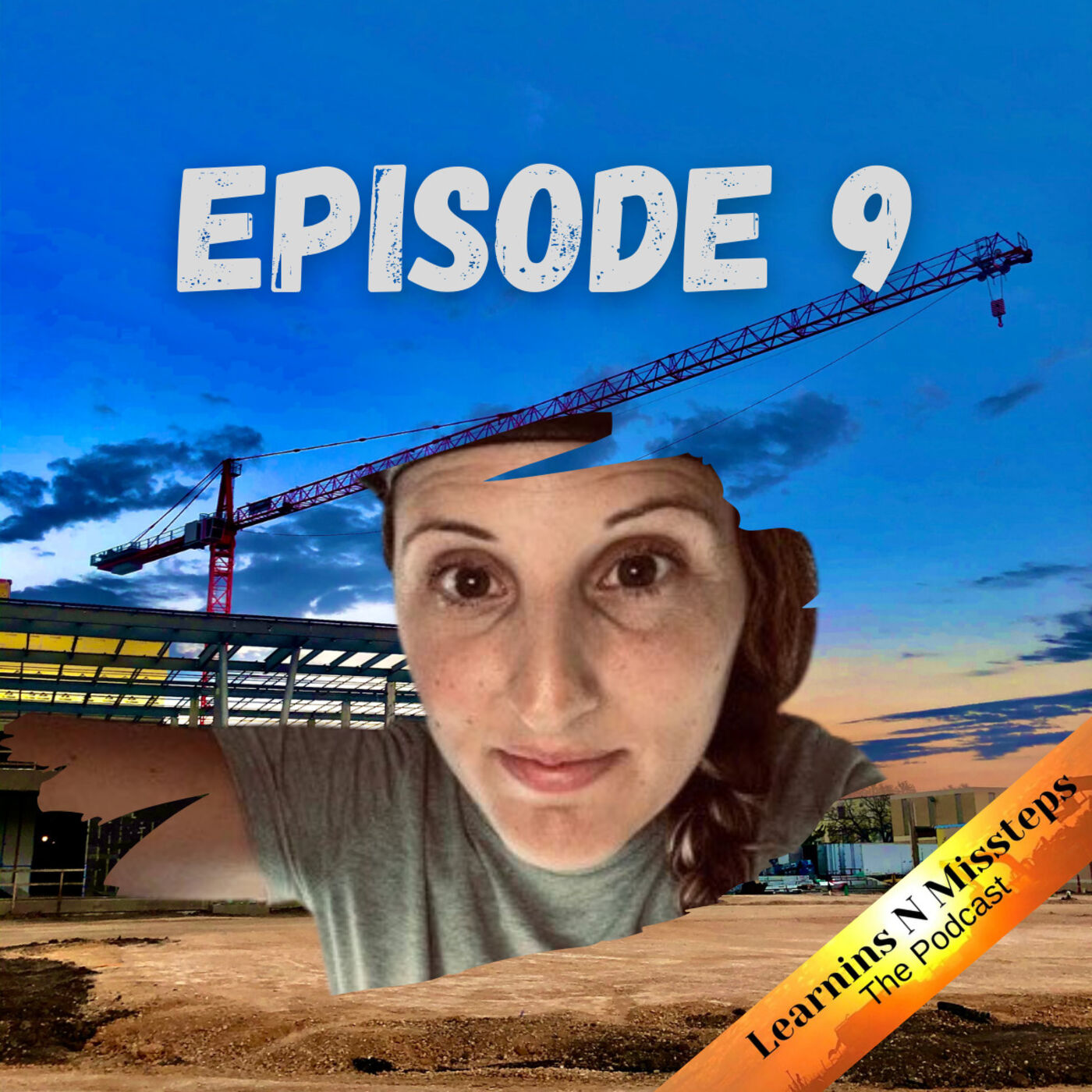
Episode 9: Adapting to new environments through transferable skills - lighting the way for career change to an electrical trade with Darci Spiteri.

 Apple Podcasts

 Spotify

 Overcast

 Castro

 PocketCasts

 RSS Feed

 Amazon Music

 Audible

 iHeartRadio
Listen in as Jesse discusses how to craft a career change with Darci Spiteri, an electrical apprentice. Once detoured from a downtown career, Darci now lights up the trades. Here she conveys the boon of her powers in problem management and the value in relishing the growth process. Other priceless character values have been the conduit to animate her success. Discover the current that carries her beyond what she thinks she cant do.
Support the cause at: https://www.patreon.com/learninsnmissteps
Connect with Darci at:
Website: https://sparks2sparkles.com/
Instagram: https://www.instagram.com/sparks_to_sparkles/?hl=en
LinkedIn: https://www.linkedin.com/in/darci-spiteri-9306bb21/
Reach out and touch us at
LinkedIn: https://www.linkedin.com/in/learnins-n-missteps-6525b41b7/
Facebook: https://www.facebook.com/learninsn.missteps.1
YouTube: https://www.youtube.com/channel/UC4yLjr8swfqCt_vMp74oiXA
Instagram: https://www.instagram.com/learninsnmissteps/?hl=en
You are listening to the Learnins and Missteps podcast, where we intend to change the image of careers in the trade. Each of the inspirational stories is designed to celebrate the real men and women who have built careers in the construction industry and how they impact the world around them. These stories are brought to you by three brothers who share a mother. I am Jesse, your host. Our in-house writer is Ernest, aka LaVoz. Hello. And our co-host is Renee. What's up? Y'all ready? Yes, sir.
SPEAKER_03Hey Jesse, what kind of bright ideas do y'all have in this episode?
SPEAKER_02In this episode, Ernest, you're gonna get to hear from Miss Darcy Spateri. She is an unassuming, confident woman in her first year of apprenticeship. This is actually her second career. And she's got some life experience that she brings and shares with us. And so the the amazing thing is she's found a way to carry forward the lessons that she learned in her previous work uh in digital marketing. You know, the really impressive part about it that I hope our listeners get out there is she has a very humble mindset as an apprentice. You know, for any apprentice, it's difficult to kind of pump the brakes and be patient with the learning and the career growth. But with an individual that has had success in another career and has maybe a decade or two more experience, life experience, it's really impressive to hear the humility in the way she approaches her work. And again, underneath it all is this just immense solid confidence that you can almost miss if you're not listening close enough. So you ready to check it out? Let's do this. Good morning, Miss Darcy Spateri, who is like super gracious, super cool, super relaxed. I fumbled up the invitation, and we were getting I can't do time zone math, and she put up with that. Um, so it's actually a Sunday morning today. Um, and you're in Alberta, Canada. Is that correct?
SPEAKER_00Ontario.
SPEAKER_02I'm sorry, Ontario, Canada.
SPEAKER_00Yes.
SPEAKER_02All right, and it's nice and warm up there right now.
SPEAKER_00Uh weirdly, yes. It's like yesterday was like nine degrees, so Celsius. I don't know what the conversion is.
SPEAKER_02Me neither. It's a jacket.
SPEAKER_00It's like it's it's seasonably high, it's relaxing, it's nice.
SPEAKER_02We're I'm here in San Antonio, Texas, where it's like I don't know, I think it's like 45 degrees, and we use the other one, right? Yeah, y'all are Celsius were Fahrenheit.
SPEAKER_01Yes.
SPEAKER_02I don't know what the conversion is, but it's not warm. Yeah, it's not warm. But it's all good. Darcy, again, thank you. Yeah, you are and again, uh explained a little earlier, but Renee, our co-host, is absent because of my fumbling with the scheduling. Uh but we're here, and and I'm excited to hear your story. I know a lot of our listeners do love to hear a ladies' perspective. Uh and you know it's absent in our not uh absent, but there's very few women in the industry. Um, so having you here is is really a special special situation for us. And so with that, what do you want our listeners to know about you?
SPEAKER_00So I think one of the interesting parts of my story is that I this is my second career. So I am 37 years old, and uh I have an eight-year-old son. Yeah, and I was living the downtown live and work life previously. And like in Toronto, our big city, it's super expensive to live. And uh I think I had a realization that I needed to look for a job where I could support me and Colson. So I had to make a decision to leave my Toronto life and went on this journey of finding a trade to get into. So I actually got a um a grant through our government to go back to school. And uh it was it's a grant that it's is kind of weird, like the requirements to be able to qualify. You have to have been laid off and then taken a contract position. So it's like super specific, and I never ever thought that I would be in that situation. And I was working for an animation company, and they actually ended up going into receivership. So like it was a huge thing in Toronto on the news, and like 500 employees were locked out, and it was crazy.
SPEAKER_02Yeah. What what is receivership? I I'm not familiar with that.
SPEAKER_00It's like a like a bankruptcy.
SPEAKER_02Oh, okay, got it. I don't know what that is.
SPEAKER_00Yeah, yeah. So I ended up taking a um contract, like a Mat Leave position at a uh shredding company. So I was doing it in, and then I realized I finally had those requirements, and I started looking into like a whole whack of jobs. Like I was looking at, I think a stenographer at one point, like doing court writing, and then I think just getting frustrated of trying to find something that I could support myself and Colson. I just was like, oh, I should just get into a trade and I should just be an electrician, and saying it not like as a joke, but like thinking I couldn't do it. And then I kind of had that moment of um maybe like why not? Why can't I look into this? And I started researching it more, and I found so many women in the trades that I was reading about, and that kind of inspired me more to do it. So I was able to get into a pre-apprentice program for electrical.
SPEAKER_02Okay.
SPEAKER_00So that was uh it was a I think a six-month program. So with the grant, they paid for the schooling, but then one of the things was is they had said you're gonna have to do your schooling anyways through your apprenticeship. And I had talked to other electricians and they're like, honestly, you don't need to take the pre-apprentice, but I think being a woman and coming into the trade, I didn't want to have zero knowledge. I wanted to be able to walk onto the job site and have a little bit. So it really helped in that regard, and it was great to have it covered.
SPEAKER_01So not that was helpful, huh?
SPEAKER_00Yeah. So it was kind of like it was a two-year journey to get to finally starting my apprenticeship, but I think that kind of added the drive to accomplish it.
SPEAKER_02I opened with uh you being tolerant and and super relaxed about it, and it just that just further reinforces, right? Two years you had to go through all these, you know, jump through these hoops for two years before you actually started the apprenticeship. I applaud your your tenacity. I mean it it it's impressive. You know, it I may be going out on a leap a limb here, but I'm getting the impression that you're a single mother. Yep. Okay, props, mad props to you. You know, my brothers and I were raised by a single mother. Yeah. Um and I'm gonna share a little bit about mom, and you're probably gonna say, yep, uh mom didn't take vacations, right? Mom, mom didn't get her nails done. Mom worked, mom went to school, mom cooked, mom cleaned, mom did all of these like super amazing, heroic things, put up with all of our BS, and and really sacrificed her personal life, sacrificed her social life. You know, she put a lot of things in the back burner just for us. Yeah. So am I far off? Is it how how close is that?
SPEAKER_00Nope, you're spot on, and and and it's hard too. And I think I have to remember that I need to take time for myself, which I I I don't, and I find that when I've had a long stretch of not doing something for me, I get easily frustrated, and I've had to tell myself, like, even just to get out of the house for like a half an hour walk, I can just like reset my brain, and that's super important. And I've definitely learned that over the last couple of years for sure. It's just like your mental health is so important. And for me to be a better mom, I need those times too, right?
SPEAKER_02Yes, absolutely. And in everybody, right? You to be a better mom, uh, to better serve the people that you that are in your circle, yeah. Uh, and more importantly, to continue developing the human being that you are.
SPEAKER_01Yes.
SPEAKER_02You've got to take time and invest, and it's hard, right? Yeah. Here's another secret question. How hard is it for you to ask for help?
SPEAKER_00Uh hard. You like that one? It is, it is. And I have so many people in my life that are helping me. Like I've moved back in with my parents to help because to find daycare at 6:30 in the morning when you have to leave for work is not existent. And having a best friend that's pushed me and and in those moments where I've wanted to stop her kind of slapping me in the face and being like, You can do this.
SPEAKER_01Yep.
SPEAKER_00But it is a hard thing. I think I always want to do everything on my own, but I can't. Yeah, and you don't have to. Yeah.
SPEAKER_02Right. It's it's this um this part this thing that we do to ourselves where we we convince ourselves that we don't we gotta do it all by ourselves. Asking for help is a weakness. And and I say we because I think people in general, you know, we have accepted this conditioning of you know, you must overcome independently and you know, all that heroic stuff. But again, back to to mothers and single mothers, you know, like I said, mom and and other really close friends of mine, women that amazing superpowers that they have. And uh their kryptonite almost every single time is asking for help. So I applaud you for you know saying, hey dad, need a place because I need some help with the boy with Mr. Col Colson? Colson, yeah. Coulson, eight year old, eight years old, full of energy, or he's super quiet, relaxed. Nope.
SPEAKER_00No, opposite. Like I need to work out just to be able to keep up.
SPEAKER_02Oh, wow, yeah, that's an exciting time for a young girl. Um, so you mentioned the first career you were in animation.
SPEAKER_00So I actually started out in, I've had like so many different jobs. I've kind of fell into all my careers previous. Like out of high school, I did a college program that would have it was called digital media technical production. So I had wanted to be a I I wanted to do graphic design. That was out of high school, that was what I wanted to do. So I got it accepted into this program, which started in August. So it was an early program instead of starting it like I think normally September.
SPEAKER_02Okay.
SPEAKER_00So I went in and it was it was more about the computer, like there wasn't a lot of design courses right away. And I was just kind of like, is this really what I wanted to do? And then I had decided I'm like, okay, I'm gonna take a year off and see what I want to do. And then my dad ended up, he was in sales and marketing. So he and then at that point he was going through a transition of wanting to get out of the corporate world, start his own business. So he was looking at a whole bunch of uh what are they called? Uh like franchises.
SPEAKER_01Okay.
SPEAKER_00And he had found this one that was a print shop. So like large format printing, doing banners, vehicle wraps. Yeah. And so I was like, well, I could do the design. That's kind of what I wanted to do. So I ended up working with them when they first my dad and my mom had started this company together. And from there, I was able to, like, so many different companies need that kind of work.
SPEAKER_01Yes.
SPEAKER_00I was exposed to so many different types of companies that I never would have known existed in high school. Like I we did a lot of work with event marketing companies, and that was like I got I was always into the creative stuff. Like I wanted a career where I could be creative and or what I thought I wanted to do. So I ended up working for an event marketing company in the as a like an account coordinator. And then from there, I slowly kind of moved into more project management. So I started working in marketing companies in their studios. So I would do the traffic, like we call it traffic. So I was basically the point person in the studio between all the different uh like the different departments.
SPEAKER_02Ah, there you go. Yep.
SPEAKER_00So I like the accounts team would come to me and be like, which designers are open, who can work on this project, and filtering those jobs through from brainstorm phase to production.
SPEAKER_02I mean, this is good stuff. So the brain, how do you, if you're the project manager in this situation, how do you manage through the brainstorm phase with people?
SPEAKER_00Well, I I was kind of I would be in some brainstorms, but I was more the person that they would come to when they needed designers to take part, like we had designers, production designers, creative directors, so they would all kind of take part in those brainstorms. Okay.
SPEAKER_02Good. Did you find it difficult or challenging securing commitments from creative people?
SPEAKER_00It's hard because I think the one of the good things was is I came from a background where I took part in the design. So I kind of had an idea of how long things would take, which was a bonus. Where it's like if you don't understand the process, like you could think something's gonna take, you're like, well, this should take this long, but you don't know the full scope of what's happening, which also like in in the like I think one of the good things about having the project management background is I can carry that over into the trade world.
SPEAKER_02Absolutely. I mean, the words that you said, like people don't really understand what it takes to do a thing. Yeah, but I I think that dynamic transcends any industry, right? Exactly. Yeah. If you didn't have if you didn't get your hands dirty and do it in the past, your estimate of how long it's gonna take is gonna be too low.
SPEAKER_00Yeah, and finding, I think having those conversations, like including everybody in those beginning conversations, I think it would help in the long run. Like I've seen it happen on the construction site, like nobody's talking, and every like things are coming at you where you're like, okay, well, we need to do this today, and you're like, I had no idea this trade was coming in, and like just having more little conversations, I think would help in a whole you you are speaking my love language.
SPEAKER_02Part of what I do, you know, during the day of my day job is uh is coaching teams on collaborative planning. Yes, um, that's a last planner system, lean thinking. One of the like really simple things that that we like want to make sure we establish is a daily huddle. Yeah, 15 minutes with all the with the foreman of every trade and the you know the superintendent or project manager of the project to talk about what are you working on, what problems do you have, and what are we gonna do tomorrow?
SPEAKER_01Yeah, that's right.
SPEAKER_02Like and and coordinate that, like you said, like man, well, plumbers are coming in to set tubs. Well, hold on, we're we're still you know roughing in the overhead lighting. Yeah, you can't both be in the same place at the same time. It's those small things having that conversation smooths it all out. You don't have the conversation, and I imagine you may have heard some magical curse words out there and throwing hard hats and threats and this sort of thing, you know. Sorry, sorry, uh I'm with you, sister. I'm with you.
SPEAKER_00Well, that was one of the things that in like I was a studio manager, so I was part of we had like this huge we called it our battle board. So it was like every day, like I'd have all the jobs on the on the board, and everyone would go through like what they were working on and how long they needed, and I would let them know like what's coming down the pipeline. So I think definitely bringing that into my my new role, I think, is I'm excited to have that background and understanding.
SPEAKER_02So this battle board, are you familiar with Scrum?
SPEAKER_00Yeah, so it was like a Scrum meeting, exactly. Yeah, I know it.
SPEAKER_03I love it.
SPEAKER_02You're you're the awesome. Okay, so you have oh Miss Darcy, Miss Darcy, you have like some super hidden magical powers.
SPEAKER_00I think so.
SPEAKER_02Oh my goodness, you sure do. I'm I'm gonna say this. In your your new career endeavor, right? Second career into trades, that type of thinking and the understanding or yes, the understanding of how to apply it. Oh my god, is going to your career, like I could see it right now, is on a very steep trajectory, and that's a positive thing. Yeah, you're probably gonna have to apply some patience because you're early in your apprenticeship.
SPEAKER_00Yeah.
SPEAKER_02But you can see problems that other people don't realize are problems, and you know how to help them with that. Oh my goodness, I am excited for you. Jeez. Sorry, I get a little goofy about stuff. Okay, so you got into market uh originally you you were your interest was graphic design. So what was it that attracted you to graphic design?
SPEAKER_00I think the being creative, like I'm super crafty, like I had a a small little side business where I would do um knitting and crochet and sewing. And I think I just love that side of like the art, I guess, or but realizing that doing graphic design for other people is like a whole different ball game, and it wasn't my jam. Like I didn't I didn't like other people telling me, like, oh well, like can you move this or do that? Like I like to do it for myself, like more of like an artistic kind of thing. So just like seeing that, I think, and it's it's so hard too because in school, like the co-op programs, like in high school, I think is so important because you see a job and you can see more of it that you wouldn't necessarily see if you're like looking through a book of what should I take in college or university. So I think the co-op programs are really important. But like when I did co-op, I was at a photography studio and didn't really do something that I was really thinking I was gonna go into. It was kind of like, oh, this is like my my fluff course. Where I think if if they offer more a range of jobs that you can go and see, like not just working at one for a whole semester, you can go and see like different things. You there's like just with an electrician on a whole, like I had no idea what the scope of the job was. Like I was like, okay, cool, I'm gonna put light switches in and change receptacles. Where like now, like I've been on a like I've been in like a program, but like you don't see the whole planning stages and like what's underneath all the walls and what has to go into it before you can actually put a receptacle or a light switch in. So it's just exposing younger generations to these jobs so they can learn more about them and and get more of an interest. Like it's I think is so important.
SPEAKER_02It is extremely important, and there's not enough people or organizations doing that, right? Exposing our youth to to what all like how exciting, right? There's so much stuff. It it's not for everybody, but for some people, they're gonna say, Oh my, I want to go play in that.
SPEAKER_00Yeah.
SPEAKER_02Um so how do you scratch that itch? My creative side? Yes.
SPEAKER_00Um, I do a whole bunch of stuff on like at home and and with Colson. I'm always looking up on Pinterest all my uh craft ideas. His birthdays are Always a big time for me. I always love to I start plan like his birthday's in June. So by like now I should be planning.
SPEAKER_03Wow, that's serious. That sounds like a serious party.
SPEAKER_00Yeah, they're intense. Um well, but now that COVID is among us, but just like doing little things for myself. Like I like to like there was some craft shows, local craft shows that I would go into. And and I think there is a little bit of creativity in electrical too, with your like conduit bending and okay.
SPEAKER_02Can you describe that? I agree with you. I'm not arguing, I agree a hundred percent. As a plumber, you better believe what I did was art.
SPEAKER_00Yeah. Right.
SPEAKER_02Or at least I believed it was.
SPEAKER_00Yeah, there's so many people I think that take so much pride in their work, and you can see it all over Instagram, like all the electrical accounts that I've seen, and just it's not like a set, like if you're if you're doing your conduit work, it's not like you have to put it here. You can you there's so many different ways of doing it, and it's I found it so interesting to look at my journeyman and see them thinking in those moments of like, okay, like they're you see someone standing around, but you don't realize what they're actually doing in their head and like trying to plan out the best ways to do things and not make it look like garbage and yeah, they're mind mapping, right?
SPEAKER_02In the moment, they're they're they they've been given some type of information or guidance, yeah. But the guidance is go from point A to point B.
SPEAKER_01Yeah.
SPEAKER_02And what's underneath that is do that in the safest, yeah, most economical way possible, right? And to achieve the required quality. That's not spelled out for anybody. We gotta figure that out. Yeah. And so it, like you said, it takes some thinking time. So when you're out there, when you're faced with the new configuration uh wiring diagram or just routing conduit, do you draw that out or do you keep that you personally? Is that something you just map out in your head?
SPEAKER_00I haven't done so much of it. I think I haven't really found my my way yet. But like when I would be with my journeyman, I they would kind of ask me, they're like, Okay, where do you, what do you think this should like, how do you think you should do this? And I would be able to think and see what what was to be done, and and then they would be like, okay, like yes, or or they would give me how they would do it. And I think just having that experience and it's like why the apprenticeship I think is so important, and like a lot of them would be like, Okay, I'm gonna let you struggle so you can see what the struggle feels like, and then I'm gonna show you an easier way to do it.
SPEAKER_02Ah, ah, uh, yes, and that is um that is a teaching method, right? Yeah, how how does that uh how do I ask this question? Does it feel respectful when they do that? Like let you struggle?
SPEAKER_00Yeah, yeah. Because I think for me to learn, I need to remember that struggle and and be like to see all the different options and and why they're telling me to do it this way. So I I appreciated it for sure. I think some I think some people may not be okay with that.
SPEAKER_01Yeah, yeah.
SPEAKER_00But I think I've always like there was one day where we were running all this wire for the we had a I was out of school for my first job.
SPEAKER_01Okay.
SPEAKER_00We were running all the wire for the stage, and my journeyman was like, okay, so like just like he had said to label everything, but I didn't have a label. So I cut all the wires and I came out and he's like, I'm like, okay, so I cut everything and like I thought I was doing, I was like, Yeah, I'm doing this so fast. I'm like cleaning up, and then he's like, Okay, so you labeled everything. I'm like, excuse me, what? Um label, no, and I had like this huge smile on my face because I felt so bad and so awkward. And he's like, You can stop joking now. I'm like, no, I definitely cut them. And uh he's like, Okay, so like just seeing how much added work had to go into like finding what everything was, but like now I will remember that moment. I'm like, okay, I need to label before I cut. Yes, yeah.
SPEAKER_02You know, I'm laughing because I I'm pretty sure any apprentice out there has experienced something similar, right? Where somebody gave you direction, and because we don't ask for help, right? We don't ask for clarification. We because sometimes, you know, I've been fortunate in my career to have people that have a teacher servant's heart, but that was rare. Usually I had somebody that said, Oh my god, I'm not here to babysit. Yeah, I I wish they would hire people that knew what the hell they were doing. So one time I was told to I had to chip some concrete to recess a floor sink in a slab. And so my foreman said, Hey man, I need you to chip that and make sure the sink fits in there. I said, Okay, so I got the chipping hammer, and man, I went to town, and girl, that floor sink would recess in the slab all the way through the slab.
SPEAKER_03And he came.
SPEAKER_02I said, Hey, his name was David, I'll never forget this. And I was at a school, I was at um uh I think it was Memorial High School here in San Antonio.
SPEAKER_00Weird, my school was new memorial.
SPEAKER_02Oh man, it's it's it's a sign, it's a sign, and he's like, All right, well, let me check it out. So he came and he's like, What the hell did you do? I said, dude, I chipped it, like it'll go up, like we could put it at any height. He's like, It's supposed to sit on the concrete, you dummy. Like, you were only supposed to go down an inch or an inch and a quarter. You went three inches, and I'm like, Oh, so so you mean my parade is canceled? Like this isn't what you wanted, but like you said, I'll I'll never forget that, and I will always ask for clarification. Like, okay, I know you want me to chip it, but how much? Yeah, I know you want me to it put this up in the ceiling, but how high? Oh my god, such an important lesson.
SPEAKER_00Yeah, I think one of the things too that I've learned is like they'll someone will tell me what to do, and then I need to repeat it back to them and make sure that I am understanding. And I think sometimes it like depending on who your journeyman is. I was super lucky with the guys that I worked with. They were all so patient and all super like supportive and wanting to teach. And I could see where that, like, I think if some people are like, okay, like you just like let's just get it done. Like, I I think I had worked with one guy where I think he'd get frustrated when I'm like, okay, so this is what you want me to do. Like, I need I need to be able to repeat it back so I know that I'm understanding.
SPEAKER_02That's that's another superpower, Darcy. You know, it takes it takes a deep level of humility and vulnerability to be able to do that. Man, you got all kinds of skills, girl. Jeez, yeah, you really do. Tell me what's hard, what's the nightmare about working out in the field on the job site?
SPEAKER_00For me, I had like the ginormous SDS Bosch is my art nemesist. Um, I think being able to realize that I'm not gonna be good at everything. I'm not like I had one day where I had to do like a two-inch core through the block.
SPEAKER_01Yep.
SPEAKER_00And just holding this drill is a mission for me. I've realized like working out is something that I need to add into my routine because I don't want to struggle with those things. And I think I I was trying to drill this two-inch core and like I couldn't like my height too. Like I I have to learn how to be able to do these things. Like I'm five foot two. So I was like holding this drill, and like I couldn't, I wasn't like at it at the right angle. I always feel like I'm like a half step too short.
SPEAKER_02Oh, just a half step, right?
SPEAKER_00Oh yeah. But it's it's I think learning like just like having someone tell you how to hold something. It's like those little things that throughout your apprenticeship you're gonna pick up. But I think the hardest thing is when I feel like I can't do something. And I just kind of there was that the day that I was trying to drill this thing, I couldn't do it. Like my I'm like, I said to my foreman, I'm like, can you just start it? Like maybe once it's started, I can do it. But I was just at such a weird angle. And I think that day I left, I'm like, oh, like I need to be able to do everything. And I just felt so defeated. And I, and then I went home and I was like, you know what? Like at my previous jobs, like I wasn't able to do everything in the company, just kind of realizing that I'm gonna find those little things that I'm going to excel at. And I'm gonna, those will be my specialty. But I had said that to my foreman, and he's like, you know what? You're like, I'm like, if I have a really tall guy on my crew, I'm obviously gonna get him to do the stuff that is maybe a little bit harder for you. But so I think having that realization changed my thinking a bit, and but it's just like going through everything and you're feeling so awkward about everything you do as an apprentice, but being able to laugh at myself a little bit too has helped.
SPEAKER_02Yeah, yeah. You know, you that's a that's a I guess a principle that that we all need to better embrace. Um it sounds like you're doing a great job of it, right? We all come to the table with skills. We all come to the table with a set of skills that that we can most likely outperform others, and we come to the table with gaps, right? There's there's gaps in our abilities, in our knowledge, physical gaps, whatever it is, but that doesn't mean that we're less than. Yeah, right? We just it's something we need to maybe build. Exactly. But also let's share the skills and gifts that we do have to help a situation out. Um so you know that's for our some of our listeners may not know what an S a Bosch SDS Max is, right? That son of a gun, what it weighs about 20 pounds, maybe yeah, for sure. Yeah, and that's without a bit. And so if you have a two-inch core bit, yeah, it's gonna be drilling through a CMU block wall. That thing's what about 14, 12 inch, 16 inches long. Yeah, the the damn drill itself is about 18 inches long. So you got like this three-foot piece of machinery that you're trying to hold above your head or on a ladder, um, three feet away from where you're trying to get this damn hole drilled. Yeah, I would challenge anybody right now to grab a cup of water and hold it in one hand above their shoulder for the rest of this episode, and then you'll understand what is difficult about that damn hammer drill. Yeah, what do you think, Darcy?
SPEAKER_00Oh, yeah, 100%. Like my shoulders were so ripped, like just carrying stuff or doing everything everything above my head. But yeah, it's so true. It's like you're not only holding it, but you're like holding it up high, and like there you're never in a situation where you're like standing on the ground at perfect height to drill. Like you're always there's always obstacles that you have to overcome.
SPEAKER_02Yeah, for sure. So, was the the physical nature of the work? Did that surprise you?
SPEAKER_00I don't think so. Like, I wanted a job where it was gonna be a workout. I think that was one of the things I wanted like my I would do like 30,000 steps a day. Like nine like I think as a first year, I was running around getting everything for everyone. Um, so I liked that. And like I liked, I like coming home at the end of the day, just like exhausted from doing stuff and like creating something, building something. So I I was ready for it. And I think like carrying the tools back and forth every day. Like I'm the kind of person that when I'm bringing the groceries in, I do not like to take two trips.
SPEAKER_02So all the fingers have three or four bags and a yeah, yeah, yeah. So can you describe that that daily sense of accomplishment you have from being able to look back at what you did today, physically see it?
SPEAKER_00I think for like just mentally being able to look at not only my day, but like who I was at the beginning of the job and who I was at the end of the job. Like right now, like I are I was there uh January 13th was my first day on the job of 2020. So the job is finished up, and just looking back at what I accomplished, like from using a bandsaw, like the first day that I was on site and like making like the butt, like the like the bit just grinding and like why isn't this working? He's like, You're pressing too hard, like let the tool do the job. Like you're I was trying to force the bandsaw and just seeing what I've accomplished and knowing that I can do it, and I think meant like for my mental health and just knowing that I can do things that I put my mind to. Yes, and so good, and like trying new things, like um you like Shannon was on the show, right? Yes, yes, she's been amazing to have in my corner, and like just meeting her and seeing what she's done, and and seeing like I think one of the things she says is like she's now has the confidence to try other things, like her car, and and I think just seeing her do that too, and I'm like, okay, you know what? I'm gonna change the light bulb in my car, and like end offering that. I'm like, wow, like if I just like think about what I want to do and do it.
SPEAKER_02Take that action, right? Yeah, you gotta take that action step, and then magically those things will happen. Yeah, uh, so you mentioned Shannon, another amazing woman in the trades. Do you have a group of of women in the trades that are a resource for you to like tap into and vent to, right? Complain about the dumb dudes out there, share lessons learned. Can you tell us about that?
SPEAKER_00Yeah, so Instagram has actually been an amazing platform for that. I've met like so many women locally too. Like, there's so many girls that are are on my Instagram now that I talk to daily. Vancouver, there's some in Ontario. I have Shannon who like in my local, and I think that's super important. Like you said, like I'll go to work and I'm the only girl there, and I'm just like having a bad day, and I'm like, they're not gonna understand. Yeah. I think when COVID kind of hit, I realized how much I missed my female friends. Like I would see them right like on the weekends, and then we went into lockdown, and I was like, I miss having my girls, and like having this Instagram family, like there's not only women, but there's other men too in the trades, and we all kind of we've bonded a little bit, and it's like once COVID's over, it's it'll be nice to have that, like maybe have a meetup or something. Yeah, happy hour, yeah. Yeah, yeah. But I think it's super important to have other women in the trade that you can talk to and and share because they'll understand what you're going through. And and like I I've been super lucky that my site, all like there was we had there was a painter that was there that was a woman, and there was another electrician who was in. So just seeing the other girls, you're just kind of like, Hey, and the guys would always make fun of me because I'd always be like, Where'd you get your pants? Like, I want to know where you get all your workwear. Because that's been a struggle. Like, it's really hard to find women's workwear.
SPEAKER_02Mmm, you know, there's a contact I have. Let me pull up his name. He's in Canada. Oh, and and he has well, this is an idea. You can help him market it with your graphic design skills. Um, he has created a a jacket that has space for a safety harness for the lanyard and everything.
SPEAKER_00Oh, yeah, I think I have him, Pete, right? Pete, Pete, yeah, yes, yeah. Uh I have him on my LinkedIn, and I see like I think Shannon has one of the jackets, and I was like, this is super smart, it's so genius.
SPEAKER_02Yes, so Pete, if you're listening, there is a market out there for women's workwear, and Darcy is gonna help you build and expand your business for women's workwear. How about that? What do you think about that?
SPEAKER_00Yeah, yeah, it's like it that that was the thing. Like I showed up on the job site, I had no idea where I was gonna be working. Like I was told it was in a school, but I didn't know, like I was like, okay, maybe it's gonna be maintenance, or I had no idea I'd be outside. So just like I had like seven sweatshirts, like so like just so much layers for those those first days. But it's like I can't walk into a store and buy a jacket, like everything that I had to buy was online, so it took time to get to me. And I now finally have like a closet of winter workwear, which is great.
SPEAKER_02An obstacle for sure. Okay, so Pete Zepp's gear. That's what it is.
SPEAKER_01Yep.
SPEAKER_02Zepp's gear, come on, brother. You gotta help the ladies out. So you're a first year apprentice, second year apprentice? First year apprentice.
SPEAKER_00Almost second. Like I've got like it just like with COVID happening, we shut down for a month. I probably could have done my full first year at the school, but I'm like it's in pause right now. Yeah, yeah.
SPEAKER_02Yeah, yeah, it's affecting all of us. You're not too far away from the very first day on the job site. And so, with that, what would you do differently if from the perspective of sharing that advice or insight with another woman entering the job site for the first time?
SPEAKER_00What would I do differently?
SPEAKER_02Yeah, what did you what if you could have done it all over again, how would you approach it?
SPEAKER_00That is a tough question. I think I don't know. I feel like I didn't have a horrible experience. So I think it was like I'm the kind of person that I can I feel like I can read situations really well, like I can get a vibe off of people. And like I I in my head, I was like, you know what, I'm gonna go in on my first day, get a read for what's happening. I'm like an adaptable person, like I I'm kind of like a chameleon because I always can change not change myself, but I can interact with people, I think, in a way that like I can if someone is I can tell when someone needs to like if like someone's talking too much and someone needs to get out of there, I can read that situation.
SPEAKER_02Help them out, yep.
SPEAKER_00Yeah, like like I didn't want to come in just like all like good morning, everyone. Like I'm super bubbly and like I wanted people to take me seriously, and so I kind of got a read for the job site before, and then I could loosen up a bit and be more darcy. Um, but I think it that that's important just to be able to read the situation before I think that's fantastic, right?
SPEAKER_02Is come in with some humility, right? Ego down, yeah, be present, be fully aware of the people around you, pay attention not to just the words that they say, but their body language so that you can adapt to that climate or culture, yeah, whatever it is, right? Because you've probably seen it. Every job site, every crew has a different dynamic.
SPEAKER_01Yes, yeah.
SPEAKER_02And and being able to adapt to that, not lose yourself, you still gotta be you. Yeah, but being able to adapt yourself appropriately really helps. I mean, it it it unlocks the door to to connecting with people.
SPEAKER_00And I think that was one thing I didn't want to lose. I didn't want to not be me. Yes, like I'm a like obviously a female, like I'm super girly, like when I'm at home. And like I didn't want to have to lose that part of me. Like, I obviously know what to wear to a job site. I'm not like doing anything crazy. Like, but like if I want to paint my nails, I'm gonna paint my nails. Like someone said, I think people have said, like, don't go, like, don't wear nail polish, like you're draw more attention to yourself. But like, I'm okay with who I am, and I don't want to change me in order to feel like I fit in. So it's like I have my nails painted, and like I remember when I got them done, I'm like, nobody's even gonna notice them.
SPEAKER_03Yep.
SPEAKER_00And like at lunch, like that's where I miss the female interaction sometimes. They're like, Oh, did you get your nails done, Darcy? Yes, I did.
SPEAKER_02You're at the job site eating lunch, kind of like, hello, and they're missing it.
SPEAKER_00Yeah. I think I got my hair done, and like two weeks later, the guys are like, Oh, did you do something different with your hair? Like, yes. But I think I I love like the guys that I work with, like I always I've said it so much, but like I feel so grateful to have those guys like the first job go the way it did.
SPEAKER_02So well, shout out to them, yes, um, and and the other men that create a safe space, an inclusive space for everybody, but particularly women entering the trade, right? There's not there just really isn't enough, and there's so much room for them. There's so much room for women out there in in the trades over the my time in the industry, real early on. If there was a woman on site, it was assumed that they were the secretary.
SPEAKER_01Yeah, right.
SPEAKER_02Like that was she could have been the damn project manager for the general contractor, and we uh would say the secretary. Like she's not the secretary fool, she's the project manager, right? Like she's she's got the big stick out here, don't be a dum-dum. And now, you know, there's more women. I'm able to see that there's more women in in management, there's more women in the trades. You know, I I've I've worked with um Lisa Pena, who's like the the controls and startup uh guru for for TD industries, like she's got it going on. And and I'm sure she had to overcome uh a lot of ignorance. Yeah, uh but it sounds like you've been in a situation where these men appreciated you, respected you, and made you feel safe. Yeah, and and we need all men to behave that way, yeah. Right? We need all, especially uh, I mean, just in general, but out on the job site, like, dude, get over yourself, lend a hand, and be cool. Just be cool, don't be a dummy. Yeah, all right. I mean, come on.
SPEAKER_00Like having a like a crew of brothers. Like, I knew that if I think that also eased my mind too. It's like I knew if anything was gonna happen, these guys would have my back. Yeah, and like there's like the odd few people that would always be like, Oh, let me carry that for you. And like, do you need help? Are you sure? Like, I think I was trying to carry like a 12-foot ladder, and the superintendent was there, and he was just like, like, if she wants to be in construction, let her carry the ladder. And like, he wasn't like getting mad at me, it was more like he was trying to have them like respect me a little bit more that I could handle it, and like by the end of it, I could carry those 12-foot ladders, no problem.
SPEAKER_02So, oh man, those things are a pain in the butt, especially when you're trying to turn in a doorway or the corridor, right?
SPEAKER_00That was like my my ultimate fear is like moving a ladder around.
SPEAKER_02Yeah, not fun at all. It is heartening to know that you you on your first job got to hook up with a pretty awesome set of dudes, right? Because that doesn't always happen. And it and you know, not just for you as a as a woman in the entering the trades, but anybody entering the trades that first year, like that first week, if you don't treat people with respect and all you do is demean them and bash them, they're not gonna stay.
SPEAKER_00Yeah, yeah. I saw that, like some other I was on another job site and like it was other trades, but just like how they were talking to I guess their apprentice. I don't know what year he was, but I'm like, it like it's just like it's so crazy. Actually, I'm reading this book by Kate Braid, she was a journeywoman uh carpenter.
SPEAKER_03Okay.
SPEAKER_00So she this was back in the 70s. And yeah, so she like she was like one of the the first females in there, and like just what she was writing about, like she had gotten her apprenticeship for carpentry, and there was one guy on the site that just like wrote her so hard and like made her feel nervous. And I think like if you're like she would mess up more because she was so nervous about it. And I think for any apprentice, like you are you have no idea what you're doing, and like everything is awkward and you're learning, and if no one's gonna take that time and treat you with respect, it's it's not you're not benefiting anyone. Like you're like if you're gonna treat someone a little bit better, they're gonna work better, right? And under those situations, and so I think that's one thing. I think in the construction industry as a whole, it's like the culture, like to keep these apprentices through and have us finish, it's I think super important.
SPEAKER_02It absolutely is, right? I mean, because there's not enough. Yeah, there's just not enough people. There is not enough people, and you know, a lot of the those salty, seasoned journeymen complain about man, I gotta do all this damn work. Well, yeah, because you keep running all the apprentices up, or they're complain that they just don't they're taking too long to learn, they're learning slowly. Yeah, well, you know, there there's like proof, scientific fact that when you create an environment where it's okay to ask questions, it's okay to make a mistake, people learn deeper and faster. Yeah, but if you create an environment where people have their guard up and and are protecting themselves from the hazing, and don't get me wrong, because I played my role in hazing people. Um but you know, if if you're in this in crisis state of mind where you're always looking out for yourself, always worried about somebody yelling at you, cussing you out, because it happens, right? Yeah, I just straight up cuss you out and demean you in front of everybody, threatening you with your job every five minutes. That does not create a a learning mindset, that does not support a learning mindset. Yeah, so be cool, right? I mean, it's it's that easy. Be cool, help them out. You weren't born knowing everything, share the knowledge. I mean, because if we don't share the knowledge we have, what's gonna get more expensive, and and the artistry and the craftsmanship in our industry is gonna suffer. It's it's gonna continue to disappear.
SPEAKER_00Yeah. My foreman had said one thing. He's like, if you like, if you mess up, own up to it, explain to me your thinking of what happened, and don't like I think he's had some people in the past just be like, like he'll notice something, and then they're like, Oh yeah, I noticed that, I didn't know. But it's like, so come to me, like ex like just as long as you can formulate what your thinking was, like that's fine.
SPEAKER_02Yes, man, that guy sounds like a genius, right? Reflect on what happened and like the real key thing there, what were you thinking? Yeah, what were you thinking? And it not not I'm I'm excited right now, so it sounds like I'm picking on somebody. No, but when we pause to examine our thinking, we are better equipped to learn and adjust in the future.
SPEAKER_00Exactly.
SPEAKER_02Yeah, and when you do it and articulate it with another human being, it's even deeper. Man, yeah, dude, you you got you got you got a good crew out there. I'm happy, I'm super happy for you. So, what do you see? This is a big question because I imagine it it could be big and broad, but what do you think your future looks like?
SPEAKER_00I think it looks bright. Yeah, I I feel you know what, like when I I think of all my previous experience and how it's led me to this point, I'm super grateful that I have the background that I do. And I think when like I guess in five years from now, when I'm licensed, I want to advocate like for sure for women in the trades. I think being able to do these podcasts and share my story has been one of the things that I'm really passionate about. And I like I wouldn't have got into the trade or started looking at it if I hadn't read about other women previously and what they've accomplished. And just seeing myself go through these different stages has been amazing. So I would see myself, I think, doing like speaking for women in the trades or just the trades in general, not necessarily women, but telling like the future generations how amazing it can be and just educating them more on the trades and not necessarily electrical, but like trades in general.
SPEAKER_01Yeah, yeah.
SPEAKER_00I think it's super important for them to hear more information about it. So getting through my apprenticeship and doing stuff like this more, and uh, I guess eventually maybe running my own job site or oh yeah, there's no doubt in my mind that you're gonna be doing that.
SPEAKER_02That that's a given.
SPEAKER_00Organization.
SPEAKER_02Yeah, oh yeah. All right, so for Mr. Colson, what what career advice do you have for the young Mr. Colson's and Mrs. Colson's out there in the world?
SPEAKER_00I think just research, research, research, and use your network or your parents' network to get an idea of everything that's out there. I think don't just like with I think my generation, it was so like okay, you're gonna go into computers or business, or like there wasn't a lot of options to see what's out there. And I think I was trying to find something that I was super passionate about and wasn't really finding that, but then now have found something that I am actually like legit passionate about.
SPEAKER_02It took a minute, but you got it.
SPEAKER_00But I'm here, and I I think just being able to share the stories and anyone who is in a career that they love to share it so that other people can hear different sides of it. But I think just research, research, research, research.
SPEAKER_02Get out there, try it, learn about it, try it, ask about it, meet somebody who does it.
SPEAKER_01Yeah, yeah.
SPEAKER_02Oh, that's that is fantastic advice. Yeah, well, this has been um you probably know, right? But I could keep talking all day long. Super, you are super interesting, all amazing attitude, very intelligent, very thoughtful. It it's a pleasure to speak with you. But do you have any last thoughts or messages you want to get out to the listeners?
SPEAKER_00I think with my apprenticeship, I wasn't really the smartest, like in my test. And I think if you want something, you should go out and get it and like fight for it. And that's what's got me where I am here. I I think that's one of the things with my the intake, we had to do an aptitude test and an interview. And I think my interview was what sold it. And like the they saw my drive and my determination and what I was gonna do for it. Like they were just like, will you like if you need extra help for your like for schooling art, like would you take extra courses? And I was like, 100%. And I think just don't get discouraged if you don't make it the first time. If you want something, just take it.
SPEAKER_02Oh my goodness, yep, perseverance, girl. Like you've got it all day, and you got it in spades. Oh man. Well, Miss Darcy, it was a pleasure. Thank you. And we'll be talking again in the future, especially when you're running your job and using Scrum and having daily huddles and coordinating and planning that work out. I want to hear all about it.
SPEAKER_01That would be awesome.
SPEAKER_02Man, you are one dedicated listener, sticking with us all the way through to the very, very end. Please know that this podcast dies without you. And we invite you to share how the episode is impacting you, along with your thoughts, questions, and suggestions. You have been gracious with your time, so we added social media links in the show notes to make it super easy for you to connect with us. Be kind to yourself, stay cool, and we'll talk at you next time.


