
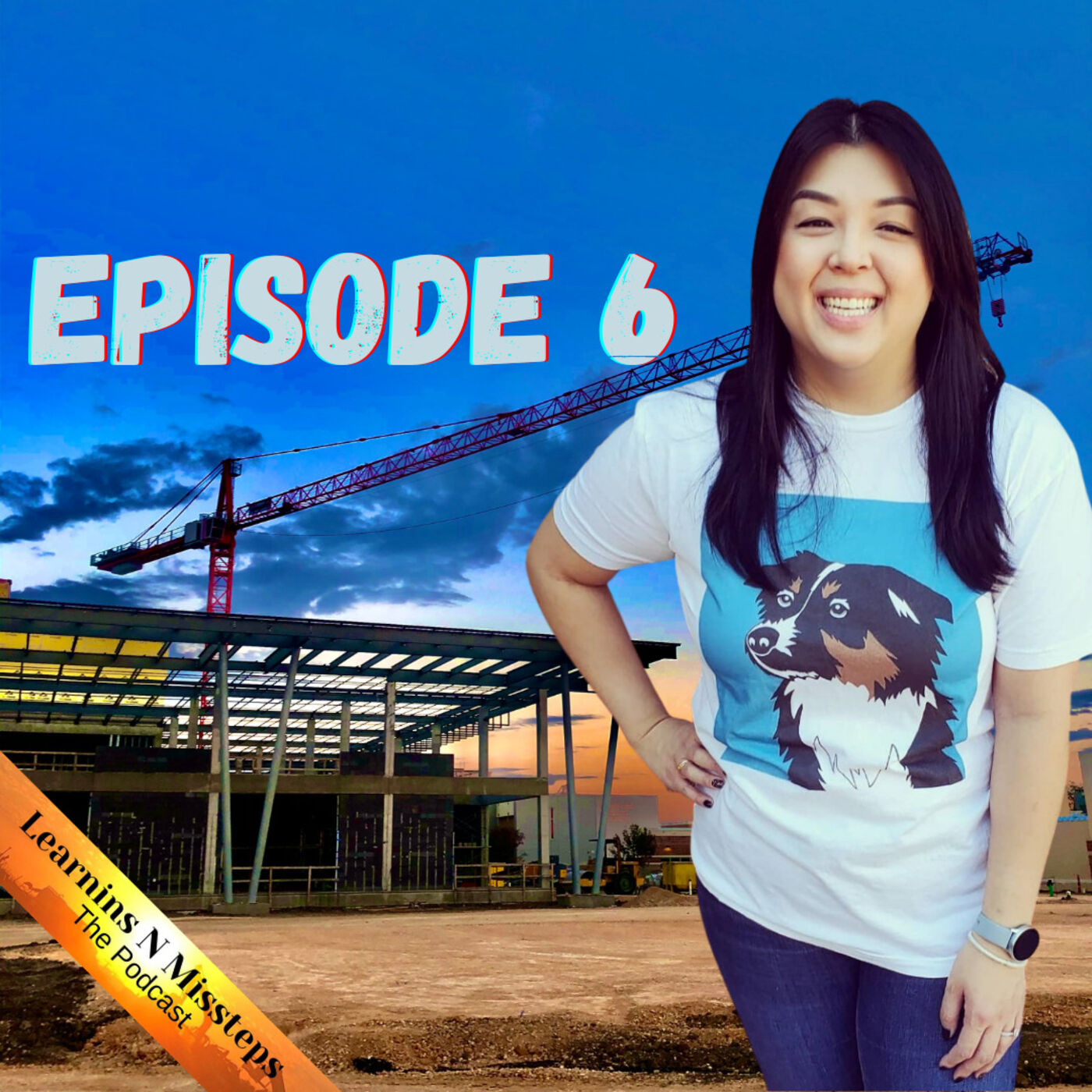
Episode 6: Connecting Tradesmen to the Trades with a Servant's Heart. Diana Hoang, Recruiting Manager

 Apple Podcasts

 Spotify

 Overcast

 Castro

 PocketCasts

 RSS Feed

 Amazon Music

 Audible

 iHeartRadio
Listen in as Jesse and Rene travel with Diana past the windy road of money-making jobs to the path of caring for people. Diana, a Recruiting Manager, shares her journey of battling through life changing circumstances and serving compassionately in construction careers. The harrowing truth of racial injustice is also brought to light along with a call to speak for others. With tough skin and a caring attitude, Diana sketches out entry to careers in the trades.
Exclusive content at:
https://www.patreon.com/learninsnmissteps
Contact us at:
https://www.linkedin.com/in/learnins-n-missteps-6525b41b7/
https://www.instagram.com/learninsnmissteps/?hl=en
https://www.facebook.com/learninsn.missteps.1/
What's going on, y'all, and welcome to the Learnins and Missteps podcast, where we highlight the men and women that have made careers in the construction and maintenance industries.
SPEAKER_01Hey Jesse, how do you feel about this new episode?
SPEAKER_00Man, I am super excited about it. Got to interview Miss Diana Huang, who is a recruiting manager for TD Industries. She goes really deep and tells us a bit of her life story, her lineage with her parents. We touch on uh social justice issues, believe it or not. We have a little bit of fun and we talk about how she how she now navigates the construction industry as a recruiting manager.
SPEAKER_01Awesome.
SPEAKER_00So you ready to roll on into it? Yep, let's get to it. This episode is with the glamorous Diana Huang, who I had the pleasure of meeting and working with uh a few years back. What's it been four or five years? Almost four years, yeah. Four years. Um at T D Industries. At the time, she was a talent acquisition specialist. Super fancy. Are you intimidated, Renee? Yeah, very amazing human being. Um has a fur baby, yeah.
SPEAKER_04Yes, a dog, yeah. I got a question already. Let's go. What do you got? The fur. What's a fur baby? What does that look like?
SPEAKER_02So she's my dog, baby, because we don't have kids, so I treat her like my daughter. So she's my fur baby.
SPEAKER_04Oh, okay.
SPEAKER_00I hadn't heard of that before. Remember, he's in the he's in physically in a closet. He doesn't get out much. Yeah. I live here. Um, so Diana, what do you want our audience to know about you?
SPEAKER_02It's a great question. So I think I'll kind of start with, you know, kind of why I was led to where I am today. So I'm first generation American, obviously. My parents, well, my parents' parents, they escaped China, right, during their Civil War and then pretty much packed up and left their lives behind and went to Vietnam, where they then left during the Vietnam War. Same thing, civil war, you know, being chased out of their country. So my parents actually met in the States. What was crazy is they were from the small, tiny town just across the river from each other, but never met, never knew each other, met each other when they came here. You know, I always laugh about how fate works, right? And how it puts them together. Because now, yeah, now when we go back to Vietnam, we go to the same town and we're able to see both families versus you know having to travel across, you know, the country, right, to different places. So so they came to the States. My mom worked for a few factories. My dad did the same thing for a while. They started in Columbia, Maryland, and then made their way into Austin, which is where I was born and raised. My dad owned a restaurant when we grew up. So I hated it. Everyone is always like, oh my gosh, but you get free food. It's like, no, you eat the same thing over and over and over again, right? So I hated it. And that was, you know, our an amazing source of income for our family. Obviously, my dad always had that entrepreneurial mind. My mom continued to work um in the semiconductor industry because you know, she had great insurance for us. So my dad had this restaurant, and we would literally go there after school and work, work and work, you know. So people laugh about, oh, I started when I was, you know, 18. I'm like 18. I was like 12 when I had to go to work. Um so yeah. So my dad had us at the restaurant. It was me and my two brothers, and we would, yeah, we'd we'd work from the restaurant, we'd serve, you know, serve, work in the back, prep food, you know, always laugh that like I'm the fastest carrot peeler. Because we got the record. Yeah, yeah. So, you know, and and all jokes aside, right? It really taught me that, you know, I I got to see my dad work day in, day out. I mean, we went there after school, but he was the chef, he was the owner. He was there six o'clock in the morning. He didn't close up till 11 p.m., you know, and that was every day. And he couldn't, he wouldn't close any days because it was our source of income. He wanted to make sure that we had everything we wanted. Um, we didn't grow up like, you know, super rich or anything like that. We actually lived in not a not really a great neighborhood, but we were super spoiled, you know, we got everything that we wanted. You know, my brothers would fight over having a gaming system because they didn't want me to play, he would buy another one for me. He's like, you know, if you guys don't want to share, then I'll just get her her own. So that was you know how he was. And if I couldn't decide between a pink and a purple bike, he'd buy me both. Oh, you know, so it wasn't until as I got a little bit older that I started to see, like, okay, so these are, you know, this is the reason why he worked so hard. This is the reason why the restaurant was so important to him. Um, and so we get, you know, we get through and he finally, I think in 2005, he sells the restaurant and he's like, you know, I don't want to do it anymore. And he'd at this point he'd had the restaurant for gosh, like 15 years or so, right? So 2005, he sells a restaurant and he's like, let's do this family trip. So he took, you know, all of us to Vietnam to see our families. He was with us, and normally he would just go for a week or two and then he'd come back home to work, right? And so he finally sold the restaurant and uh we got out for a little bit, had a great time. And in in all this like happening, I think I was in middle school, middle or high school, right, at the time. And he used to tell me, you know, whatever you chose to do, just make sure you're helping people. That's it. He would say, You're help people, be a doctor, be a lawyer. I'm like, oh gosh, like here we go. Typical parent, you know, wants me to do this money-making career and then disguise me as helping people, you know, and I'm like, All right, whatever, right? But um, so you know, fast forward to all this stuff that happens. And then in 2009, my dad gets diagnosed with leukemia. Oh, and he never gets sick. I mean, he's like an like he's never sick, you know. And so he gets, we we go to the hospital because he's not feeling well, right? He's like, I just don't feel right, and we think it's the flu. We're like, oh, you probably have the flu, you have a fever, no big deal. So he does this blood test and it comes back and he has elevated white blood cells. And you know, before we could even think of what it might be, like we still thought, like, oh, he's just got some sort of infection. You know, this nurse comes out and she's like, Oh, you're the family with the dad that has leukemia, right? And I'm like, no, God, what are you talking about? And she like deer in headlights, turns around, walks away. And I was like, Well, that was super awkward. Like, you know, poor poor family, right? Poor family that's gonna find out, seeing that their dad has leukemia. And then the doctor comes out and he's like, Hey, you know, I'm I'm really sorry to hear this, but he's got um a really advanced form of acute melodenous leukemia, and it he says it's typically something that you know impacts kids. So we were surprised by it. So taken aback by it, super concerned, obviously. So he spent all this time at the hospital going through um, you know, chemotherapy, right? And so it was six months or so in the ICU because it impacted him so heavily that it mean he was on life support because it killed all his blood cells, he had nothing left, his body was trying to fight through it. Um, so at this point, I was in um I was at ACC at the time. So just graduated high school, right? And so he um he got super sick. So I spent a lot of time in the hospital. I mean, head there after school, before school, in between work, and I was working, you know, this midnight shift where it's 10 p.m. to 2 a.m. Right, and then going back to the hospital. So um, yeah, so growing up, it was great, right? And so we we think about how our lives are impacted, things happen for a reason. And my dad was amazing, right? He gave us the best life that he could while he was here. And I look at other people who have their dads here and they don't have the same relationship, they don't have the same kind of connection, right? So he ends up passing away after a year, a little about after a year after being diagnosed. And I can tell you that I was just numb. Like I didn't um know how to process it. Like my friends were kind of like, you didn't really, you mean you cried, but you didn't really cry. You were they're like, it's just weird. It's like you didn't feel it. And then so it just, I mean, I just spiraled, right? I did really awfully in school. I like flunk some classes, I dropped out for a year because I'm like, you know what? I'm just gonna go work. And I worked at a restaurant.
SPEAKER_01Oh, of course, right? Of course you did. You were the best, right?
SPEAKER_02Yeah, yeah, exactly. And so it was, and I mean, that restaurant though, it was a sushi restaurant. And I mean, I had the most amazing team though, right? They were like, we're gonna help you get through it, take the time that you need. Amazing support system of people that I still keep in touch with today. So I won't say anything bad about that. They were amazing, and I think working in the restaurant industry really teaches you how to have that server mentality and that help mentality, right? So he passes away, and you know, I drop out of school, I start partying a lot, start drinking a lot, and then something just clicked one day, you know, something just clicked one day, and it was like, this is not you, this is not who you are, this is not who you want to be. You know, my dad and my parents, you know, did everything they could to come to the country, right? Suffered a lot, a ton to give us a good life. And here I am, just kind of throwing it away by just partying and drinking all the time, right? And I kept thinking back to my dad, like, choose your career, choose something where you can help people. And so that was always in the back of my mind, but I didn't know what I wanted to do. So middle school, going back to what my dad says about helping people, I thought back, right? In middle school, I wanted to be a pharmacist. So actually, the first thing I wanted to be was a lawyer.
SPEAKER_00Uh right.
SPEAKER_02And I wanted to be um, I wanted to be a lawyer. And so my dad was like, Cool, I have a lawyer friend. I'm gonna get you hooked up with him in the summer. And this was like middle school time frame. He's like, and I was he's like, you're just gonna go see him, see what he does, see what you know what his day-to-day is like. And he was a criminal defense lawyer. Uh I was like, I might know him. Yeah, a lot of my friends might know him. Yeah, you know, so um, so I I go, you know, spend some time with him. And then, of course, you know, going through middle school, I'm like, oh man, I don't know what I want to do, right? So at the time, I was like, I'm gonna be a lawyer. I'm really gonna be a lawyer, that's gonna be awesome. I love talking, I love arguing with people. This is perfect. Like this is so then you know, my dad hooks me up with this lawyer to go and just kind of shadow him and and see what it's like, right? And so I did, I did it, and it was so dull, you know. I just didn't enjoy it. And my dad, you know, he kind of put this bug in my ear. He's like, you know, when I say help people, maybe not help criminals, you know, and I was like, oh, what do you mean by that? Um, so he kept, you know, he kept pushing it. I think he was trying to push me out of that realm, right? And he's like, Well, do something in the healthcare field. And I'm like, all right, cool. You know what? Um, going into high school, we had to choose our careers, right? Or kind of choose our path. And I was like, okay, you know what? I'll do healthcare, I'll do uh, I'll be a pharmacist. I don't want to be a doctor, I'll be a pharmacist. And so our high school offered like these medical terminology classes. They'd offered this like health, it's called this health occupation students of America, right? Group. Okay. So you could get exposure right to the healthcare industry, learn about medical terminology and all that. So medical terminology was awesome, but so boring, right? And I was like, man, like if I can't get through this, like, how am I gonna get through to be a pharmacist? Yeah, yeah, there were so many different things that was happening, and then like all the healthcare classes, all the anatomy, all that stuff. And I was like, man, this is so dull. Like, I do not want to do this. So I struggled a lot, you know, changed it a couple times. And then finally, I was just like, you know what? Like, I'm just gonna go to college, take my basics and see what happens, right? I'm just gonna see what happens because I don't, I don't know, I don't know what I'm gonna do. And I thought, you know what, I'll just pursue business or something, you know, that might work out. And so as I was working at this restaurant, right, I was thinking, you know what, I could probably go into like hotel or restaurant management, right? Because I've been in the industry, my parents have done it, I could totally do that. It would be something that I enjoy and it's service industry, right? So I come out of school and or I'm I'm going in, coming out of high school, going into college, took my basics, and so when I finished up my basics, that was when my dad passed away, right? So, in between kind of finishing up some of my basics, I spent a lot of time, you know, with friends and all that other stuff that happened. And then the day that I decided, you know what, I'm gonna, I'm gonna go back, you know, to school, I'm gonna get my degree because that's what my dad wants for me. I'm going to um get my life together, you know, like just get science together. You got a responsibility, girl. You got it, exactly. I was like, man, I'm not getting any older. Like, I need I need to just do something. And so then I um finished up my my basics, right? Transferred to Texas State, met my husband, obviously, too, or at the time we were dating, but um met my husband at the time too. And you know, he was an amazing support system. He was always one of those that's like, you know, you could do better. Like, just what are you doing? You can do better, you know, keep going, keep keep pushing me. So um I get to Texas State, and I actually met this guy who's a mutual friend, you know, of mine, and he knows my brother too. So, you know, we are in a bunch of classes together, and of course, you know, it's it's funny because he used to laugh. He's like, I'm so glad I met you because I just cheated off all your stuff, you know. That's how it's happening. You know, because I'm like one of those like overly preparing analytical people that's like, oh man, I can't like not, I can't not miss homework, you know, like I gotta do my homework. Um, but we had a really awesome relationship, and he worked in the staffing industry. He worked for Aerotech. You know, he's like, you know, have you ever considered a career in in recruiting? And I'm like, what the hell is recruiting? Like military recruiting? Because that's the only thing I knew, right? It was like military recruiting, like, okay, sure. What it's not like that, like you recruit all sorts of things, like they have really awesome training, you should really consider it. And so at the time, I was like, well, it's either, you know, um, hotel restaurant management or it's recruiting, right? Because those are kind of what I thought I would do. And so I was like, you know what, I'll just interview, we'll see what happens. And I don't, I just don't know yet, right? And so we fast forward to a couple weeks before graduation, he sets me up to interview with our with the Austin location. And I mean, when I say that I was bad at interviewing, I was really bad at interviewing. Like, still to this day, I'm like, I wonder if he just hired me because I was a referral. Because God, I was awful.
SPEAKER_00He he needed to pay you back for helping him finish school.
SPEAKER_02Something. Yeah, but I just remembered, like, and I think we all do this when we interview, you know, they ask you questions and you're like, Oh, I could have answered it differently, or oh, that's what he meant by that question, right? So we go, we we think back on it, but ended up being fine. You know, they they made me the offer just the day before graduation, so I was like, Yeah, I'm graduating. Got a job, yeah, I got a job, I graduated. I'm like, cool, this is awesome. We'll see how it goes.
SPEAKER_00So I'm assuming in college there's not like a recruiting track. There is not recruiter track, right? It it's kind of out of left field almost.
SPEAKER_02Um there's HR, you know, and HR has like all these it's HR is an umbrella that has all of these different things that filter into it, recruiting being one, but yeah, there is no like talent acquisition track, or these are the classes you should take to be a recruiter.
SPEAKER_04So, what degree did you graduate with?
SPEAKER_02I graduated with business administration and management.
SPEAKER_00Wow, so that's a windy road. It started with, of course, um restaurateur, master carrot peeler. Right, and then you were thinking of being an attorney to help out me and and all those other criminals out there, then a pharmacist, hotel and restaurant, and then and then recruiting, right? Like that's if I think about it back in the day, right? When I was in middle school and high school, and I think a lot of middle schoolers and high schoolers might feel like they have to make a decision, and that decision is the end all be all. So if I make the wrong one, I'm it's trouble. Yeah, and and that's kind of the messaging, right? Like you gotta know what you want to do, and you gotta photo and think your story thus far is the perfect depiction of the reality, yeah, right? Like you start here, and you as you go building um relationships, experiencing different environments, major life events, right? They shape us. And and I'm gonna steal one of Renee's quotes, right? Like, life is not a race. And and we go, and I mean, your father sounds like an amazing human being, and it it's really struck me what he what what you shared with us that find something do something that helps people, and that's that's a rare message because typically the message is make more money, get a good job, right? And the end of what that means is get a job that's gonna give you income and so you can buy shiny things, yeah. Um, but he said find something, do something that helps people. That's amazing. You know, I wanna if you would entertain, you know, given the current climate out there, we're in this period of hyper awareness around social justice. And you know, you shared uh your family's history, right? Uh you're first American, first generation.
SPEAKER_02Yep.
SPEAKER_00And your lineage goes back to China. How how do you feel about the social justice situation that we're living through right now?
SPEAKER_02Yeah, that's a good question. You know, something I I didn't mention with my dad, too, is he told me he'd have to work really hard. You know, and I'm just like, okay, whatever, you know, no big deal. And he's like, you know, he's like, you're gonna have to work harder than anyone. You're gonna have to work harder than your brothers, you're gonna have to work harder than other white people, you're gonna have to just, he's like, You're a you're a female for one, and you're of color, right? Don't look like the people that are here in America. That's what he told me. He's like, you're gonna have to work twice as hard so they see you. But when they see, they will see you, right? Um, and so he he told me that. And at the time, I was like, okay, cool, like great story. And the the young me was like, oh, you know, like racism doesn't exist, right? It doesn't exist, or not in that way anymore. Um, and I feel like we've I I don't think that racism has gotten worse than the time that we're in now with everything going on. I think it's more visible. I think, yeah, social media has made it more visible. And I'm glad that it has, right? Because I think about everything that's happening and I think about how I grew up. Like my dad didn't care about what color you were, he didn't raise us that way.
SPEAKER_03Right.
SPEAKER_02You could have whatever friends you want. I had Hispanic friends, I had African American friends, I had Asian friends growing up. You know, it just didn't matter. You could bring anyone over, and if they were hungry, he'd feed them. He's like, I don't care what they look like. So I think, you know, in the situation that we're in now, it's it's it's awful, but I'm glad it's coming to light because I think more people, more companies, more of these government official, right, these politics, they they need to start noticing. Yeah. And then with the coronavirus, too, right? You're seeing kind of the impact that it's taking on a lot of Asian Americans, right? Being um hurt or being bullied, right? And it's, and I I worry, right? I worry about my mom and my grandma, people who will not defend themselves, right? Who will go out and have something happen. And they are not gonna be the ones that are gonna think to pull off their phones and start recording so that we can't have this like opportunity to find these people, right? They're gonna let it happen, and then it's just gonna be whatever. And there's a story of this grandma in California where these boys just she was outside watering her plants, and they came and they lit her shirt on fire after they punched her because she was Asian, right? And I'm like, oh man, it was like, you know, you don't that can't be real, you know. That can't be how could someone just be so hateful that this defenseless person, right, gets hurt over it? She kind of became that spokesperson, California. They were rallying, you know, they brought a lot of light to her story, right? And so she was kind of that spokesperson of like, let's let's end this racial injustice, right? It's we're all the same people, we're all people, we all want the same thing. So why? Why, you know, why this? Um, so I I did, you know, at the beginning, I told my mom and grandma's like, don't go outside, don't go get groceries, I'll have it delivered to your house. I don't want you outside, I don't want anything to happen to you. Um, even I was afraid and think offer masks as I'm like, oh, maybe they won't be able to tell that I'm either and nothing will happen. Um, so it's it's been tough. And and we as Asians, I think, you know, yeah, we we experience it, but nothing like African American and black people, right? Nothing like them. So I I feel for them. And I it's depressing, right? Every time you watch the news and seeing stuff like that happens and all the all of you know the protesting and some of the violent protesting. I think they have every right to be angry.
SPEAKER_00Sure, sure. I mean, you you know, you said there's a few things that you said that gave me chills. Um, one thing that you didn't, I don't think you said directly, but you live with this fear for your fat for your loved ones that somebody is going to hurt them because of the way they look and the way they speak.
SPEAKER_02Yeah.
SPEAKER_00And you live with that, like, does that ever turn off?
SPEAKER_02I mean, it does, but it doesn't. It's almost like you kind of forget, but then something happens and you're like, oh, like I just hope, hope, hope they're okay. I hope nothing happens, right? But I think we all kind of think that, right? We all kind of fear that. Like every time I walk into a store, you know, I'm like, oh, like, don't look at people, don't cough, you know, don't make any eye contact just in case, you know, they hate Asians. I don't know, you know, and I haven't haven't had to experience it, thankfully. You know, sometimes people just stare and it is what it is, but I haven't no one in my family has had to experience that yet, thankfully, right? But I feel for the ones who do.
SPEAKER_00But they live with the fear, yeah. Right. And it that's it's taxing on one's psyche. I mean, it is to say it lightly, it is absolutely inappropriate for anybody to have to live with that fear in their heart all the time.
SPEAKER_04Yeah, especially when you mean well, you know, like for my job, I'm uh leak detection technician, right? So I need to find leaks that are underground that are not surfacing. And for me to do that, we I have this little uh this little fanny pack thing with a headset on it. And uh, we had a little joke with within leak detection, they call me radio for a second. Right, but the eyes are on me, you know what I'm saying? Like, you know, I'm walking down people's streets with all this clunky gear, you know, and so I'm an anomaly, you know what I mean? Yeah, and I'm a black man, so for sure, it's like like you were saying, it's it's uh it's mentally taxing me, especially when I go, you know. Sometimes I go in areas of town where you know they're waving Confederate flags and you know uh all lives matter signs, and I'm like, oh man, you know, I better watch out, you know, I better watch my back, you know, I'm by myself. Yeah, you know what I mean? And I'm also the face of saws as well. So it's like a double taxation on my psyche or whatever you because like let's say somebody comes up to me and starts, you know, spinning some venom at me. Um I also bear the responsibility of a San Antonio Water Systems employee as well. You know, I don't want somebody to be recording and see, you see how they are, you see, and that's that's the kind of employees they have, and also that's how a black person behaves and stuff like that. Yeah, I I I can relate as well for sure.
SPEAKER_00Thank y'all both for going there uh in this conversation. I think actually I hope that some of our listeners that may not have experienced that kind of constant fear and concern and complexity of just walking down the damn street or going to the freaking grocery store. Yeah, um that they understand, right? Hopefully it they'll think like, damn, that's not cool, right?
SPEAKER_02Yeah, and I would hope up too, you know what I mean? Like speak up for the ones who are being victimized who are not speaking up for themselves.
SPEAKER_03Yes.
SPEAKER_02You know, I just keep thinking, like, man, like if that happened to my grandma and I wasn't there, like I would pray, you know, that someone interjects, right? Someone says something. And you see a lot of times in these videos, sometimes people do and sometimes people don't. I always pray, like, you know, to that victim who is experiencing, who can't speak it for themselves, doesn't speak the language, maybe it isn't even comprehending because they're in shock of what's happening, that someone else interject and just stop it, right? Be brave, stand up, be a hero, and just just stop it because it's doesn't make sense.
SPEAKER_00But yeah, yeah, like we we need to be champions of one another, yes, as human beings. And and being a champion for your fellow human being is heroic, yeah, right? Go be a damn hero, man, help somebody out. So, you know, another thing you said in the same uh line of thinking is you're gonna have to work twice as hard just to be seen. Like I I I'm not I don't really like this word, but how the hell is that fair? Yeah, it's not right, like you know, people talk about fair, and to me that's kind of a soft uh word that that's maybe used to to whine a little bit, but for real, right? Like, why do you have to work twice as hard not to be appreciated, not to advance, not to earn more, just to be seen. That's that's real, right? And and you're a woman. Like double, right? That's a compounding situation. Yeah, and obviously, uh those those lessons, you didn't let them beat you. You used them to become the amazing human being you are. You know, it's one of those things, like, damn it, it sucked, but man, if I didn't have that dynamic, where would I really be? Would I have the Asian for people and life that I do? Like, who knows? Yeah, but I've been I've been able to work with you, and and when we first connected in San Antonio, I'm like, oh man, this woman is awesome. Like, so awesome. And and you helped us, you helped us do make some major, major changes, and I think that's part that's one of the it's a result of that working twice as hard. Um uh Renee, you got a comment?
SPEAKER_04Yeah, so uh in my experience, while I'm working twice as hard just to be on par with some other peers, um, I've gotten a comment before like saying like you're one of the good ones, you know, or you're not like oh you're not like the others, or you know, have you ever had anything like that happen to you? Have you ever had a comment like that made to you?
SPEAKER_02You know, I don't I haven't had that said to me, right, like directly, but I have had it's like, oh, it's cause you're Asian.
SPEAKER_04Yeah.
SPEAKER_02You know, and it's right, it's it's because you're Asian. That's why you, that's why you do that, or that's why you're good at math, you know, like that, it's because you're Asian. You know, and people say it and it's stereotypical, right? And then like at I laugh because I'm like, ha ha, okay, like one, that's so cliche, like get over yourself, right? Oh, yes, but two, it's like, really, you know, that's that's the only reason why I'm good at math. Not because I went to school for it, right? Not because I went to college, but oh, because of the you know, how I grew up. I'm good at math. I can tell you I know a lot of Asians are really bad at math, so that's terribly not accurate.
SPEAKER_03So yeah.
SPEAKER_00Yeah, there's you know the assumptions and prejudices that we all carry, right? I think um for me, anyways, I I'll speak for myself, but I know I have uh preconceived notions of different nationalities, ethnicities, and races, uh, genders, like all of that stuff. Um, but it it doesn't feel good, right? When it happens to me when they say, Oh, you're different, you're not like the others. And I'm like, You must be talking about my looks, because you're right, I look good. But they're not talking about that, right? They're talking about a brown kid. They say, You're you're you're different than than the other brown people I know. Or and and you know what, they probably don't even know any other brown people, yeah. Right? They're they're I'm different than what a brown person is supposed to be, and what they want to perceive a brown person to be. You got it, you got it. So it stinks, um, but it makes us better people, right? And and we have a we have a responsibility to protect people. So to our audience, call to action. Diana said it, you better do it. Stand up for the people around you, defend them, support them. Uh, we need more of that out there. So you went, you, you went to this interview and you aced it. You said everything exactly the way you wanted to say it, and you knew, like they said, this is uh this is our future right here. We need to hire her. Um, something like that, right?
SPEAKER_02Yeah, yeah. That's how I remember it.
SPEAKER_00And so you and you, you that was your entry into the industry of recruiting.
SPEAKER_02Yeah, tell us about that, yeah. Say again, corporate America, even right. That was my first experience, like working in a corporate setting because I'd come from restaurants where you know our day starts at 10 a.m., not 7 a.m.
SPEAKER_03Yeah.
SPEAKER_02Um, so yeah, so the experience was interesting, right? That was probably my biggest concern is like, how do I dress? Right. I had to go shopping for all new clothes because I was like, man, what do I wear? Um, do I leave my hair up? Do I leave it down? Like, don't, and I purposely like didn't wear such bright colors because I didn't want to stick out too much. So a lot of grays and blacks and dark blues, right? And then of course, you know, being a female, right? Our body types too. I'm like, I just hope it looks right. I hope, you know, and so I enter into corporate America, right, working for this massive staffing agency. And I mean, they had an amazing training program, like hands down when people come from the agency and they've been there, been from this specific agency and been there for a while. I'm like, man, no, we got a good one, because they have such an extensive training program. And they make it to where you have to get after it and you have to, you know, have these placements to get your commission. So if you're there short term, it's because you're not performing, right? Or you don't have that drive and that push to be successful. So very salesy, right? And but awesome training in terms of sales and recruiting training, um, how to ask the right questions. And so, you know, I I started in the scientific group, which is like recruiting scientists, lab tech nurses, right? Anything like that. So somewhat technical. And so it was it was a lot of fun because it was very niche, right? So I had to really kind of search for the right person. So for me, it was almost like a puzzle trying to fit these pieces together, right? And so we go through this process and then I get moved um to the administrative portion where I'm working on like high volume call center. So that was fun for me too, because I'm like, man, this is gonna keep me busy. It's super fast-paced, it's high volume. So then I got moved there and then I got moved out of that and into our commercial sector, which is all like light industrial skilled trades. Ah. Right. Yeah. So I get into this and I'm like, oh, I don't know if I'm gonna like this. Like, I don't know what a production person does. Like, I know customer service, I know customer services. I did that, but I don't know like assembly, I don't know welders, I don't know machinists. Like, this isn't my forte. Um, but I had an amazing team again, right? And so they taught me a lot of it. Um, and as I started to talk to customer service people versus tradespeople, I realized I like the conversations with the tradespeople more. Oh, okay. They were so you when you're in customer service, right? A lot of the things that those people highlight are the intangibles, right? This is what I did, behavioral setting. And then you talk to a tradesperson, they have so much pride. Right. The way that they talk about their craft, the way that they talk about things that they do, they're very direct. They tell you what they know. Sometimes they tell you what you don't know, you can't always control it, right? It was a it was a much different conversation. And I kind of think back to this, and it was almost like I felt like I was talking to someone like my dad, right? Someone who's kind of honed that craft, very passionate about what they do. And so as I got further and further along in recruiting, you know, um, skilled trade and talking to them about, you know, I always ask people, how'd you get into the industry? Right? What was kind of that step or what was that aha moment that got you into the industry? And it's always these amazing stories of how they fell into it. It's not anyone that ever really chooses the path unless they had family in it, right? But so you talk about that fate again. Um, so then I got that exposure to recruiting trades. And then um, of course, you know, after that, right? And I I think I got recruited then to go work for TD. But before going, you know, into that story, going back to what my dad said about helping people, right? And recruiting is helping people. You have trades people who have never made resumes in their lives. You have some that don't even know how to operate a computer, let alone, you know, at the time, yeah, we had smartphones, but it's not as prominent as it is now, right? You have people who don't sometimes don't speak the language.
SPEAKER_03Yep.
SPEAKER_02That is a barrier in itself. And so I try not to be one of those people in recruiting that was like, oh, this is gonna take too much time. Like, I don't want to bother with it. Like I was the person that would help you with your resume. You know, come and meet me in the office, I'll help you write it.
SPEAKER_03Right.
SPEAKER_02If you're worried about it, come let me proofread it. Or hey, you know what? You just told me this amazing story about the stuff that you've done, and it's not on your resume, add it on there.
SPEAKER_01Yeah.
SPEAKER_02Um, and then a lot of times it's also those like there were some people who would call in who were Vietnamese, and I would respond to them in Vietnamese so that they feel more comfortable in their native tongue, right? And then they're like, I've been calling into this agency for a long time and no one really wants to help me because no one really understands what I'm saying, you know. But I really want to work for this company because I know that they're hiring. And so helping them with that, you know, helping them to understand what the interview process is like, right? Yep. Um, so you know, going back to helping people, there's this one story of this candidate that I talked to, and um I recruited him for um at SpaceX at the time, right? And he's like, I really, really want to work there, I really, really want to work there. And I'm like, okay, cool. He was coming out of um electrical school, right? And so just had a baby, he was young, you know, I just need a really, really good job, right? And so I'm like, you know, you want to work there, I'll get you interviewing. You've got a great resume, he's got great drive, he has this passion, right? And so we go through this process, and it's a hard company to get into, they're really particular, right? And luckily, he was a little bit more entry level, so I think they felt like okay, we could take a chance on him, and they hired him. And so I recall like being in my mom's backyard at the time, and I get this call from him, and he was like, Diana, I got the job. Wow, he's like, I got it, and then he's like, And my my wife wants to talk to you, you know. And I'm like, Oh shit, like, oh like I swear it was work-related, like there wasn't anything going on. Yeah, and and she was like, Thank you so much. She's like, he uh, I have never seen him this happy, you know. I think he's gonna do really great things. I I see him light up, I see him being a different person. Um, I I just I can't thank you enough for what you've done, right? And so that to me was that moment where I was like, I'm helping people, yeah. Right. I may not be like donating a ton of money, I may not be working for a nonprofit, but I'm helping people. And so I think back to people like my uncle, my dad, who don't really speak the language, who aren't capable of having, you know, or doing all the things on their computers, right? Yep. Those people, like those people who need a voice, and then also moving into students, right? Who sometimes are graduating and like, Diana, like I don't know how to write a resume. I don't know if I interview well, you know. So anytime I interview a candidate, I try to give them my personal feedback of hey, like you could have answered it this way, or hey, I really liked your answer. Make sure you hang on to that one. That's a really good story, and then maybe not say that portion because that's not really a good thing to say in an interview, right? So I try to provide as much feedback as I can so that they can take it with them and grow and be better, right?
SPEAKER_00So wow, and and that you know, that ties back. I think rather I should ask you. You mentioned working with your dad and working in the restaurants help develop or plant the seed of a server's mentality, the mentality of a server. And I imagine that after that experience, that that was super rewarding. And and in the spirit of of the server's mentality, how much did that does that anchor or connect with your current job and the company you work with now?
SPEAKER_02So I think naturally I am a little bit more of an introvert, right? That's kind of my natural setting. I like having a small group of people that I can talk to on a regular basis, and that's pretty much it. I'm good with that. I don't need a ton of people around me, and I'm not fueled right by energy of others. So working in the restaurants got me to open up right and talk a little bit more, be a little bit more comfortable with strangers, be able to have these warm conversations and not feel like, oh man, this is like another moment of awkward silence, right? And so that piece of it, right, talking to people and relating quickly, right? Because when you're looking at passive candidates, you only have so much time before you connect with them, before you draw them in and before they hang up on you, right? Or something so you know, it allowed me to be kind of an easier conversation starter, which I think has helped, right? And then um, in terms of my interview style, too, I'm not someone that is just very go, go, go, go, go. Like I kind of go with the flow of the conversation, but I try to bring back, you know, whatever information that I need. Um, so I think that from the service industry has really helped. And then um, you know, I think the service industry also gives you tough skin, right? Because you're gonna get, I've had really difficult customers. I've had actually like some that were just assholes, right? You know, we've been there. Um, we've had that. And so, you know, even going into trades, right? One thing that I I did experience was some men would not talk to me. They're like, we're gonna talk to the hiring manager because you're not gonna know.
SPEAKER_03Right?
SPEAKER_02You're not gonna know. And so in my head, like I'm like, all right, but that's fine, you know, whatever. Like, just you're not realizing though that I'm your gatekeeper, right? I'm the one that decides whether or not you move forward or not. So maybe rethink that comment. You know, I've had that happen multiple times where it's like, hey, let me talk to the person that's in charge, let me talk to the hiring manager, or I want to talk to Jesse because he's the one that's gonna be making a decision, right? Something like that. So I've you know, I've had that, you know, that Diana.
SPEAKER_00Diana is the boss.
SPEAKER_02So yeah, I think that that has kind of prepared you for the rejections that prepared you for the judgment, right? But at the same time, it's almost giving me that patience to where if someone does need a little bit of extra help, maybe they don't understand something to be okay, which is taking a moment pausing and saying, Okay, what do you need from me, right? What can I do for you? Yeah, I think that's where it ties together that mentality piece, and then you know, in the role now.
SPEAKER_00And and again, winding road, right? At every stop along the way, very important lessons that you can carry forward.
SPEAKER_03Yeah.
SPEAKER_00You just got to kind of pay attention and carry them forward. Um, yeah. And I and I say kind of pay attention, like that's not a reference to you, that's a reference to me, because there's some lessons that I've learned dozens of times because I wasn't paying attention. You know, it took me took me a little bit. So you got it.
SPEAKER_04I got a question. So you're are you working from home right now?
SPEAKER_02I am now, yep.
SPEAKER_04So that that's really, really cool. Because like I had no idea what talent rec um what was your title again? I'm so sorry.
SPEAKER_02Talent acquisition. Yep.
SPEAKER_04Talent acquisition. I had no idea what those people do. I I just assumed, you know, they they talk to you and uh they they send you on to the next this the next level, you know, in in the hiring process. I had no idea that it was this complex and personable, you know what I mean? And um I I asked if you were working from home. I wonder if you can explain to I know I know I've been guilty of this as well. It's like can you explain to people that just because you're working from home that doesn't mean you don't care? Because like I know people that are kind of disgruntled right now that uh especially in in my team, like we're we're still In the mud, we're still out there in the elements and stuff like that, but that doesn't mean these people don't care about us, you know what I'm saying? And it doesn't sound like that for you. And I had no idea, you know, that you you help people this much to this extent, and you actually care. Like you mentioned, the the server mentality. Can you explain?
SPEAKER_02Yeah, yeah. That's actually a very common, you know, misconception, right? I think the first time I did a ride-along with a technician, he was kind of like, uh, I just kind of thought you just sat at your desk on the on the computer and on the phone all day because that's all I see, right? That's all they saw. And I'm like, no, I was like, you know, we have very specific metrics in terms of what we have to hit, right? Certain calls. If we're not, and then we're having to source on multiple, and sourcing means going out and like plugging in these keywords to pull certain resumes or certain, you know, certain skill sets from people, right? And you're on multiple platforms, and not to mention, like, not every one of us check our emails every day. So sometimes you could send a message and go a week without getting any sort of response. And that's if you get a response, right? And so you're going, going, going, going and trying to source all these people, but at the same time, you're doing these phone screens, and the phone screens are really for it's both ways, right? It's the candidate interviewing the recruiter in the company and the company interviewing the candidate. And people forget that. They think, oh, it's an it's an interview. So I always like to preface it by telling candidates, hey, like, I want to take this opportunity to get to know you, but I know you'll probably also have questions for me because you're interviewing me just as much as I'm interviewing you, right? So be okay with asking those questions. And honestly, I'd rather them ask me questions that may not be the right question to ask than to get to a hiring manager and ask that same question, right? So I want to be able to weed some of that stuff out. I can tell you now, like working from home, I work longer hours a lot. Yeah. And it's because I'm always here. So like I'll go down and I'll eat lunch. So, you know, when we first started working from home, I was like, this is awesome. I get to be home with my dog. Like, this is so much fun, right? But gosh, like, man, there will be some times where it's like seven o'clock and I'm I'm still up here working. And my husband will bring dinner up to me. And it's because I can't separate or I don't have that time to separate. Okay, it's time to leave the office. Now go home. Let's turn it off, you know, because I have access to the computer at all times, right? Like I'm constantly, and then even through lunch, sometimes I'll bring my lunch up here and I'll eat. And while I'm working, so I'm like, I'm on a really good search stream right now. I don't want to lose momentum and I'll continue working. Right. So I find that I work longer hours working from home than I did in the office. Because when you leave the office, you leave the office, right? And that's different. You can turn it off. And I think I'm also fortunate too. Like I don't have kids, so I can do that. And I'm not saying that everyone should. I don't have kids, so I don't, I don't have to turn it off. You know, I can spend a little bit more time if I want to. And because now I'm also recruiting all over like the US trying to find people. Sometimes you have someone in, you know, Phoenix or California that's two hours behind. So maybe it's five o'clock for them, it's seven for me, but I'm still gonna stay on the phone. You know, I'm not gonna say I can't talk to you because it's you know, I get off at five. That's not the case at all. So yeah, I definitely work longer hours, even sometimes on the weekends, like on Sundays, I'll come in and I'll just kind of see if I can set my week up, right? And make sure that I have everything prepped and ready to go. So, no, it's it's not that we don't care, we're working just as hard. We get really sick and tired of doing video calls, right? We do soul video calls. Um, you know, and then also because I'm home, there are less distractions of other people coming to up to talk to me too. So I can be really productive when I'm home, right? Without the distractions. But I do miss people, you know, when we do go back to full entry, like I do plan to go back to the office for a little bit, but I can say that working at home, I'm definitely way more productive than I am in the office.
SPEAKER_04Wow, that's awesome. Thank you for sharing that because I feel like there's, especially in my experience, there's this disconnect between field workers and office workers. And it's real easy since we don't see them, it's real easy to assume, like, yeah, they don't care about us, they're in the AC or whatever, you know. But it's really cool that there's they're human beings as well, and they actually do have emotions that do have sympathy and care for us and care for our success. So that's really awesome. Thank you for sharing that.
SPEAKER_00So you're at the staffing agency, you got recruited, the recruiter got recruited. Um and you began working with T D. What was that like?
SPEAKER_02So I got recruited by you know, the director who reached out to me. She actually reached out to my friend first. Uh, and my friend was working for a different company. She had just landed that job, so she's like, I'm probably not looking, but I'm gonna forward you to someone who I think will be really good because she recruited trades. And so um was actually on the phone. Uh, well, I started talking to the director at the time, and it was a really quick conversation, it was just an hour. I think she was kind of feeling me out. I was feeling her out because I don't, I wouldn't say that I was necessarily looking for work at the time, you know, like I was really busy making a ton of money. So I was like, oh, this is great, like it's not bad. I'm not really in an awful situation, but there were some things that I wanted a little bit more work-life balance. It was the office was also really, really far, right? And then I also, you know, when you you're in a producer role, it's like you can get drained from it, right? You kind of burn out from it. I think I was kind of hitting that burnout mode, not quite there. And so, I mean, she was an amazing recruiter because she started by asking me, like, what is it that you're looking for? What is one thing that you're missing, right? That if you could have in another role, what would that be? And I said, work-life balance, you know, and so she clung on to that. Like, no, she's like, Well, this is what we have. And then I talked a lot about culture, like what I look for in a culture of a company. And she hung on to that too, right? She's like, Oh, TD's got an amazing culture. Um, you'll love it here, you know, servant leadership, like all these different things. And I'm like, all right, this is interesting, right? This is this is good. Um, so we have that conversation, the initial conversation goes really well. And she sets up a follow-up call, and I think we're on the phone for almost an hour and a half or two hours.
SPEAKER_03Oh wow.
SPEAKER_02Yeah. And it was just talking through like what kind of metrics do you guys hold your team accountable for? Okay, well, what am I held accountable for? So it's this back and forth, and we're trying to, it's again that puzzle piece, right? Trying to figure out, okay, is this a fit for me? And you know, are they gonna like me? Like, does it make sense? Do I make sense for the company? So we go through this process, right? And I guess I I did make sense.
SPEAKER_03Yeah. So yeah.
SPEAKER_02So she ended up bringing me in for um an interview with the team, right? So I met with the VP in Austin, um, and then a couple of HR people, and then I met with her again, right? So she she uh drove into Austin, she's from Dallas to interview me. So same thing. Um, you know, I I did as best. I think I was a much better interviewer at that point because I'd been through and I kind of knew like how to answer to take my time and not rush through the responses. But even then leaving, I was kind of like, oh, there's a lot of things I could have said that I didn't say, right?
SPEAKER_03Yeah, yeah, yeah.
SPEAKER_02So yeah, so and what's crazy is like I found this out later, right after getting the offer, is I wasn't the first pick. There was really another person that they made the offer to who rejected it. Um, and the reason why they went with her was because they felt like I was gonna be a little bit too reserved because of this assessment that I took that said I was reserved and that wasn't an introvert, which I already knew that I was, but it's situational, right? I can turn it on, I can turn it off. Yeah. So it was that. And then they felt like I was reserved. And then I was also getting married at the time or like planning a wedding, I was engaged. So they're like, she just got a lot of her plate. Like, I don't think starting a new job is gonna be good for her. So yeah. So I find this out later, right? From another um, from another partner, right? Another teaching partner, like, yeah, you weren't our first pick. And I'm like, What do you mean? I was mean and she told me, and she was like, But you know, things happen for a reason, right? There's a reason why that person rejected, there's a reason why we went with you instead. So I was like, Oh man, like that kind of sucks, right?
SPEAKER_01But I'm glad that they that you like you're amazing. Wow, wow.
SPEAKER_02Yeah, at the time I was like, you know what? I was like, you know, she was absolutely right. Things happen for a reason, right? And so I think them having the concern about meing intro being introverted and then me coming out and showing that I'm not was almost like relief, right? Okay, she's she's okay, she's normal.
SPEAKER_00Yeah, no, not normal, outstanding.
SPEAKER_02Thanks, yeah.
SPEAKER_00I got to work with you, and man, you motivated me, uh, challenged me. I don't know if you know that, but you did. You absolutely did. Uh so not normal, outstanding.
SPEAKER_02Good, yeah. So then I was hired on, right, to cover um Austin and San Antonio, kind of split my time between both business units. Um, and at the time, Austin and San Antonio were fairly smaller business units, so it made sense, right? But I loved that I got to experience the growth on both sides, right? And where they are now. Yeah, I can say it was definitely an adjustment coming from staffing to being in the corporate world in a couple different reasons. Is one specifically is that I didn't have to sell people on TD. People knew, yeah, people knew who we were. There were people that wanted to work for us. So that was a lot easier. So the warm, you know, the cold calling and the warm calling was a lot easier. But I did find that I had to get a lot of the hiring managers to trust me, right? Same thing. I'm a female, I didn't, I didn't come up in the trades, I don't know, I don't know anything. So there comes, you know, um, the struggle of proving to the hiring managers, hey, like I can help you, like I don't have to be able to do the job, I just have to know how to recruit it. Just tell me what questions to ask. And trust me, you know, that I'm gonna be able to help you through it. And so it took a lot of of that too, right? That's a little bit different. Whereas when you hire an agency, you don't know what goes on behind the doors. It's way different than when you're sitting there in person with your hiring manager. So it was a little bit of an adjustment for sure.
SPEAKER_00Yeah, yeah. It sounds like there's still room for people to open up their damn minds, right? And and say, this person, Diana, is gonna is really going to add value and make my life better.
SPEAKER_02Yeah.
SPEAKER_00Uh get past, well, she's not from the field, she don't know what she's talking about. Yeah, like how to go.
SPEAKER_04How did you get them to trust you?
SPEAKER_02Well, I think it was, you know, we have this tactic in recruiting where we share screens, right? So it's almost like, hey, tell me what you're looking for, and then I'm gonna do that search and I'm gonna show you what you're looking for. So this also helps when you get someone that's like, I want a Medcast Palmer that's only two years in the industry, like something outrageous, right? Like something that doesn't make sense, and you're like, okay, this is this is your talent pool and this is what you're getting, right? You're funneling down to what you're limiting yourself to by adding more. So it was that, Renee, you know, having a conversation showing, okay, this is what you're looking for. This is the candidate. Okay, cool. What questions should I ask? And then I over-communicated with my hiring managers. Like I would send like a paragraph of, hey, this is everything that I talked to them about. I don't know what you what you're looking for specifically, but this is everything that they disclosed to me. And this is how they answered the question. And then at the bottom, I always put, you know, maybe any concerns I might have, like, hey, he did say that he might be moving back to wherever, right? Whatever happens. So over-communicating with them and then, you know, sharing that information with them. And then I think it's also really important to come up with the candidate fast, right? And not let it linger. So that way they can see that you're actually spending time with it and you respect them. And then hopefully they give you that same respect, right? Of responding pretty quickly. So it was just a lot of trial and error. I, you know, even if I felt like a candidate might have been a fit, I would send and say, Hey, I'm not sure about this one. What do you think? Why don't you tell me what you think? Because they are the subject matter expert. So I think that was helpful. It's kind of both like, you know, we're both learning at the same time. So I think that was what really kind of gave them that trust, right? Yeah.
SPEAKER_00And I and I'll say, having been one of those, the the other person that the trust needed to be built with, it only took a couple of emails. Like, we talked, this is what we're looking for. Can you help me with this? And and I was skeptical. Well, maybe not skeptical, but it was like, wait a minute, this is my precious, this is my special thing. I don't want to give it up, you know? And they said, No, no, no, Diane, I got to meet her. It's like, man, she's she's awesome. Like her energy is just really positive, and like, and and and I'm drowning in work, so don't be a dummy, right? Use your resources and getting that email, like, okay, I've talked to these people. This is kind of a brief summary of what the conversation was, or the email that was like, Hey, I still got it on my radar, haven't had any responses, but just giving you an update. Like, it only took a few of those, and I said, Oh my god, this is magic. And I after that, I just completely like Diana, do your sorcery, you got it, and whatever. You like them, get them. Like, just go do it. Because it was there was no doubt in my mind that that she was gonna come through and she understood what we were looking for. You know, one thing that really, really stood out to me. Uh oh, hang on, I've got a housekeeping. No, thank you, I'm good.
SPEAKER_03Housekeeping housekeeping?
SPEAKER_00I'm in Houston right now. Oh, I forgot.
SPEAKER_02I was like, who did housekeeping? Your house?
SPEAKER_00Yeah, yeah. I'm a baller, you know. Oh, shoot, where was I? Oh, uh, so one of the things that really helped me appreciate you, uh, one of the many things, was some of the recruiters would automatically exclude candidates because they, especially when we're like for the foreman or superintendent role, because they didn't have the computer skills, the you know, typing and word and excel. And I found that out after the fact is like, man, this is like I know there's people out there. Hell, one of them I I recommended. And why isn't that name here? And the response I got was well, they you know, they don't have computer skills, like they don't know how to make a resume, make a resume, and I'm like, whoa, whoa, whoa, whoa, whoa, hold the hell up. Like, we're not hiring them for their freaking typing skills. We can teach them that, that is not a disqualifier, and so that kind of I'm gonna call it an attitude, that may be the wrong word. Like, I was done. I'm not using that person, that recruiter anymore, because they are excluding people on the based on inaccurate criteria, like poor criteria. Yeah, Diana knew, like yes, you know, they're they're they're not their computer skills aren't very strong, but I don't think that's a bad thing. They have all of these qualities, and that right there, I'm like, she gets it, she knows like totally different, totally, totally different experience, and and that like all of that helped build a confidence. I mean, for me, anyways, like I trust trusted you and still trust you immensely, and it helped build the confidence to to one, it gave me time, um, but it also helped me build the confidence to go and explore another crazy idea, but the energy and confidence really came from Diana and the whole structure and the whole thing about it. Diana, you if it wasn't for you, it wouldn't have happened. Uh, can you guess what I'm talking about?
SPEAKER_02The high school program?
SPEAKER_00Yep, the internship program.
SPEAKER_02The internship program was a lot of fun.
SPEAKER_00Yeah, it was good stuff, yeah. Oh man. So, what do you how do you remember that developing?
SPEAKER_02So, what I recall is you had this crazy idea. Which is uh very jessy, right? You had this crazy idea, and you're like, man, like, what about high school students, right? And I think at the time too, we were thinking, like, what else could we do, right? How do we continue to fuel this dying trade, right? This trade that has people retiring. How do we continue to get people in the funnel so that we're gonna continue to have tradesmen and women, you know, 10, 15, 20 years from now? Where does that start? Um, and so you have this crazy idea about um looking at high school students because there were a lot of construction programs or students who chose construction as their string, right, or their career moving forward. Then we go into labor laws. Can we hire this person? Is it even possible? And then there's insurance issues, right? Like will the insurance cover these students? And then workmen's comp OSHA, like all these different regulations that you know that that um we were that you were facing at the time when you were building up this program. So I just remembered it was a lot of back and forth. It was a lot of kind of discovery and trying to figure out, you know, can this really happen? Lots of calls, lots of networking. And then bam, right? First cohort comes in and we're like, oh man, like we did it. We got people in the door.
SPEAKER_03It's happening.
SPEAKER_02Um, and then yeah, so I I just remember all of that. I remember there was a lot of work behind it, a lot of fact finding, a lot of digging, a lot of, you know, creating something and then scrapping it and then doing it all over again because like, ah, maybe that's not gonna work out, right? So I remember a ton of that, and then a ton of the research of you know, the labor laws and then the insurance piece to see if it makes sense or if we're able to even do it legally.
SPEAKER_00So yes, yes. And and just for clarification for our listeners out there, Diana was doing most of that. I just had an idea. And Diana knew, like, oh my god, this guy is gonna get himself into trouble. Let me let me hold his hand through this because he doesn't even know what he's asking. So if and a and an example of that is it was an internship program, right? So we were gonna get these students that were under 18 years old to come and work, work on our job sites over the summer. And by work, I mean actually using power tools, bandsaws, hammer drills, sawzalls, uh on the job site. On the job site, right? And so we, you know, we we went through all of the stuff, and and Diana made sure that I stayed on track and didn't do anything illegal. And then it was like, okay, we picked our students, right? There were three students, uh, two young men, one young lady, and and they had to like now they had to fill out like they had to interview and they had to fill out uh an application. And this is how dense I am, right? And and maybe a snapshot of how Diana really helped make sure we were doing the right thing. She's like, Jess, you need we need to invite their parent. Like, when you schedule this thing, you got to coordinate it with the parent schedule. And I'm like, like, why? I'm not hiring their damn parents. And she's like, Jesse, they're under 18. Like, they need an adult, a legal adult. Oh yeah. So wow, and and and like really, without you, that dream or that crazy idea would not have manifested. Like you are the root of it, sister. And so I've left T D since then, but my understanding that it's it has grown within the organization.
SPEAKER_02Yep. So we had our first cohort in San Antonio, right? And that was so we had our first three, right? That first year, and then the next year, Dallas picked it up. Right, corporate office picked it up. They had close to, I think they were targeting 10. They ended up with close to like six or seven, or something like that, right? So yeah, so then they had it, and of course, we continued in San Antonio to do it, did it for a third year, and then COVID, right? This year has been, we were planning to do it in Austin, started to meet with some schools and started to meet with some students and really got them excited, and then had to pull the program just because it wasn't it wasn't safe. It was a little bit too much, too much gray area for this year for us to have that program. Um, but San Antonio did still keep one because they had already committed to the student. So, like, you know, we'll keep them on. Um, but next year we're going back, and then we'll have, you know, obviously more in Austin, more in San Antonio, more in Dallas, Houston's doing it as well, and then potentially even Phoenix.
SPEAKER_00Ooh, that's that's I love it. Thank you for keeping the dream alive, Diana. Yeah, oh man, it's so good. We we recently um record uh interviewed Jose Moreno, who was part of that first cohort, and uh and he's he's still with TD, he's in his second or third year of plumbing apprenticeship, and that just like that brings me so and also to be able to talk to you about it and share with with everybody out there. I really believe that people don't know how instrumental you were, you specifically were in making that happen. And I wanted to take the opportunity to celebrate you and and celebrate all the things that you did and brought to that that idea and that dream. So thank you, Diana. You you are magical.
SPEAKER_03Thank you.
SPEAKER_00Um, so my understanding is in Austin, there's a y'all y'all are involved in um a kind of a a pretty big movement around apprenticeship. Can you tell us about that?
SPEAKER_02Yeah, so we partnered with Win, right? It's a it's a company, right, that will come in and do the training. So we have a full-on NCCR recognized apprenticeship program. So we've we we enrolled, we enrolled some new people, but some of it was for existing partners who have never had like a formal type of training, right? It was more on the job training. So we have that that's um been rolled out, and I think it started last year, middle of last year, right? So we had our first class that came through, and it's plumbing, piping, and sheet metal.
SPEAKER_00Nice. Yeah, nice.
SPEAKER_02It's a formal program. program, so we can have formal classes, people can actually have, you know, the right kind of training uh to go through this apprenticeship program, right? And it was it's DOL recognized as well. So it's registered, which is awesome, right? And that's huge for us. So it's not just some, you know, mom and pop situation. It's it's a full-blown program with NCCR certified instructors and everything as well.
SPEAKER_00Nice. So DOL is Department of Labor. Yep. Right. Uh and and that's a serious thing, especially for like plumbing licenses of the state of Texas, when you you've got to have completed an apprenticeship that is recognized by the Department of Labor. So and you know maybe some of our listeners may not know but plumbers need to take a damn test right like there's a requirement of four years of apprentice well I say four years. It's like 8,000 hours of apprenticeship. Apprenticeship means working under the guidance or supervision of a responsible master plumber. You've got to have some formal official DOL department of labor approved training. Then you apply to take a test then you take the test and if you pass it you're a licensed plumber. And then there's an annual continuing education that you've got to take to make sure you're staying up to speed with the changes and and learn ins and innovations that are happening out there. So it's not like yeah I'm a plumber right like it's it's uh the trades are are a profession they are a career and so again thank you for for helping people right helping people expand their careers helping people expand their their earning capacity and just like like the gentleman that you hooked up with SpaceX you are making their lives better. You're giving them access to to things that they did not have access to before meeting you. And you did that for me even though you didn't hire me you gave me access to things I did not have access to until I met you. So what do you what is what is the no you know what before I ask you that question I was stalking you on Facebook.
unknownOkay.
SPEAKER_02And so I discovered um a little uh a hobby you have a sketching hobby tell us what is that tell us please all right so I know you want the world to know about it I don't know about that so okay so I um I love calligraphy right handwriting I don't know if you ever see like I have I'm very particular about my handwriting and just penmanship in in general and so at the time my husband um bought an iPad and he bought he bought the pro, which would mean there was an Apple pencil that was included. So I was like can I borrow it I just want to play with it right I just want to practice right and so he bought this iPad for himself to like work and play games and I was like can I just borrow it for a little bit and they found that it probably sat on my side of the bed more than it did his for a really long time right yeah so all this stuff happens right and then so we're in this COVID situation where we're not going out we're not really meeting with friends right and all I was doing was coming home maybe get a workout in but most of the time it was binge watching TV shows like all day. And then at one point I was like man like I've got to find another hobby than to sit here because I'm one I'm running out of shows and two I just feel like you know so I was like you know what I'll I'll do that right um so I I picked it up and I started you know initially just kind of started watching some YouTube videos. Um it's this it's a program called Procreate and so I started watching YouTube videos with like some basic tutorials right and what prompted this all to happen was one of my friends had posted a shirt and it was a picture of her dog that was like sketched.
SPEAKER_00Okay.
SPEAKER_02Like cartoon form and I'm like oh man that is so cute right and so I went to the website I looked at it and I was like oh this isn't really like as cartoony as I want like I want it to be a little bit more fun right and something a little bit more animated. So I was like you know what maybe I'll I'll try to do it. So of course like watch all these YouTube tutorials on how to use the program some tips and some tricks and then just started doing it right my first day it was like made so many mistakes probably took me two hours to make this not so great sketch of my dog right and so um so I did that for a little bit and then of course started picking more picking up more tactics and strategies and it started to get a lot faster. And so um I had that first one printed on a shirt just to remind myself like it's okay that it's not perfect. You know, that was kind of my first step into digital art right and I'm doing it for fun. I don't like make money off of it or anything like that. But what was kind of cool was I got you know someone that reached out to me she's like hey my dog passed away and I would love it if you could recreate her so that I could have maybe I could make it into a portrait. So I make a digital art where you can print it you do whatever you want you can print it on your phone you can put it on your shirt you can put it on a canvas in the wall you know like you know my dog passed and I would I would love if you could do something like that for me. And I'm like heck yeah like totally I'm on board you know send me a bunch of pictures and so then that's that's when I was like okay like I could do this for fun right so help people it doesn't take me very long it doesn't cost me anything and it's a hobby and I'm still practicing it right and so um yeah when I got that and I did a couple of my dogs that passed away too right um you know so I was like you know I'll sketch him he's really cute there and it was more fun than anything else um and my husband I don't talk about him enough but he's an actual artist like portrait artist. Oh I didn't know that yeah he's a portrait artist does some really amazing work and of course when he entered into the corporate world kind of took time away from you know his art as well because it just it doesn't make as much money people don't really want to pay for that anymore right they want digital art that they can print off yeah now um so he was kind of my mentor you know he's like look at the way you're sketching here look at this lighting you know you could do it this way instead and we have totally different styles like his is like true portraits where they look like it looks like a photo right when he when he when he paints it and then for me it's like digital art that's more cartoony he's like that's not really my style but I can help you like this is what you want to create um and especially like colors he's amazing at matching colors you know so I was like I really want you know something like this but I don't want it to take away from what I'm doing with the eyes of this dog. He said okay cool so do this and modify it here. So he is instrumental in kind of helping me and guiding me through like what the best practices are and then I'm teaching him digital art right like layers and how that works. So yeah it's just kind of like a hobby but for him and I we connect on it because we both love art right we both have that artistic mindset right and it's an escape we're not watching movies all day we take time out on the weekends you know we feel productive and then of course being able to bring that memory back for someone that lost a dog right it's it means a lot because I don't have kids and I just think like that when I lost my two dogs I've had since childhood like it was it was hard. Like I it was I had to mourn you know losing them. So I think about oh if I could give this back and do these little sketches that don't take me much time at all and they can do whatever they want with it cool like I'm totally down for it. So now I've started to get a lot more requests from people who've had you know dogs or animals that have passed away.
SPEAKER_00So wow always helping always helping yeah servant spirit I love it I love and yeah I mean that's you're awesome um your husband's super cool we like we had dinner one time a while back super cool guy and I I think you know Renee's uh newly recently married young man I say recent right been like like a couple years right how how many four oh damn yeah so four years and that sounds recent to me because that's one of those lessons that that I learn over and over like I don't know how to do that. I still haven't learned that lesson um but he's shared how he's been able to find ways to connect with with his wife and you finding this venue to to connect with your husband and learn from each other and teach each other and support and invest in one another um I'm gonna put that in my notes right so Jesse in like maybe 20 years start trying to do that just start trying not to do it start trying. Yeah yeah yeah when I'm 80 when you're 80 years old thanks amazing again just a uh another example how freaking fabulous you are um so what fingerprint are you gonna leave on the world?
SPEAKER_02Yeah I thought long and hard about this one and it it's it's interesting you know because I always had this plan right I'm like I'm gonna I'm gonna do everything I can now work for for profits make you know make money right build my life do whatever but I always said one day you know I'm gonna step out of corporate and I'm gonna go into nonprofit recruiting right something that makes an impact on someone's life maybe the Leukemia lymphoma society because that you know it's kind of holds true to me or even like a St. Jude's you know something that kind of uh works with you know people who are experiencing what I experienced right and didn't know that they had resources for it. So I always thought that was gonna be like my my game plan, right? My end plan. But then I think about everything else that I've done up to this point, right? Helping people and you know it's some of it's construction related and some of it is not but I think for me what I want to do or what I will end up doing is somehow giving back to students right at that high school level and helping them to see right that sometimes you know people don't know what your situation is. They don't know what you're going through. Sometimes you talk about it sometimes you don't some people just don't feel comfortable voicing that but there's always a resource and that I think another piece too is that you're gonna fail. You're gonna fail so often you're gonna mess up so much you know and that it's okay and kind of bringing them back to it right and kind of being that long term long term mentor. But yeah so I think it's you know that that footprint is going to be continuing to help people right adapt students to see that, you know, hey you've got a resource I can help you even if you're not coming to work for T, reach out to me like I can help you with your resume and hopefully get to a point where that misconception of education right and the need for educal education is gone. Right. That's that's kind of my goal right yes I did go to college but I know people who are in my profession that didn't go to college and who are just as successful.
SPEAKER_03Right.
SPEAKER_02It just took me going into debt to realize that I didn't I didn't necessarily need it. And great that I did because you know me going to Texas State was what landed me that recruiting job. So I won't say anything about bad about the education I got or anything like that, but it's not always necessary. Right. It's not and so many times parents just don't know better. Parents think that education means money but that's not always the case. So for me it's going to be hopefully turning that perception around to say hey like find what makes you tick find what your passion is because life is too short to work and be unhappy right yeah work towards work towards a goal that maybe it's maybe you're not making as much money in the beginning right maybe you're not but that's okay because you will you will make money and it's crazy to me too that people you know and you said something about this earlier and I think it goes back to that misconception of the of construction right that only the uneducated are in construction. Yeah. Plumbers have gone to school way longer than I have gone to school right you guys do so much more of the continued education than I do. Like yeah I do a little bit of training here and there but nothing formal so you do have to keep up with your education to be in the trades to be in construction you have to keep up with safety you have to know all of that like regulations, OSHA, right? All of these different things that make you successful versus me just sitting behind a computer all day. It's completely different. So I think changing the perception of construction in general or just jobs in general right I think a lot of these coveted jobs like being doctors, being lawyers, not everyone's going to do that. It's not realistic for everyone. So that you know that's my footprint and I I try to do that you know with my nieces and stuff too and encouraging them to do things that maybe their parents don't encourage them to do. Right. And I look at you know my baby niece now she we have her she's a little over one year old and I just keep thinking like I don't know what she'll end up doing but whatever it is like I'm gonna support her right it doesn't matter. And you know and going back to kind of the the race comment too and and kind of what we're dealing with she's half Mexican, half Chinese. So I just keep thinking like it's gonna be difficult for her right because she's gonna have to identify with one or the other. So I think that's gonna be huge too and I hope that moving forward right like we are I guess I know the unconscious bias will will always be there but hopefully we move to a point where we're not looking at it in that way and that we're looking at people as people and that's kind of the goal. So yeah I think I'll continue to help people maybe I will end up a nonprofit one day right and and kind of giving back in some way but I think it's really important to kind of help people with where where I can and sometimes that's resume writing sometimes that's interviewing sometimes that's just connecting them with another person that they can never be connected with right because of my networking in the industry or in always helping people uh yeah that's why you're you're the best thank you for the conversation thank you for the time it's it's you know we started at eight o'clock in the morning on a Saturday and you gave us your your free time to do this I want to take this time to to recognize one of our one of our listeners some of the feedback we got and and I think this conversation probably is what this person was referring to.
SPEAKER_00So uh one of the reviews we got was from Peace Weenie right I love the name here's the review says love this podcast faintly surprised can't stop listening love the genuine conversations they're having do yourself a favor and listen in and you know that word genuine from the very first time I met you Diana you you you're a genuine human being and and and outstanding I said it earlier you're an outstanding person. Uh it's an honor to have to be able to work have worked with you and learned from you learned with you and I'm looking forward to maybe if you could find a way where I can help and contribute to your footprint on the world I got you girl.
SPEAKER_02I love it. That's awesome. Good I know I'll uh yeah I definitely will will keep that in mind you know I always love having an additional resource and I mean I think part of you know my success at TD was you believing in me and sharing your experience right with other people who maybe didn't have that trust right because they trusted you you've been with TD for a long time and so that was huge for me too and I was like man I've got Jesse in my back bucket like I'm good. They're gonna love me. But it was because of you you're like you know trust her she can do it just let her do it or hey like respond to her email right and so it's it only takes those little things right from that one connection that kind of branch to where you are and open that open other people's minds right to what someone's capable of. So um for all the listeners and for you guys you know sometimes take that extra step give them that little extra boost right to help get them and maybe have that different experience. I don't know but I appreciate you and everything that you did for me too for sure.
SPEAKER_00My pleasure all right Renee you got anything I got nothing well that's the end of this episode thank you for being gracious and sharing your time with us we ask that you show us some love on social media give us some honest actionable feedback help us understand if we're headed in the right direction and and providing an entertaining and insightful experience for you. You can also give us that feedback uh directly via email at jessie at learnins and missteps dot com. So thanks again be cool and we'll talk at you next time


