
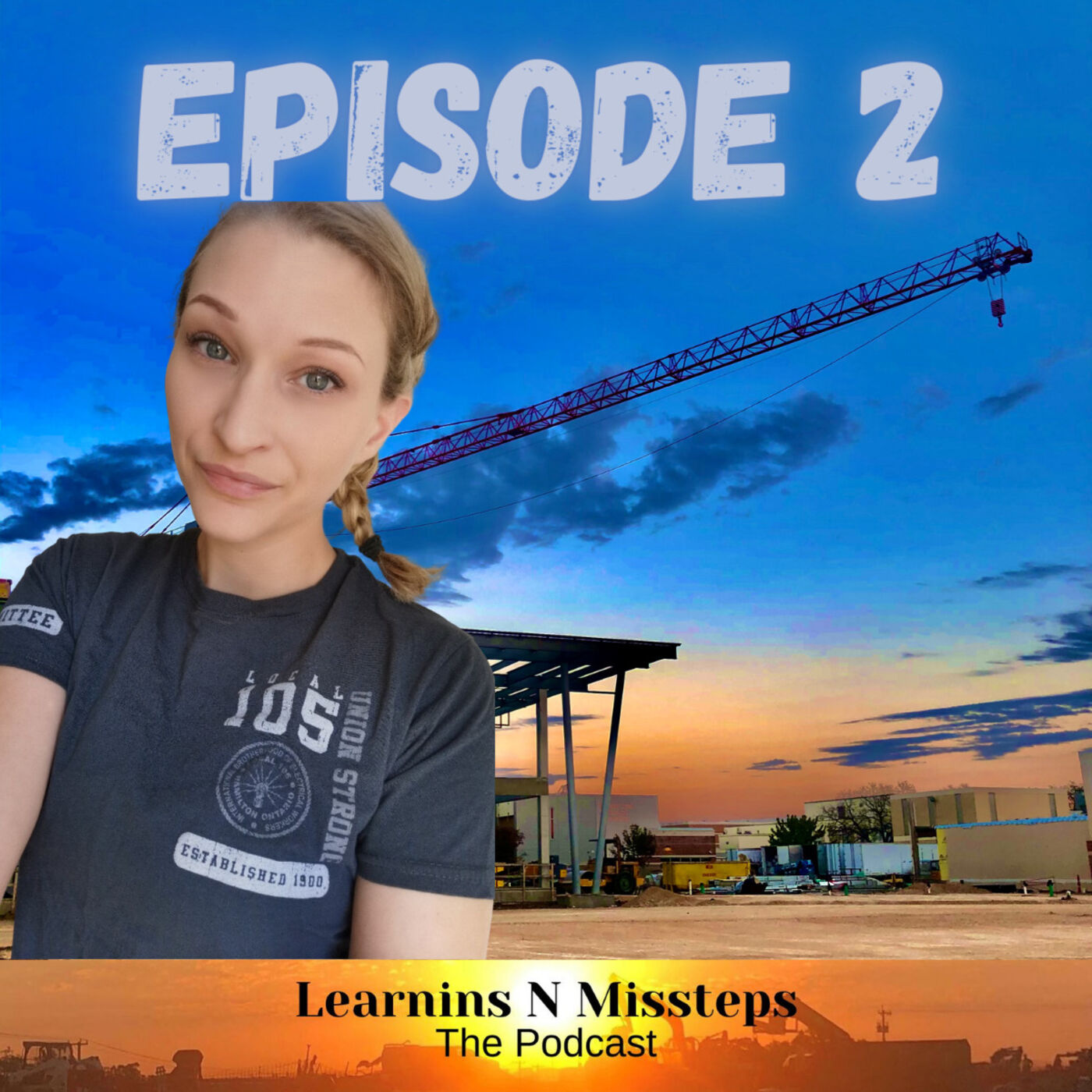
Episode 2: Shannon Tymosko Electrical Apprentice and Trades advocate

 Apple Podcasts

 Spotify

 Overcast

 Castro

 PocketCasts

 RSS Feed

 Amazon Music

 Audible

 iHeartRadio
Meet Shannon Tymosko as she describes the windy road that led her to choosing a Career in the Trades and working towards becoming a Journeyman Electrician. We also discuss:
- Being Human
- Construction Culture
- Unspoken realities behind Career choice
Contribute to the mission at:
https://www.patreon.com/learninsnmissteps
Contact us at:
https://www.linkedin.com/in/learnins-n-missteps-6525b41b7/
https://www.facebook.com/learninsn.missteps.1/
https://www.instagram.com/learninsnmissteps/?hl=en
#electricians #tradeswomen #workforcedevelopment #careers #learninsnmissteps
Welcome to the Learnins and Missteps Podcast. Where you get an inside look of the lives of the men and women who have made careers working in the trade. This episode is of the wise and tenacious Miss Shannon Tomusco, who by the time this episode releases will be a second-year apprentice, electrical apprentice, up in Canada. She's gonna share about her her career path, which is a very interesting uh winding road, but it all seems to be coming together for her. She also so eloquently describes or makes a distinction about what dirty work really is. And and there's some serious talk around retaining apprentices, you know, busting the myth about people young people don't want to enter the trade. She's got a very interesting thought about that. And here we go. Are you okay with us just jumping into it?
SPEAKER_02Sure.
SPEAKER_01Okay. Shannon, I'm gonna attempt to pronounce your last name. And please don't slap me. Shannon Tomosco.
SPEAKER_00Very good. Tomosco, yep.
SPEAKER_01I guess my first question, Shannon, is is there anything top of mind that you want to talk about or ask me with regard to this interview?
SPEAKER_00I don't have anything off top of my mind. Um, I'm sure I may have questions that come up along the way, but um, I think our mindsets are on the same page about advocating for the trades and making you know a voice somewhere because I don't feel like there's enough um places to go and avenues to to you know go down to try to find information about the trades. So um people like yourself and hopefully me one day spread the word and and be able to make a difference. So I think that's what we're both here to kind of do.
SPEAKER_01Yes, ma'am. Okay, so with that, I'm suspicious. Maybe when you were in middle school, maybe high school, as far back as you can remember. What did you think you wanted to be when you grew up back then?
SPEAKER_00I I think that's changed over the years. And you know, if you ask my parents, they'll tell you the very first thing I I wanted to be when I was still a baby, was a baby doctor, you know, probably my little dolls, you know, walking around, but um wasn't something I think I was ever really serious about. I think, you know, at different times in our life we have different interests or, you know, just different toys. And that time in my life that, you know, made me feel that way. I didn't really have any draw towards anything as I got towards the end of high school when you're almost forced to make that decision. And you know, one of the things that saddens me is that you're you have to make one of those toughest decisions that you've ever made in your life about what you want to do for the rest of your life when you're not even really an adult yet. The very first adult decision you have to make is about, well, what do you want to do for the rest of your life? But your parents have been kind of not controlling, but they've been an influence for those all those years. So, how do you even know what you like, who you are, you know, without exploring a few years? And so at the end of high school, I was good at numbers and I'd taken all of the business courses that there were to be taken at um my high school at the time. And um, I had an aunt and uncle who are both uh uh chartered accountants here in Canada, and um, you know, well, good with numbers, accountants make good money. Well, what do I do? I go try to be an accountant. I applied for universities, didn't have the university marks to get into any university. I did get into a college here in Canada, did one year of college of accounting, and realized that maybe my personality wasn't it wasn't fun for me. I didn't enjoy it. And and you know, it was maybe the first time that I did something that I realized, you know, you don't enjoy this, it's still early on in life, try something new. Um, and at that time I had um uh Paulette, she's uh one of those strong women influences in my life, and she I worked in a school board with special needs kids, and I'd spent a few, you know, I tried it, I tried it, I enjoyed that experience. And so I thought, you know, maybe child and youth work is for me. And so after my one year of college, I switched to um child and youth work, uh, which is a three-year diploma, and finished that. And so I didn't really necessarily know what I wanted to do. I guess I I had things that were strengths, you know, and and people in my life. And I think that's that's often what happens is you don't really know all the career choices that are available at 18. And so you only have what you're exposed to. And so you have your parents, what did they do? You have your family members, what did they do? And um, and often, you know, you you rely on the school to to provide you more exposure about you know what you you could, and it doesn't, it doesn't necessarily happen. And um, so I I did follow almost a family, you know, I follow the people in my life, of course, and not necessarily what my my passions were. And I didn't even know what my passions were at the time because again, 18 years of age, you don't even you're still trying to figure out yourself, and you know, your adult brain hasn't even completely formed. It's it's a lot to decide so early on in life.
SPEAKER_01Absolutely. So, can you describe what it was like for you and the dynamics with your family when you decided to that accounting was not the path?
SPEAKER_00They were really supportive. I decided about halfway through the first year that it wasn't me. They but they encouraged me to finish the year. You know, my my family's always kind of been, you know, the they're really they're really encouraging and um but they're also rational and reasonable people, you know. Just because you don't want to do this doesn't mean you didn't commit to this for the year. And I think you should see it through because there's still lessons to be learned on that. And you know, and my mom used to say to me all the time, I'd when I was a kid, you'd come home and I disliked my teacher. I don't like so-and-so, right?
SPEAKER_02Yep, yep.
SPEAKER_00And one of the things that my mom would say to me is, Shannon, you're gonna have a boss that you don't like with you. You aren't going to have a boss. Bunches of them. You don't get to pick your boss. So this is, you know, this is you only have to deal with this teacher for a handful of months. You know, this is your turn to time to practice and and realize how to work with people you don't like. Um, and so they've always been that my mom's been very like kind of reasonable, rational kind of person. And so they were supportive of it. They wanted me to see at least the semester through, which I think is, you know, I already invest, why not? I think you know, I committed to it, why not challenge myself? Um, and then the next year I did transfer into child and youth work. I guess the one thing I didn't really realize when I transferred is at that point, accounting is is more of an avenue that you hope to make more money. I think people think accountant think they're gonna make lots of money. And one of the things I I didn't know then or I didn't really realize was gonna be such a challenge was I went to a college here in Canada. If you want to become a charter accountant, somebody who makes serious money, you need to be accepted to like UFT, University of Toronto, Schulex Business School for Accounting, and anybody else who kind of goes to college or you know, for those accounting courses, most likely, unless you decide to commit yourself to another, you know, four years of university and more, more, more, more school, are likely going to come away with just like an entry-level admin kind of job. You know, and so taking that accounting route going the college way, I didn't really realize how long of a route that would have been to make good money, even though accounting does sound like a good secure job. But and then child and youth work, again, that's a different avenue. And and I signed up, you know, as a bleeding heart to help people and didn't realize that my three-year diploma would then get me a minimum wage job. Um back to that whole you know, financial struggle as somebody who's going to school and and trying to better themselves, um, still ending up with that minimum wage job is quite frustrating.
SPEAKER_01That's not on the in the commercials, is it?
SPEAKER_00No. And the thing is, when when our parents were in school, it was something to have a high school diploma. And to go to university was something was even it was something to have. You know, not everybody had university degrees. In 2020, everybody is, you know, kind of sent down the path to the university, college, some sort of post-secondary, some sort of post-secondary decision, which means now everybody has it. If there's it's you know, if you want something, you know, to stand out amongst the rest, you now need to start doing those master degrees. Now you need to start doing post-like, you know, a decade worth of schooling, you know, just to stand out amongst the rest because everybody has one. Um, and so these aren't necessarily things that they talk about in in call in in high school, sorry. And would I even maybe even understood it at 18 years of age? Probably not, because you know, at 32 years of age, I have years of experience, you know, years of frustration with debt, years of just different things that life life, life has made me you know more aware of what kind of long-term decisions those things can be.
SPEAKER_01So we learn, right? We learn through trial and error, we we learn through mistakes, we test the water. I think that's that is not marketed enough, right? When we're talking to talking to kids and talking about career choices. It's pick one and and it's a direct path to you know financial freedom. Not exactly, right? Not exactly. Question I want to hear about Paulette. You mentioned she's uh she was a strong influence in your life and helped you.
SPEAKER_00She's probably she's been around in my life for a long time. She actually is um um an ex-boyfriend's stepmother of mine, and who's just you know, kind always kind of been there. You know, we might not be in communication all the time, but when I pick up the phone and we do chat, it's like yesterday that I just got off the phone with her. And so she was all she's always been really supportive of me. It you know, she is one of those people that did give me um that kind of passion for people. You know, she gave me the opportunity to realize that I, you know, working in the school board with her and just volunteering some of those times, it's it was rewarding to see, you know, the change that people can make, rewarding to see that different kind of stuff. And so it is, you know, because of Paulette that I did kind of start that avenue. Um, I didn't even, I don't you never know where your life is going to take you, but she most certainly was someone who started that, and I do, I'm very grateful for her.
SPEAKER_01And it's an important thing in my head. She would qualify as a mentor. It sounds like there's a much a very deep relationship between the two of you, which is phenomenal, and and it's something to to treasure, right? I'm sure you cherish it. But mentorship, you know how many folks don't even understand what to look for in a mentor or the mentors don't know how to mentor, right? It's a powerful, it's a powerful role to play in somebody's life and also a high value thing to go and acquire, find some mentors out there in the world. So besides Miss Paulette, what else attracted you to education? You would you say your uh what triggered your bleeding heart?
SPEAKER_00I think a lot of people in in that industry, not all, I'm I'm I'm not everybody, but a lot of people in the social service kind of industry normally have struggled with something themselves that makes them want to help others so that they don't experience the same. You know, so I was one of those kids. Um, my boyfriend Paul would say that, you know, I had a glow up. So when I was one of those little kids at school that, you know, it was a little chunky thing and picked on, and not necessarily I would go back and redo my childhood going through it myself and wanted to, you know, make change in others. And what I really realized about the child and youth work, the three to the three-year diploma is um, and I'm really grateful that I did it, although I'm not actively in the career uh or the field, sorry, child and youth work, the three-door three-year diploma was you know counseling for me for three years. What a nice way to learn about yourself, discover yourself, evaluate everybody in your life, including yourself, you know, and so I'm very grateful for those three years of schooling because it did, I think, kind of set me up on a on a you know, the path of wanting to help people and and wanting to better myself. I really think growth and change is really important. I don't want to ever be that person who's just kind of that grumpy old person who can't change anymore, they're stuck in their ways. You know, I I really think that everybody has value. And if you open your you know ears and listen, there's something to be learned from everybody. And so child and youth work really, you know, set me up kind of on this avenue to want to help others and and but probably I'm I'm very much, you know, everything happens for a reason kind of person, and it probably has taken me my entire life, you know, up to this point to really realize that because when you're in those struggles and those stresses, you don't necessarily see see what the potential can be. It might not be until years later. And so when it comes to my future ambitions of wanting to be an ambassador for um young people or you know, even myself, I'm not necessarily young, but ambassador for people just who want to maybe try something new in the trades, that child and youth work really gave me the foundation and the and the base to do that. And so, like everything happens for a reason. Did I take that? Did you know that combined with my trades really has set me up to be what I hope to be a really well-rounded ambassador and um advocate for people? And so I'm very grateful for that time in my life, even though probably at that time when I, you know, I probably there was times when I felt not the same. I felt maybe a little regret, you know.
SPEAKER_01Sure. So it sounds like you didn't stay in that in that area of work, but you learned a lot that you can that you're carrying forward and taking with you.
SPEAKER_00And after, you know, the schooling, I did I did work in the field a little bit. I proceeded to work, uh, one of my my placements through college was at a a youth shelter, youth without shelter here in Etobicoke. Um, you know, any they were 16 to 24 years of age. They could have been there because of any kind of walks of life. Sometimes they're refugees, sometimes they've struggled from maybe some, you know, family issues, whatever that might be. We all have family. Oh, yeah, yeah. Uh whatever might have brought them there. And so, you know, coming from a small town in K in Canada called Keswick, which wasn't very Keswick. Keswick. It's a little town just north of uh the Toronto, but it wasn't very diverse, still probably not very diverse. And when I say diverse, I mean culture. You know, we're all Canadian, but we all have different culture, and so Keswick was pretty Canadian, you know. So when I went and worked at the shelter, I had I got exposed to all these different cultures, religions, beliefs, traditions. And I love I love culture. I think I think it's just so interesting people and how we kind of how we came to be who we are today. And so I'm really grateful for my experience at the shelter. Um, it really, you know, you can't help but grow up quickly, especially when sometimes these youth were sometimes older than me at the time. Um makes you really grateful in life when you hear some of these stories, and you're like, well, my life just ain't that bad now, is it? Right? Like just be not very nice, but life just ain't that bad, you know. So you you know, it gives makes you very grateful and humble. And so I'm very grateful for all those early-on experiences, although that's not what I'm doing today. Again, everything happens for a reason. Without that, I wouldn't, I wouldn't be as passionate as I am today about wanting change and growth for people. And um, and so I'm grateful for that. And during that time, because it wasn't a very lucrative career choice, you know, it was a you know, a job that you pick because because you want to, but unfortunately, uh continuing that path, I would have ended up living with at the shelter with them, you know, as a single person here in the GTA, it's it's costly to live by yourself and hard to do so on minimum wage. So during my entire time working at the shelter, um, and during the schooling portion of it, I was working at payday loans, which I don't know if you have them in the states, but I was working at a place called Cash Money. Um, and so it it supported me for a decade, the payday loan industry, because it was one of those jobs that I always maintained while I was, you know, doing my child and youth work kind of stuff. And it gave me again, everything happens for a reason. Working at payday loans, it's you see again so many different walks of life, and you see so many different people struggling for different reasons for financial reasons. You know, it teaches you a few things about what you want to do and don't want to do financially. Um, and so at my my time through at payday loans, I started as just you know a CSR. Um, it was just a job, and and then I progressed to um assistant, I transferred to a different company called Pay Today, um, and they promoted they hired me as assistant manager, and I progressed to branch manager and then to a head office position at as a training coordinator and auditor, but it still didn't pay enough for me to survive. Here I'm you know doing all this advancement after a decade of work, and I'm just trying to fight for those 50 cent raises, the three percent raises. And so after a decade and only making $40,000 a year, you know, I'm I was going into debt slowly. And so that's where I like to say I was starting to look for a job that I could thrive off of, not just survive. I wanted to have wants in life, and so um my my best friend Matt, he purchased a home and uh he said the very next day, it happened to have two kitchens, so it wasn't such a drastic decision, but he wanted to rip out one of the kitchens, and I was like, You're crazy! Like, you just bought it yesterday, you just got these. Um, and sure enough, nope, we're doing it. So we we ripped out all the cabinets and uh we started you know doing renovations in the kitchen. Uh we worked on the basement and I did a little bit of framing and electrical and drywalling and mudding and all a little bit of a variety enough to realize that I enjoyed this, you know, and I got a sense of pride and accomplishment when I like did something that I didn't realize that you know I didn't think I could do, you know, and my friend Matt, he's not a tradesperson, you know, and so all of this was trial and error, and you can definitely see, you know, you can see our progression through the house. We got better. Um definitely inspired me to to look for something else and and not be stuck in this kind of job that I didn't like at pay to payday loans, you know, where I was just fighting for that 3% raise. And that $40,000, that's not a lot, you know what I mean? It's it's really not. And so I I found a pre-apprentipogram here in in Hamilton, uh, through the YWCA Hamilton, and uh I actually did two pre-apprenticeship programs. The first one was a general machinist program. I didn't know what a machinist was at all before I started it, and very much enjoyed it. I liked the job. I would have continued doing it should there have been you know success through employment, you know. Right. So I I got the job, I had a co-op, sorry, after the pre-apprentip program. I didn't get hired not due to my own merits, but because of uh they just didn't have resources for me at the time to take on another new hire. And so they um had to let me go and I I started a job search at that time, and after months and months of no success from job searching for a machinist job, the electrical pre-apprentip program was released. It was a new program, and I begged and pleaded to be able to participate, and then they allowed me to. So I completed the program. I reached out to the IBEW here in Hamilton, uh local 105. They were so grateful to take me on as a new apprentice. And so now I'm I as of next week, I only have like 12 more hours to go until I'm a second-year apprentice. Woohoo! Very exciting because it does include a raise. Yeah. So I will be very shortly a second-year apprentice next week. I'm just um working on a hotel in Hamilton. Um got a great crew, it's a small crew that I'm working on, but um a great foreman Shane and uh great journeyman Todd and a couple apprentices, Tyler and Aaron, and they are so amazing. They always include me in the process and um the learning part of it, you know. I think there's there's some people that don't want to deal with new people, and maybe don't even want to deal with a girl, never treated me that way. Um, and so I'm really grateful for my little team and and all the different people that have helped me along the way. And that's brought me to where I am today. Again, everything happens for reason. And without my experience with child and youth work, my business, you know, kind of payday loan experience and my trades has brought me to um where I am today. And and I can't help but think I needed every part of that to be successful in what I my future goals, you know.
SPEAKER_01Yes, that's a that's a great point, right? Because it's easy for us to get this mindset. Well, I failed and I just wasted all my time. Um But the reality is all of our experiences add up to help us become what we're intended to be.
SPEAKER_00Right.
SPEAKER_01If we can embrace that, right? Learn the lesson, reflect upon it, apply it, and keep moving forward. Yeah. So I want to go back to your pre-apprenticeships. It sounds like you were super tenacious, like you were gonna get it no matter what. Where does that come from?
SPEAKER_00You know, um, someone said uh a common phrase is the best kind of revenge is success. And as much as I'm a very positive person, I obviously have my own struggles in life. I can't say that they were again worked at the shelter, they weren't tough. They in the grand scheme of things, you know, they were little, little landmines, but enough to give me a motivation to want to be successful. And be successful for me means like make a difference and help people and and be proud of myself for, you know, like here in in Canada, you know, I've I've had the opportunity last few months to, you know, meet different people like the Minister of Labor and Doug Ford. And I I'm really grateful for those opportunities, and and it makes me feel special that somehow my voice is yes, my like it means something. Um, and so that's that's you know, that's what gives me my kind of drive and motivation is is just to be successful uh for myself.
SPEAKER_01Yeah, but it sounds like not just for yourself, your definition of success sounds like contribution and helping and influencing. It's not just acquiring shiny things, right? You're can you're you're giving back, and that that just kind of pays itself back, right? It's it's a perpetual thing from my perspective, anyway, or my experience.
SPEAKER_00Be grateful, you know, and things will come to you. And so I've been saying things come to me easily and freely, and I can't help but notice that I've gotten those pre-apprentip programs that come with you know free tools to help you be successful, free education to help you be successful. Um, so I tried to live in as much a positive kind of light as I can.
SPEAKER_01Yeah, yeah. So, what was apprenticeship like? I I went through a uh four-year apprenticeship here in in San Antonio, Texas. Um, I'm a plumber by trade, so I'm wondering how how similar the apprenticeship programs are. So, what what can you describe the electrical apprenticeship, your first year?
SPEAKER_00What I did was a pre-apprentip program. So that's completely separate. So I'll talk about the actual process if the traditional process, because I'm a little different, I suppose. The traditional process is you find an employer here in Canada that wants to uh sponsor you as an electrical apprentice, and the best way to do that, I really think, is you know, just getting in with them with the company, even if it's just a general labor kind of position. Let them see your eagerness and your drive. And you know, they're always looking for new candidates, and if they like to hire within. So, you know, sometimes just taking that entry-level job is what needs to happen, but finding a company that wants to sponsor you from there, you start your apprenticeships. Um, for electrical, every trade here in Canada is slightly different. For my electrical 309A, I need 9,000 hours of work on the tool. So with an employer being paid, doing all that kind of stuff, 9,000 hours normally, if you're consistently working, works out to about five years of work. Um as an electrical kind of summer, less hours. We need 9,000. And then throughout those five years, what will happen is you'll get letters from the ministry here in Ontario and they will request for your attendance at school. So there's three levels of schooling that you need to take to become an electrical 309 maintenance and construction or journeyman here in Canada. Um, there's basic, intermediate, and advance, and upon the three levels of completion, along with your 9,000 hours of work, test, little test, your certificate of qualification, and then you'll be a licensed journeyman here here in Canada. Um, some of them are red seal trades, allows you to go all throughout uh Canada to work. Um, but that's how the traditional electrical apprenticeship works. Okay. What I did was a pre-apprentip program. I really dislike the word pre-apprenticeship. Yeah. Um what I'm realizing is like it's a very fluffy word to describe many different things. So one of my colleagues at work did a pre-apprentip, and it was simply the year he spent um on the job before he got signed as an electrical apprentice. Uh that's that's just okay, so that was before your apprenticeship, pre-apprenticeship. Right. Some people took like some fluffy entry courses where it's, you know, they do one week of carpentry, one week electrical, one of plumbing, they call it a pre-apprentip. So you get a flavoring, a taste to see what you might like. They call it pre-apprentip. What mine was was those three levels of schooling that you're required to take throughout your 9,000 hours. Mine was the first level, basic level one. You call it a pre-apprenti, and the contractors don't take you seriously. They're like, oh, you're pre-apprentip. It's my basic level. Oh, they get trust me, they've had a lot of you know, kickback on these programs. And so it's it's my basic level one, along with a placement opportunity, so that you actually get some hands-on experience here on the on the tools, and then your resume, you know, you have the schooling and some work experience to go along with that, so that you, you know, when you do have to apply, or you know, in the future, your resume is more, you know, more the more you have both experience with schooling and hands-on. And so um that's what the pre-apprenticeship program was. Um, I know um the Minister of Labor here just recently uh a couple days ago released a lot of funding, I'm not really sure, millions of dollars funding for the skilled trades to to help fund these different kinds of programs to help people get into the trades. Um, and so hopefully there'll be more programs like mine that I um that I completed, but hopefully a better understanding of what those programs are too.
SPEAKER_01And when you took these classes, was it during the day? Was it in the evening?
SPEAKER_00It was a full-time program, so it did take it was committed, like you had to commit a lot of our other, it was a female program, so it was catered towards women and a lot of our women, you know, different ages, different walks of life. Some were mothers, um, some like myself were not, uh, some were old, some were young, every different walk of life. And so we all have different challenges. Obviously, for those with children, that's a different, you know, daycare and all that kind of stuff just makes it so much harder. Um, trying to support yourself because it wasn't a paid program. Although they did provide all the equipment and schooling and stuff like that. You still had to provide your housing and your transportation expenses. So it there was obviously different struggles for for all of us, but the pre-apprenticeship program um was a like Monday to Friday, nine to five. You're in school at Mohawk College here um in Hamilton, and you're doing both um, you know, you're doing code classes, prints classes, electronics, um, some hands-on for, you know, we actually would go to the shop, so we would actually practice putting in um different circuits, might be a three-way or a four-way, or we did um a range and uh dryer receptacle, baseboard heating. So we practice all these different skills as well. Again, you want it to make us tangible, you know, and and attractive to employers.
SPEAKER_01Yeah, that sounds like some hell. If back when I was hiring plumber apprentices, I would have jumped all over it. Like, you got that you're teaching them that bring them over here, send them to there's a small volume of people coming into the trade. I heard on on one of your podcasts with Josh. Yeah, um, y'all were discussing that, how there's not a lot of people going on, uh coming into the trades. I know here in the States for sure, right? I get to travel the country a little bit in the work that I do now. And and everywhere I go, every job, it's like we'll we'll sell a job. Yay, we got this project. Then it's like, oh how are we gonna do it? Now we need people to do it, you know.
SPEAKER_00I find um one of the biggest struggles here for me, because I was somebody looking for a job, was contractors just don't want to take on those really new, new, new hires. And I totally understand the contract as with my business, you know, previous business experience. I totally understand not wanting to take on new hires and the expense and all the headaches that necessarily come with us, you know. But in order for your future of, you know, to be successful, you need to start, you know, training in these new people and stop putting out applications for third, fourth, fifth, you know, uh premises. And maybe you might have some interest. Stop telling me there's nobody available for jobs because I know based on my LinkedIn, people are always asking me, how do I get a job? How do I get a job? And so my real question is statistics. I don't remember where I saw the charts and the stuff, but I remember looking at statistics that talked about how many people registered and then how many actually completed their full five years to become journeymen. And the dropout rate is is significant. So why isn't anybody taking a look at the retention? You know, we're only talking about how do we get them. But once you get them, how do you keep them?
unknownYes.
SPEAKER_00Because if you're gonna offer them a minimum wage job as a first-year employee, you're not paid great. You know, nowadays minimum wage in Canada is really creeping up to you know the starting rate of an electrical apprentice. If you're not gonna pay them great, and then you're gonna treat them like crap because culture on construction site is still old, old school mentality a lot of the time. And you're gonna yell at them, and then you're gonna ask them to go and put their life and safety risks, you're gonna treat them like shit. They're gonna walk away and go work at Tim Hortons where they'll get the same pay, and all they have to do is put on a smile. Here's your cost for the day, you know, and so we need to start taking a look at the retention of employees, the leadership amongst our construction site. You know, uh I I have different experiences on my construction site with different foreman. One's really supportive. Shane's amazing. I don't necessarily have that support from other people on the on my on my site. There's been a couple times where they won't transfer me somewhere because the boy over there who's a leader can't play with girls. Is that my problem or their problem?
SPEAKER_01Right, right, exactly right.
SPEAKER_00If he can't play nice with everybody in the sandbox, so there's a real big culture change that needs to take place. Um, and we need to take a look at the retention of employees. Why aren't we keeping them, you know, not just how do we get them interested? Because that's the same mentality that the colleges are taking. How do we get them to sign up? But how many actually drop out of college after? So, you know, who cares if we can get them interested? Because if we, you know, especially with millennials, um, you know, I'm just on the cusp of a millennial, but the younger generation, you know, we it's they're different, we're all different breeds throughout generations. And you know, I've been raised in a little bit more of an environment of you know sensitivity, and you know, you can't talk to people like that, especially with me in business. That that's that's your young people, they're not gonna take being yelled at, they'll just go home, they'll say, Mommy, this is how I'm being treated, and they'll be like, Oh, honey, you can't do that, and they'll go find a new job, right? So you have to look at your clientele and and take a look at the retention as well, because it's not just a lack of interest.
SPEAKER_01Absolutely. You use the word sensitivity, and and don't get me wrong, I'm not judging because there's a lot of people that may hear this podcast and know, like Jesse, that's not the way you used to behave, because I was one of those jerks, right? Where it was like people would call in and say, Hey, I'm sorry, I'm running late. And I'm like, Don't be sorry, be on time and hang up, right? So it wasn't so it wasn't, it's not, I think we in we and I'm saying that generally in our industry, we'll call it sensitivity, but it's really respect and understanding, right?
SPEAKER_00Like it it's a respect, like when does it not be okay to be human? Exactly, exactly becoming human become a problem, and so everybody's late once in a while, everybody has doctor's appointments, everybody has and so uh you know, a sensitivity wouldn't be used necessarily in the business world, right? You know, it would be um understanding or mental health days, like everybody has bad days, yes, you know, and and so it it is it's a respect and understanding that just you're human, and today you're having a human day, and I love that. It's true, and and you know, I think a lot of people these days, and again, you you you always have to be careful about what you say, you know, but what you because it's around forever, you know. But I find a lot of people these days, you know, are very sensitive to different things, you know. Journeyman's one of those things. I'm gonna work very hard for the next five years to play with the boys. If you call me a journeywoman at the end of it, I'm gonna be very upset because I'm one of them, I'm not anything different. And to me, if you take a look at the three words that describe women, female, woman, and human, all of those words have the word man or male in them. Why am I choosing not to identify with journeyman when man is in my own word? You know, it's it's I'm humankind, right? And so to me, journeyman is a status, it's not a gender. You know, it's it's my choice, but I don't need to and I don't need to put that on other people. And so, you know, it today's a very different today. You have to be very careful what you say, and I totally understand you need to be coming from a previous background in psychology, and you totally have to be respectful as best as you can. But at the end of the day, why are we forgetting that we are human at the core? And so take accountability, but don't crucify people for their actions, you know. Remind them that there needs to be either areas for growth and and you know, areas for improvement, but it's not something to destroy someone's life over, you know, because we are human beings, we are made to make make mistakes. That's how we grow and learn, you know. So when did failure become an issue? Failing's not an issue, it's an area of opportunity for you to learn and grow.
SPEAKER_01Yes, yes. Now, do you are you aware of any, you know, for the for the foreman and superintendents that you've been able to interact with, are you aware of any leadership development that they have access to?
SPEAKER_00No, I'm not. And um, and I just again I think it's about the culture. You know, you have these companies like Google and these big companies that are about developing and supporting their staff and growth, and and I think it's very different when it comes to construction. And I feel for contractors, this is where I do feel for contractors that why would you invest money in somebody when you know that that job is going to be done in two months and they're gonna go work for your competitor? So, because of the nature of our business and because there's always these short-term little contracts, there's often not that drive to encourage people to invest in growth.
SPEAKER_01Yeah, that's a good point. I mean, it's a reality, right?
SPEAKER_00It's the reality, and like, you know, I would I don't know how to change that. You know, how do you encourage how do you you have to encourage, you know, everybody to be play nice in the sandbox again? Like, I'm training this person, eventually they will come back to me, but in the meantime, I have to respect and understand that they might go somewhere else because I don't have work for them, you know, but it's gonna pay me for it in the future because they're gonna do the same. There needs to be that mentality and that culture change. Um, and I don't know how to do that.
SPEAKER_01It's I will say to to help, because you you obviously are vigilant about the environment that you expect, and and that is commendable. So you're I mean it's motivating for me to hear to hear, listen to you. Um but I've worked two companies now in construction. One was a mechanical contractor, and now I work for a general contractor. Both companies invest heavily in developing their people, and and the the what I guess the the buzzword is soft skills, right? Um the those power skills, especially where I came from. I was there for 17 years. And boy, did they did we have all kinds of training on servant leadership and crucial conversations, essential conversations, uh conflict mitigation, you know, all of that.
SPEAKER_00Yeah. My previous employer pay to day was like that, and that's why, you know, to me, I'm still adjusting. It's taking me some time to really to really there's a bit of a shock and awe with the the difference, you know, it's a different spectrum, different, just such difference. Um, because it used to be so much um, you know, so much was pressure was put on them the growth and development of their people. And and so it's definitely taken some time to adjust. And yeah, it's not it's not an it's not an easy avenue. And and again, I I go back to the the contractors and and it might be different. My I only have a year of experience, and so I'm my experience is very uh biased based on what I know. And I'm a unionized worker, so they typically, you know, they go to a job, job ends, move on to the next job. Would it be different with a smaller contractor who is hiring and wanting to groom and and train and and develop their their staff to be journeymen? I would hope so. Um, but because of the work that I do, that's not you know, that it's it's unfortunate contractors, you come to an end and you go to the next site. Um, so I I it's hard to really say if it's across the board here, right? Um, but it's definitely been it's not something that's I don't see much development and um for leadership and growth and right. Yeah. And that's something that really comes from the top. Oh, yes, absolutely. It's not like, you know, I sit here and it's like, well, their boss, well, if if their boss is their boss, it keeps going. If the top person is encouraging growth, growth and development and and trickling it downwards, then how does that person know? Um, again, it's just probably something that's never taken place in some companies, so why would they change anything? It's hard to assume any company is or anything is one way or the other, you know?
SPEAKER_01Oh, yeah, yeah, it's difficult. But you it's out there, right? It's just finding the right place and and and not just finding the right place, but doing exactly what you're doing. Toughen it out, right? Yeah. Do the sometimes you just gotta put your head down and do the damn work.
SPEAKER_00Right.
SPEAKER_01And better days are coming, right?
SPEAKER_00As much as I have the experience and I do demand a certain level of or I expect a certain, I don't demand it. I expect a certain level from the people around me. Um, and I'll in in turn I I expect from myself to give that mutual respect. I I don't demand it because I think it's really important to know your audience. I'm I'm out to be successful in the trades, and you need to know who who you're talking to, you need to know, you know, kind of their character characteristics, how are they received by them, you know, and some people I know just can't change. Sure. That's when I need to realize that I need to learn how to cope with this myself because maybe putting it out there could jeopardize maybe my future, you know, in the traits and whatnot. I do understand that I'm still in you know one female in a group of men, and I'm still very aware of that. Um, so you have to be respectful of of the environment and the people in it. So knowing your audience is is key.
SPEAKER_01Absolutely, absolutely. You know, hearing your story, I just envision like a like a snowplow that just keeps going no matter what. And and in a positive sense, you just keep pushing through it and contributing along the way. And so you mentioned LinkedIn earlier, and and it's kind of how I it's how I found you. I saw a post, something you posted about kick-ass careers, and I'm like, the language caught my attention, like, oh, that's interesting. And I was like, whoa, this is about trades, and this young woman is on fire. Like, this is really interesting. So, so what's up with kick-ass careers?
SPEAKER_00We talked briefly about you know, women in my life that have been uh motivating and impactful and um changed my life. And along the pre-apprentip program through the YWCA, I met this amazing woman, Jamie McMillan. Uh, she is the founder of uh Kick Ass Careers and um tradeswoman herself, uh ironworker and boilermaker, I think started in 2002. So she's been, you know, she's been uh doing it for a a long time. Um and she's got those real life experiences. And so she came to speak to our our class of women. Um it provided me that motivation that you you know you kind of needed just to keep going because yeah, you know, you hear there's women in the trades, but you don't always see them. Yes. So it was nice to see one um and um and so i i met jamie through the program from there our relationship you know is just developed and again and there's not many of us but the few of us that are in the trades are quite connected and there's lots of different um organizations and groups that you know support women and all across North America and um kick ass careers isn't necessarily you know there's a lot of women in our organization but there are men as well excuse me we're not just uh you know for women organization we're we're most certainly just about advocating for any trade and and the skilled trades and um for youth and oh young and old doesn't matter um just trying to get the word out there um and so you know I I marked me and Jamie's path crossed again or paths crossed again and um since then since about the beginning of the year you know I've really you know been working with kick-ass careers to try to just kind of be more of a voice and more of an advocate and you know COVID's given me a little bit of free time here here and there to do those things um and so you know just to to be a voice and an advocate and and let them know again that you know there are people out there there are other options um and so Jamie spent a lot of her time here in Ontario visiting the high schools um now she's doing virtual meetings um virtual presentations so that um you know she just shares her story with the youth and lets them know you know why she picked the trades and you know we all all of us ambassadors at Kick Ass Careers have different you know stories and different reasons to why we joined the the trades and for me it was some you know I wanted a job that I enjoyed I was you know only 30 years of age and um I realized I had more years in front of me of work than I put behind me and I thought it's never it's not too late and um I I switched for Jamie she you know school the typical avenue of trades and stuff or sorry of university and college just wasn't for her and so you know that was her her journey and her avenue and um we all have different kind of reasons as to why we picked it and so we just try to share that with youth and let them know there are alternatives than just your typical university college path. It pays to go to school here in Canada. Often your employer pays for your education portion at the colleges and while you're in this the school portion which is only normally you know a 10 week period eight week period you're receiving funding from the government when you do a skilled trade typically your employer will pay for your education portion of it and then you know while you're in school full time you're not working the government comes in and you can get unemployment insurance um to you get paid to go to school to become a trade person here in Canada compared to going the other with college and university. And so um it it definitely um like I say it pays to go to school and um that's you know what we're just trying to do is is let young people know there are other options.
SPEAKER_01Oh my God that's beautiful work. I'm jealous that you get to do that. That's a dream that's amazing.
SPEAKER_00Working on kind of it's new to a lot of us ambassadors because we're where a lot of us are new to the trades. A lot of us were inspired by Jamie um you know originally what got us kind of going in the trades was her and and her talking and so now we just you know we want to do that for others. We want to be that inspiration and you know wisdom if they don't like they maybe they have questions or they just don't know how to do things. We want to do that for others. So so what would be an amazing outcome of your service to kick ass careers I feel like my life has really come full circle again with the whole child and youth work it gives me the passion to the drive to do the ambassador thing the business set side of uh with the with the paid pay loans aspect a lot of tradespeople have only spent the years doing trades like Jamie and so I have now some business experience that I can hopefully help kind of expand and and develop kick ass career into a little bit more uh you know yeah national wide and and do that kind of back back work kind of stuff I I'm really glad that it's kind of really come full circle for me because a lot of our a couple of our ambassadors are are young and bad are young and you know by age and I I say to them all the time it it doesn't when I talk about maturity I think maturity and experience are two different things. Yes I think you can be young and mature I can think you can be very young and mature and I think you can even be very young and have gone through more experiences than I have. And if you have I feel for you because that you that should not be what your child is about is is what developing growing so maturity and experience are two different things. And so for the young young people out there that are just starting anew and they're you know only 20 years of age you know that extra decade of just experiences that I have have provided for learning opportunities. And trust me I think some of these girls and boys are more mature than me. I can be very immature at times but I just would love to share my experiences with you. And it's almost like a parent like a parent doesn't want you to go down the same path that they did. And so I'm sitting here saying okay let me tell you my experiences you make the decision but let me tell you when I tried that and how it worked might work for you but let me just tell you some of the this kind of little you know struggles that I had away along the way so I can help mold you and you know just help you you know so I'm really glad to just kind of be that person who's got just an array of an experience again to make me this kind of full package thing to help mentor my ambassadors as well as other young people and um and be a little bit of business backbone. And and so Jamie keeps telling me that I'm like kick ass careers bit like manager, but I like I'm still struggling to take on that that term because I just haven't had the time to really do anything yet. But um I would love to kind of be able to really make this you know a great enterprise and be able to to share our stories and encourage thousands and how any however any we can yes well I look forward to seeing that happen.
SPEAKER_01So we talked you're 12 hours away from being a second year apprentice.
SPEAKER_00Very excited oh you should be congratulations for that what are some of the fun cool things about the work that you've been doing with the traits I really do love the learning part of the traits for me I'm I've always really loved puzzles I've really loved sewing I've loved taking something and making something seeing the end product and so you know when you when you can see the work in front of you it really gives you a sense of pride and um success and and so those kind of feelings are are you can't really compare. When it comes to cool things like I don't know I just love I'm starting to love I see new tools on the site and I just want to try them and you know like my my journeyman and foreman will say like well we're glad you're excited about this and I'm like I've never seen it before they're like they're like okay like I'm I still have exactly I'm like but it's just so new. So every day it is different like you know sometimes it can be repetitive I'm not gonna lie sometimes you get stuck doing the same job you know I'm working in a hotel right now well there's 25 suites of floor and there's how many levels right so we're gonna have some repetitive tasks but I go back to something about confidence and confidence is built by competence. So you can understand by the time I'm done all those suites I'm gonna feel really confident about you know what I'm doing and and that in itself uh you know is amazing uh to go home every day feeling like that so um I guess it's just like the growth that I've seen in myself and it's amazing to to feel proud every day going home you know oh yes I I miss that's one thing I definitely miss is at the end of the day being able to look at what I did.
SPEAKER_01Yeah I can't do that anymore I it's all invisible now um there there was just there's something special about that that I I definitely miss it.
SPEAKER_00And it's not that it's in invisible I think like it's just not as tangible. That's the thing it's like there's something about it when you can touch it. Yep you know I mean you still get you know when you reach young people and once in a while you get those messages that just confirm that you're you know on the right path and it's words of encouragement. Those are your tangible moments now you know they're just they're just less. And so every day you know trades provide you that opportunity for learning which just is always stretching your brain like what's school about just making sure you're you're still learning and still doing I really am very grateful for kind of how my life's unfold and and the trades and what they it's given me personally as a person.
SPEAKER_01Yes well and you'll be you've been very responsible with all of your gifts and all of the lessons that you've learned because you keep you keep kind of collecting them and applying them forward. That's right that's amazing. It's impressive what about what about the physicality of the the work you know being exposed to the elements um carrying stuff getting dirty how what's that like well first thing I'll cover is dirty because I feel I feel like everybody thinks the trades is a dirty job and I'm like okay sure but I've never had to wipe up on that work so shout out to all you nurses out there who are having to do that to me is dirty work.
SPEAKER_00Sure right right that as a child and youth worker we had intentional poopers in the bathroom someone pick up that poop so when you talk about dirty I think it's just a definition my my job is like a gardener the amount of dirt I'm gonna get on me is construction dirt. You know so sure I definitely get dirty um I definitely need to go home and have a shower get different you know maybe chemical things off of me but I would not say it's any more dirty than other people's jobs.
SPEAKER_02Right?
SPEAKER_00But the physical aspect you know there's two kind of parts here there's like the I'm the girl part and there's sometimes that things that I maybe I look at and I'm I'm intimidated at it first and I have to think a little harder on how I'm gonna get it done. You know sometimes there's the men on site that just give you a task just to see you struggle with it.
SPEAKER_01You know that's still there.
SPEAKER_00You know and so that's a little frustrating but when I do accomplish something the amount of success that I do feel for myself because again you at the beginning I thought I can do this. You know and there's always a way to get it done. It just sometimes might take me a little longer and and so that that pride that I get when I finish it you know I've talked about it before I talk about the the going to work every day and doing physical activity. I'm getting paid to go to the gym every day. I'm not paying uh a gym to you know go run on a treadmill I do not need to do that anymore because we have enough stairs for that yeah there's there's definitely different you know physical things that I struggle with but I'm I'm busy I'm building physical strength and and that's a different you know again sense of pride and you know realizing that I could do a push up oh wow is that for me lifting all those drills at work I don't know but it's it's a nice feeling right so oh that's so good I you know you put dirty work in perspective like I've never had it put before uh very well said my goodness even teachers is when I was a child and youth worker and I was I worked with a school board for a period of time they're changing bums you know and and bless their hearts because they're off like it's they're they're they're not their own children you know they're they're they're extending themselves to other people um you know and those people are are being vulnerable with them it's so it's we don't have to deal with that on the trades you know and and very grateful for those people because truthfully one day we'll be there yep you know one day I'm gonna be at the hospital and I'm gonna be in a very vulnerable position and those nurses are amazing for just dealing with that every single day. And there's tons of other dirty jobs out there. That's just the one that I normally go to you know it's a good one. It's it's very in your face. It's very true you know so and maybe hopefully makes you a little bit more grateful for your job you know like your job most people's jobs are are pretty nice you know and there's always something at your job that you're not gonna like that's for sure you know and so you definitely have to weigh uh the pros and cons.
SPEAKER_01Yes yes yes the the the realities of it right so you've had lessons it seems like you you capture them pretty quickly maybe usually probably in ret retrospect but given your you're you're on the cusp of completing your first year of apprenticeship what are some some big lessons that you that you're gonna take away and apply forward lessons um I don't know if I've had any huge lessons I guess um when I I think about myself I still question every day whether or not this I can do this and I've said it before it's not about my capabilities but can I deal with the environment can I deal with the people you know because it's not always easy.
SPEAKER_00I question every day and so I guess the biggest lesson is that like a year's past and so I have I reflect on you know a year ago Shannon who thought can I do this and now a year's past I just remember I can do this and even when I question myself I have to remind myself of all of my last few years of experiences that have gotten me to where I am today and persistence and dedication has has has has gotten me here and and a lot of times you get turned down in life a lot of times people say no and that can be really discouraging um and there's probably times in the last two years that I I probably felt like like so discouraged but I I just kept going and so I sit here almost a second year and very grateful um that I continued doing this. And in a year or two from now I'll sit back and reflect on this moment and think man I I just didn't think I'd become a fourth year or whatever it might be and and um anybody can do it if you put your mind to to something you know oh yeah yeah definitely okay so what about the future Shannon?
SPEAKER_01How are you gonna change the world?
SPEAKER_00Change the world I don't know if I hope to change the world but just to be you know the biggest impact I can the people that I come across with kick-ass careers it just got it really does give me the platform and the brand you know to get an audience and so I I just hope that my experience is kind of like the whole parent thing again I can share them enough with people that's that some people will learn and from my lessons and some won't need my like some will just they've already learned that lesson but whatever it might be I'm hoping that my experiences can help others. If I could encourage construction culture to change more towards a growth and development and and a more friendly environment to our our new hires that would be ideal I don't know how I could do that but I would love to see more journey foreman like my my current foreman who is so dedicated to his staff even though he doesn't have to be and you know I can't help but think like we talk about burnouts and stuff stuff like that. And so for these people who have been foremans for years and years and years and years and maybe they were as passionate as I was when they first started I can't I I again I'm so realistic that I think about everything and chances are probably they've already thought what I'm I'm so new you know I mean I they've already thought about it tried it and and you know found that it didn't work you know and and hopefully my persistence and my you know drive can help me persist through those moments you know I mean because I'm sure I'm going to face moments of and they say it's me all the time I try to like well can't you just rationalize with him and and explain to him how it's more cost effective and blah blah blah blah blah and he's like nope like but but it like look at how much it makes sense nope nope it's it's it's oh they've been doing it for years and it's it's like what like don't you want to save money nope what like doesn't everybody want money I don't understand right um I don't know I don't know how to make that change but I would love to try to encourage that kind of change just a more more open and understanding culture we talked about the human touch I'd love to be more human on a construction site simple but difficult right a long way to go for sure okay last question are you ready yes what advice would you give the 15 year old Shannon 15 year old Shannon tried a shop class and um I was in a new high school it'd only been open for a handful of years and so they didn't have the funding and stuff like that to really have a well rounded um tech kind of department I would I would probably say a few things I would say go Google the job that you're interested in pursuing and see what jobs are available. How realistic is that education going to be to that job because there's a lot of I don't want to say fluff like there's no there's a lot of fluff degrees out there that you know a philosophy degree I don't know what you can actually what kind of job you can get with that but chances are there's only a couple dozen out there but they're filling classrooms with a couple hundred so let's be realistic you know do you like are you that passionate about philosophy like that passionate that this is gonna be forever like just you know be realistic about you know even child and youth work I would have loved like if someone said to me you're gonna need four jobs to maintain a life it's minimum wage um you're gonna be competing with social work all that kind of stuff you know you might not be able to sustain yourself maybe I would have made different decisions but the fact is is I'm very grateful for everything that's happened and I say to you all the time everything happens for a reason and so I would probably tell 15 year old Shannon to suck it up there's gonna be times that you don't like in the next 15 years but it's okay life's gonna be okay life's great I don't know I'm very I'm very grateful for all those experiences even though at the time I didn't know where they were going to take me yeah yeah in the moment it's difficult to see the purpose yeah but it reveals itself for sure. Well is there any any question last final thought you have no um it's been such a pleasure chatting with you and I'm glad that there's lots of people like you and me who are you know wanting change and hopefully um you know through conversations education really makes you know a difference and conversations like this is where it starts um and so hopefully uh we can educate the masses about how many great things that the trades provide um and that perhaps it's time for a little bit of a culture change so that we can encourage more young people to come in um because they're they are the future.
SPEAKER_01Yes so you're in charge of Canada I'll take charge of the states and we're gonna make it happen.
SPEAKER_00Sounds good that's all we can do one day at a time that's all we can do.
SPEAKER_01One day at a time that's it well Shannon this was super fun. It was great it was lovely chatting and um I'm so grateful like I get so nervous for these things but um again it's the um sometimes I get off these calls and and you know things like with the Minister of Labor and stuff like that and you have moments where you're just like so proud of myself yeah but it's hard to do that right I mean you're you're doing amazing amazing amazing things and I I can imagine that it's it's like you're just doing it in the moment and then later on it's like oh damn I did that I often have these like moments of like not say outer body because I but just like am I really going to work right now is this really what you decided to do with your life like um well and it's moments like a couple weeks ago we had a a fire alarm at work like I just did a um test and um I forget all the time I'm the only girl on the construction site but it was that fire alarm when everybody came to the curb and I walked outside and I was like oh yes I am the only girl of like 70 pen like oh and then reminded like why it was reminded right like like you know so um there are definitely moments that uh because you just you do you just live you just exist and you're just you know you just plug along and you're like okay next thing in front of me gotta tackle it you know and um you often just you know you take moments to reflect back and just be like holy crap that's me yeah yeah yeah well you you are a very accomplished woman and thank you I'm excited to see how you further contribute well that's the end of this episode thank you for being gracious and sharing your time with us we ask that you show us some love on social media give us some honest actionable feedback help us understand if we're headed in the right direction and and providing an entertaining and insightful experience for you. You can also give us that feedback uh directly via email at jessie at learnins and missteps dot com. Thanks again be cool and we'll talk at you next time


