
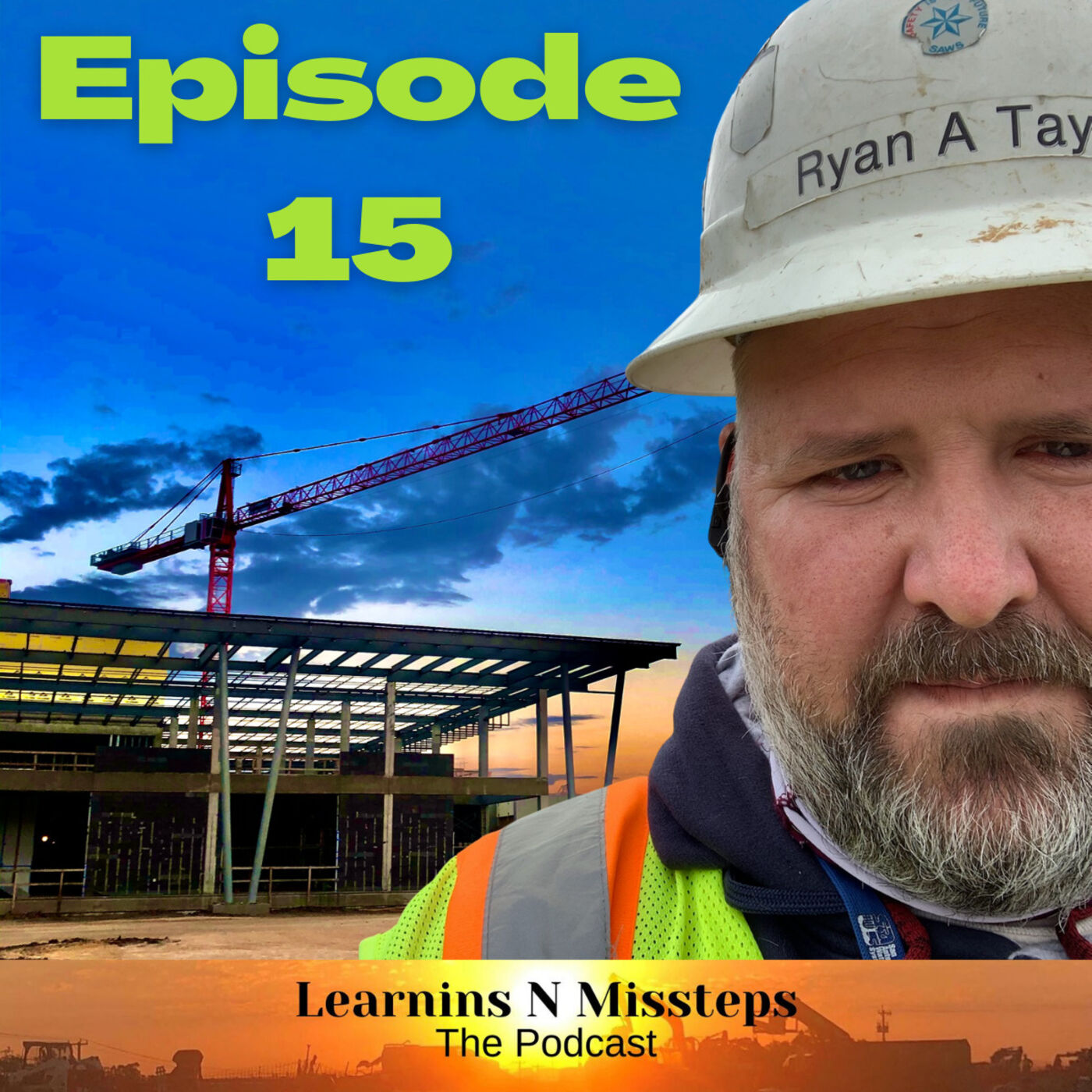
Episode 15: Ryan Taylor schools us on the one thing you can do today that will change tomorrow

 Apple Podcasts

 Spotify

 Overcast

 Castro

 PocketCasts

 RSS Feed

 Amazon Music

 Audible

 iHeartRadio
Jesse and Rene get Ryan Taylors advice on what it takes to work your way out of humble beginnings. Ryan, Superintendent of a Leak Detection team in San Antonio, shares his view on the value of Social Intelligence and the role men need to play in repairing our communities. As the conversation builds Rene "Caterpillar" Duron takes us down a path of generational growth regardless off what resources you start the race with, a topic we all should examine further. Lastly, Jesse beams with pride as Ryan (Renes boss) praises Rene for his contributions in the work place.
Video on Social Inequalities:
https://www.youtube.com/watch?v=4K5fbQ1-zps
Support the Mission at:
https://www.patreon.com/learninsnmissteps
Connect with us at:
https://www.facebook.com/learninsn.missteps.1/
https://www.instagram.com/learninsnmissteps/?hl=en
https://www.linkedin.com/in/learnins-n-missteps-6525b41b7/
https://www.youtube.com/channel/UC4yLjr8swfqCt_vMp74oiXA
So uh I was listening to the podcast on the way in. You know, it's weird because like I I've heard your voice on the podcast like a bunch of times, and now like seeing you, I kind of feel like I'm talking to a celebrity.
SPEAKER_03What's happening, LM Family? This conversation is between myself, Renee, and Mr. Ryan Taylor, who's a superintendent for the elitist leak detection team in San Antonio. He's a father and contributing member of his community, and like many of us, has come from humble beginnings. As we talk, we cover our definition of fulfillment and how we experience that as tradesmen. Ryan also displays a deep understanding of the value in IQ and EQ and showers Renee with some love. My baby brother, my caterpillar, getting some props from his boss. And to all you men out there, there's a call to action from Ryan and myself. There's a lot of work to be done. Our family and our communities need men. And Ryan does a fantastic job of calling that out. So step on up, big daddy. You're listening to the Learnins and Missteps podcast, where we intend to change the image of careers in the trades. We celebrate the real men and women who have built careers in the construction industry by bringing their personal stories straight to you. I began my career as a plumber's apprentice in the late 1900s. Over the last 26 years, I've had the fortune of meeting some of the most resilient, intelligent, and inspiring people who happen to be construction workers. My career path as a plumber has provided me with experiences and opportunities I thought were inaccessible. And I want you to know that the trades are a place where dreams can come true. These stories are brought to you by three brothers who share a mother. I am Jesse, your host. Our in-house writer is Ernest, aka La Voz. Hello. And our co-host, Renee. What's up? Y'all ready? Yes, sir. Those of you that are interested in some exclusive content, early access to our episodes, and supporting the mission, we set up a Patreon account for y'all to contribute even more than you have so far. We've got four different levels. Any level that you sign up for will get you special recognition on the video version of these podcast episodes that you're now releasing on YouTube. We got a YouTube channel, baby. Watch out. We'd love to be able to share your name and let everybody else out there know that you're behind us. So you can find each of the four levels to sign up and contribute at patreon.com slash learnings and missteps. Uh, we love you guys, and here we go.
SPEAKER_01I'll I'll say this. I remember when Renee first told me about the podcast, we were talking. I think I probably brought it up that I I listen to a lot of podcasts in my downtime, or like if I'm doing some just administrative stuff, or if I'm driving, I rarely listen to the radio anymore. It's it's typically a podcast. And and I think I had talked about maybe the Joe Rogan or or or something that I had that had piqued my interest. And and then he told me about uh like the Jocko podcast. And Jock, like there are there are some guys that are like just they're a very small percentage of uh the savage of men, right? Yes, yes, ridiculous, uh crazy. So Renee had told me he had listened to a couple Jocko podcasts, and then probably much later on, he had told me about a podcast that he was starting. So I was immediately interested, and so I think I had listened to the very, very first one, and it immediately spoke to me because he was talking about something that I have been a part of, and I mean, and I and I know when we're talking about the trades, right? Yep, um, all of these um anecdotal, they all correlate with each other, whether you're in the private industry, the public industry, yes, um, it it's it these cultural things. This one that you were just talking to, Ad, um, you know, you said something that just really resonated with, you know, you were with you were with a whole bunch of people that saw what they were doing as a failure. And I was like, man, that like that hits on a different level, right? Like, because we all have dreams as a kid, right? I want to be a fireman, I want to be a superman, I want to be a police officer, and then you you kind of progress, and you're a plumber, right? Or you're uh you're working for the public utility. And so, you know, that dream of driving that, you know, shiny red truck to a fire to save somebody's life. Well, in mine and Renee's case, we're working on the hydrants, right? To supply the water for those for those guys. So our dreams don't always work out like we were as children, but those dreams can modify and give you a very fulfilled life.
SPEAKER_03Oh man. Well said. But it it's it's really the stigma. Yeah, like I was loving the work. You know, my first year of apprenticeship, I was digging it, but in my head, I felt like I just, you know, the expectations that I that was that I had received in school for my teachers, from my classmates, from my family, all of that was you gotta go to college. And if you don't go to college, then you're a failure. And so it was that, you know. I loved what I did, but it was a conflict of but I'm not meeting people's expectations. You know, back then I couldn't, I didn't know it was that. Now I can look back and say, yeah, it was the whole expectation thing. But you're 100% right, man. Like I love my life, I'm extremely blessed, and it's a result of uh starting a career in the trades.
SPEAKER_01I'm I'm interested to ask uh Jesse, where was that did you feel that fulfillment very early on? I like when you started, you said you started in uh what the the mid-90s, 90s.
SPEAKER_0395, yep, yep.
SPEAKER_01So um when you first got on and you were loving what you did, right? Like your day-to-day, getting dirty, doing all those things, uh you know, a lot has changed from 95 to where you are now.
SPEAKER_03Oh yeah.
SPEAKER_01Uh and surely your fulfillment has uh but how did you kind of feel that very early on um in your in your career?
SPEAKER_03Oh man, yes. And so, I mean, you you touch on something that's really important, right? Like as we grow, I mean, you said it a little while ago, you know, when I was a kid, I wanted to be a bullfighter, I wanted to play baseball, right? I wanted to be a professional baseball player, and I wanted to be a clown. Like, that's what I wanted to do. And then I wanted to be a teacher, and so that kind of kept evolving. And as I got into plumbing as a plumbing apprentice, at the time all I wanted to do was be kick everybody else's ass and be the best damn apprentice on the job site. And and so my fulfillment, yes, I got a hundred percent fulfillment at right out of the gate, and it was from probably two things one was the physical aspect of the work, right? Being able to see other people, and we're all running cast iron sanitary system or putting up hangers, but I'm gonna put up more than them. And that was fulfilling for me, right? That instant gratification. And then the other part was like, you know, there's so much to learn out on a every job site is brand new, new people, new situations, new systems, and and so the challenge of of having to learn that and digest all of that and and do something, create something, produce something was extremely fulfilling. So, you know, as an apprentice, that's where I got my fulfillment from. And then as I, you know, progressed in my career because they wouldn't fire me for whatever reason, that fulfillment started coming from different things. And and then so it kind of transitioned to like, ooh, might I would get fulfillment, and then I'd kind of like, okay, this is cool. I got this. Like, I know how to do this, I'm really good at this. I need something else. And then the next thing would kind of reveal itself. So I went from installing really, you know, as fast as I could, the best, you know, highest quality I could, all of that stuff. So all of a sudden, what really tickled my fancy was helping my peers, right? Like teaching the the younger people that were coming in and helping people do the weird stuff that I knew how to do. So I started doing that. And then it turned into like leading a crew. First, learning how to do that, because that's you know how it is. You go from an installer, and then they say, Hey, you're a pretty good installer. Here's all this paperwork and all this damn responsibility, go be awesome. And like, shit, how do I do that? And so as I progressed in my career, there was always points of me, of my fulfillment adapting and and carrying me forward into the next evolution of whatever it is my career was gonna be. But but to answer your question, the very first thing was when I got out on that job site and I could put things in place and turn around and look at what I did and say to myself, I did good. That was instant, instant fulfillment.
SPEAKER_01So I I think life in general, right? When you find a purpose, right? And so we we all know people that are just kind of like floating down the river, right? And but when you find a purpose, and whatever that is, and you can find purpose in in just about anything. You know, you talked about hanging cast iron sanitary and hangers, and and there is extreme gratification in being and knowing that your hands, right, actually were a part of building something or providing a service that other people are gonna use.
SPEAKER_02Amen.
SPEAKER_01And so when you look at the trade industry, there is there is like deep, deep purpose that you can find that that is going to make you happy. And you know, happiness is not always about the money that you're making, money helps, money helps don't give me. I've all I've always said that money just gives you options, right? It's never gonna make you happy, it's gonna give you options in my industry. You know, uh repairing water mains, sewer mains, a priority one fire hydrant that's out that you get going back. You did that. Like you there were a lot of people that were without water or had sewer backing up into their homes, and the things that you did that day gave them water or running sanitary, and they can go to bed that night, and you can go to bed that night thinking, wow, what I did really, really touched somebody's life today. And man, what what better than that?
SPEAKER_03You know, we want to get romantic about it. The trades and craft workers, the work that they do enhances the quality of life for other human beings. Right? We build the buildings that people get medical care at. We we we like you said, we make sure that the damn crud ain't backfilling back into their bathtub. Yeah. Right? Like, like all of these things that we do that that I think the large majority of people think are menial or or or brainless are supremely impactful in enhancing people's quality of life. Uh you know, and and and that's why that's why we Renee and I was like, man, we got to do a podcast because I mean, like I'm a tradesman. It all the way back in the day started a second generation plumber. But to this day, I still, when I introduce myself with people and tell them that I'm a you know, I'm a plumber and whatever, I work in construction, there's a lot of people that recognize, like, wow, that's a that's a thing, that's for real. But there's also a lot of people like, oh, I mean, I was I was on a virtual career fair. That's what it was. So I was on this virtual career fair talking to high school students, super smart kids, right? And one kid, when he found out that, you know, I introduced myself, I'm a plumber, and I do what I do now. And his question, and it was an innocent question, but it was an indicator of kind of the the conditioning and the programming that's still out there. He's like, Man, okay, so you're a plumber, but but do you feel like like you're reaching your potential? Something to that effect, right? And I'm like, oh man, that's a beautiful question. Like, absolutely 100%. And so I you know, I gave him my spiel on it, but to me, I felt like that was just uh another indication. Like this high school student has in his mind that if if you work with your hands and you work in the field, that you're underutilizing your talent and your potential. And that you know, that is 100% false. And so there's a lot of work to be done in helping people understand how amazing the human beings in our industry are.
SPEAKER_00I would even challenge that that that statement, like, are you re do you feel like you're reaching your potential with like because I'm here in the trades, I am getting to reach that potential. I'm unlocking these potentials that I didn't even know I was capable of.
SPEAKER_03Oh, yeah. That's the mission, and it seems to be gaining traction. Renee and I set very low expectations out of the trade. I know. Renee had even lower expectations than I did. But man, you know, we're getting input. He's he's told me about y'all's conversations, and it's extremely motivating for us, man. Uh, and so to be able to have you on the podcast is it's a special treat, I think, for both of us.
SPEAKER_01Well, it's an honor for me. It really is.
SPEAKER_03Man, we're we're right out of the gate. It's starting good with good deep conversation.
SPEAKER_00Ryan told me he's gonna come on here spin that hot fire. Awesome.
SPEAKER_03So, Ryan, is there anything in particular you want to make sure we cover through this conversation today?
SPEAKER_01Man, I I want to tell you a little bit about my wife and and what she does. She's uh a teacher. Oh, and she has worked in a lot of lower socioeconomic uh schools, Title I. There were some observations that I did that I saw in her work that I thought were really important. She worked in a um a district kind of far on the southwest, kind of bordering San Antonio. I saw that, you know, and in all of these uh lower socioeconomic kind of districts, and I grew look just full disclosure, um, I grew up on the southeast side of town when high school.
SPEAKER_03Highlands, all right.
SPEAKER_01Yeah, went went to Highlands High School, uh, grew up in a single parent home, right? Where I learned uh about like work ethic. And work ethic was literally just waking up, you know, and getting to work, right? Just go to work, right? Uh my mom, my mom and I were having a conversation the other day, and God bless my mother, she's the same. But uh, like I remember being at school and not feeling well, right? And I'm talking about like early on, and she would just say, you know, go to the nurse and you know, basically lay down a little bit or whatever you gotta do, but you're staying in school. Not coming to pick you up, you know, you need to kind of push through it, and that that mentality kind of carried over into you know, early on in my career. But let me go back to my wife real quick. So she, you know, she's working at this district, and I I kind of observed, and she would go into much more detail, but this is just an outside looking in observation. Was they this district was really good at being able to identify the kids that were going to the next level college, right? And then the other very large percent, you know, because we're talking about maybe uh five to ten percent high side from this district was was gonna go on to some type of higher learning, as you know, as successful as maybe a uh a Harvard or a Yale, yeah, or as or maybe a I don't know community college district, right?
SPEAKER_03Sure.
SPEAKER_01But but moving on to a higher, and then the rest, right? And I wouldn't say the rest, you know, the the other 90%, but there was a big chunk that they identified, okay, how are we going to make them ready for life outside of the real world, right? Yeah, outside of high school. I saw that they were offering lots of intense types of trade kind of programs, right? And I'm so I'm talking about like HBAC, right? Who did HVAC in in high school, right? But HBAC, we're talking about like ag welding and and a lot of, I mean, for for the girls, they have a big cosmetology program too. And then all I could do is relate my own high school, right? I think, Jesse, that the districts out there are starting to kind of change a little bit as far as if, and and this goes back to your your your podcast with with D, right? Yeah, is you're not a failure if you didn't go to college. In fact, it's it's the quite opposite. I would argue that it's better for you not to go to college and and get in, get get your hands dirty, get into real life, find you a good mentor, and start building your career. Whatever that is, if that's plumbing, whatever kind of trade that you're you're gonna get into, go headfirst and start building it. You're not gonna incure this insane debt that most children get. You look at these kids that are coming out of high school or coming out of college, sometimes with a hundred thousand dollars in debt, right? Yeah, and so if you if you came from a lower socioeconomic situation, right? Your parents didn't have a lot to help you get through college, so you're getting loan after loan after loan. Sooner or later the chickens come home to roost, right? Oh, yeah, and you gotta you gotta pay those bills. I you know, I I listened to this podcast the other day. It talked about some of these people that have reached social security level age, right? Yeah, that were getting their their social security garnished because they still had student debt.
SPEAKER_03Oh wow it's unbelievable, right? But it's real, it's real, it is real, it is real.
SPEAKER_01If you can get through, start building whatever you're gonna do, whatever it's gonna be, plumbing, you know, electrical, uh, HVAC, there's all kinds of things out there for you. You can become, I wouldn't say rich per se, but you can live a comfortable uh financially speaking and definitely fulfilled life.
SPEAKER_03Renee, when did you graduate? Did you graduate?
SPEAKER_01Uh did I graduate?
SPEAKER_032012. So I want to say around that time, I I it was like HV House Bill 12 or something. There was a big change in our in for Texas, right? For the Educate Texas TEA, where they started, they got this funding and made a focus of bringing back vocational training to the school.
SPEAKER_01Because I know like my store when I was in high school, I'm also a product of SAISD, but from the best high school in SAISD, which is practically that's the old that's the old 285A. There was Thailand, Lanier, Burbank, Brack, Sam Houston, probably missing uh Jefferson. Yes. Yeah, those that was the old Yes sir, big time.
SPEAKER_03So I went to Tafoya Middle School because I was in the multilingual program, right? It was low-income students, trying to get them college ready. And part of that program was that I I you know had I took Latin. I was learning another language, and we but we weren't allowed to take vocational courses. Like everything we took had to be college geared, right? So middle school did all that, high school, same thing. And I was, you know, I have I have discipline problems. Like I I really couldn't behave myself. So I ended up getting kicked out of the multilingual program. But because I had been exposed to all this, you know, uh college geared type uh education, I was still a nerd boy. I couldn't take vocational classes, right? So it was like you gotta go to college, college, college, college. And I'm not against college, like some careers absolutely require a degree. And if that's what your heart and your family feel are important, go do that. There's gonna be some debt, right? That's a reality. But if you're not sure, you don't have to go get in debt to to figure it out, right? Yeah, and so I you know, I I took that track, took high-level math because I love math, and you know, all that stuff, and then I got into the trades, and I was like, oh my god, like this is this is the world where I can apply all that weird stuff they were talking about back in school.
SPEAKER_01A negative times a negative is a positive time.
SPEAKER_03You got it, man. And so that was that was kind of the environment back then where it was like no no vocational stuff. I mean, even at at at my high school, they had like a uh auto body shop class. But the kids that they put in there, you know, some kids, some of the students opted to be in that, but a lot of the kids were just like, Well, you're kind of a troublemaker, we're just gonna put you in that. You know what I mean? It was kind of a last resort, the end of the road, nobody like limited options, just dump those people over there. And so fast forward, you know, you're talking about these these trade programs. Uh like I know Southwest High School, they have a uh partnership with Caterpillar, Hulk, Caterpillar, right? Where they're and they've got trade, they've got internships where kids and it's juniors and seniors go work on like diesel mechanic stuff, like real serious work. We've got Construction Careers Academy at uh here in the NISD. That that whole curriculum is around those students learning, they they have multiple tracks, right? They can be they can take plumbing, they can take HBAC electrical, carpentry, project management, uh virtual design, engineering, but it's all geared towards construction. And so that's a huge shift, which is exciting, but it's it's we got a long way to go before it becomes like um respected as a profession, right? Because we're professionals too. We gotta go get continuing education, we gotta maintain our licensing, we gotta get our learning all up on safety, OSHA 30, all you know, all of these things that any craft worker absolutely has to continue learning. I think part of the reason uh educators uh stress and push college is is really because they had to go to college in order to be a teacher. And so that's that's like the only formula they know to you know having a higher income and starting their career. So by default, right? Like not maliciously, but by default, they're gonna believe and and message you have to go to college.
SPEAKER_01Yeah, that's a good point.
SPEAKER_03You know, like they they just don't know any other way, which is again all the reason for this podcast. So we can talk about all those other ways. Now, that being said, there are a bunch of um bad actors in in the system that have zero respect for anybody that doesn't have a college degree, and that's that's a problem. That's that is a problem that we absolutely need to attack.
SPEAKER_01We kind of we kind of hit a couple of things there. Let me let me just tell you a couple of anecdotals in my life. My brother was much more engaged in his academics. He went to the Highlands, grew up in the same community, same financial situations. We joke in the family, right? Like he was the good kid, and I was the world. He was he was the brains and I was the brawn. Yeah, and so I and I did a lot of the athletics and he did a lot of the academics. And so out of high school, um, he went straight into uh Tech SM. He got he got uh accepted to to Tech AM in Palace Station, and he got there and was absolutely unprepared, getting his ass kicked every day, but then he kind of got into a routine. I think it took him like six, maybe even seven years to get his bachelor's. Here is the problem. He graduated with a major, he he majored in biology and minored in chemistry, gets out, comes back to San Antonio, and guess what? He cannot find a job. And this was a big, big issue, not only for him, but for lots and lots of people. And again, most of his peers there at AM were talking about, you know, they grew up in that all-American mom and dad household. Yeah, you know, dad was a professional somewhere, maybe an engineer, that he that they could get their son on a track and working with a firm. So Rainey didn't have any of that. So he comes home and he's like, What the hell am I gonna do? And so he he was like, Well, I can like work in a lab. I remember he he went and applied at uh there was there used to be this like a lab here in San Antonio called DPT. Remember that? So he goes and applies, he has no like no experience, right? Doesn't get hired, and and and so now he's like, okay, what what do I do? He goes back to school and he he ends up getting his nursing degree. I think he's been in the nursing field like 23, 24 years, happy, doing, doing well, but again, had no clue what he was gonna do when he got out of college. The second one is my wife. She was kind of uh a traveler, her dad was in the oil field. I think he went to like 15 or 16 different elementary, middle, and high schools, right? I mean, just kind of all over the place. Gets out of high school, goes to UTSA, was interested in medicine, and then that quickly kind of turned into well, then let me just kind of go and be a teacher, got her teaching degree, went back, got her master's, right? She's very fulfilled. She's she has a passion uh for connecting with people and um working with these lower socioeconomic cadres of kids, if you will. But here's the deal she goes, she gets her bachelor's, she gets her master's, she has all of the student debt, and teachers don't make a lot of money, bro. You gotta love that word. I make probably a little bit more than she does, and I have no degree, and and she has multiple, right? Or or two degrees. And so, you know, that that's also a problem, is you know, it's not gonna be short-term money that you're looking for, it's long-term money that you're looking for, because not everybody can be a doctor, not everybody can be a lawyer, not everybody can be a what we would call a white-collar professional, right?
SPEAKER_02Sure.
SPEAKER_01You know, even those white-collar professionals these days are are still not making a whole lot of money, right?
SPEAKER_03Agreed.
SPEAKER_01That stigma, that default that you were talking about. This is what you're gonna have to do to you know to be successful. Man, I want to say it was Barack Obama who gave like three or four things to do to get out of the poverty cycle, right? And it was like, you know, wait till you're married to have children, graduate from high school. It wasn't like none of it was go to college, none of it was like you had to do these extraordinary things to have a successful life. It goes back to those basics of literally just get up and go to work, right? If you're if that is like starting out as a kid, I washed dishes at a Mexican restaurant, you know, long hot hours in the kitchen, and and you know, it sucked, but I was there to do a job, and that's the job that I did. What's funny is for my mom and my dad, the success was getting a job at the city, right? The city. Oh, if you can get a job with the city, you're gonna be okay. Yeah, and what and whether that was like CPS Energy or SAWS or City of San Antonio, right? If you can get on there and you know progress, you're gonna be okay. And most of the time that's accurate, right? Like you didn't have to become an entrepreneur and own your own business and things like that. Again, you're never gonna be rich, right? But you can get to a point where you'll be comfortable and be able to raise your family and be an active member of society. You know, that's what that's what like all these teachers and and is just get out there, be an active, contributing member of society, and we're gonna be okay.
SPEAKER_03100%, man. I mean, a hundred per like it took me a long time to figure out that being a contributing member of my community was more important for me, for my mental well-being, than making damn money. Right? Like I was caught up in the you know, I gotta make money, so you know, I gotta make this much money a year, so I can buy all this shiny crap. And I did. And guess what? The work I was doing, I hated it. You know, I was a superintendent at the time, very high stress, same argument, same problems over and over and over again, but I had to do that work because I needed that level of income to pay for all the crap that I bought, but I was a very unhappy person because what I wanted to do was teach and develop my my peers and the people within the company. But because of the responsibilities of my job, I had to go deal with problems all the time, you know? And then I so I got to a point where I paid off all my debt. And now it's like, okay, you put your money where your mouth is. And so I made a big decision. I was gonna leave the organization to go work for the school district. Uh, and the job was gonna be connecting the community, parents, business, and the campus. And like I could talk, so I could do that job, right? I could go talk to people, figure out what we need to do to connect them, and that's what I was gonna do. It was a major, it was like a 60 to 70 percent pay cut, but I didn't need the money, yeah, yeah. It was big, but I had no debt. So it was like, hell, I'm gonna go do something that's important that I care about that's gonna help people. So I told my company and they said, Whoa, time out, bro. Like, no, what are you talking about? We'll give you more money. I said, It's not about the money, and they're like, Man, you're crazy. Anyways, what we ended up doing is they said, What if we let you be the in-house trainer? And I said, What? Like, are you serious? They said, Yeah. And it's okay, what do you want me to train? And they said, Well, you're already kind of doing it, just formalize it, you know, give us an outline and let's look at it and we'll do it. And and so I started doing train transitional training to help people transition from installer, right? Journeyman, plumber, sheet metal mechanic, pipe fitter, welder to foreman. And then another pro later on, I put a program, or we put a program together that took help foreman learn the superintendent role. Right? Instead of just throwing people in the deep end and letting them sink or swim, we're helping equip them to be successful at the work. Anyways, I share all of that to say I discovered that the money was the least important thing, and the most important thing was contributing, being a contributing member of the community. And and you know, back to the teachers. Teachers are, I mean, they're they're godsend, right? For so many people, I heard a saying the other day every student is one caring teacher away from living their dreams. Right? Because that's all it takes is one teacher to listen to that one student, give them their time, make an investment in them, and help that young individual believe in themselves. It's unfortunate that that they're compensated poorly, and we got to do something about that, right? Obviously. But the other side of it is if you don't want to help change lives, you do not need to be a damn teacher.
SPEAKER_02Amen.
SPEAKER_03Right. All you're gonna do is damage people. If you're looking for the income and security and benefits, there's plenty of other places. Please don't go ruin kids' lives. Don't don't do it. So I have a deep respect for teachers, uh, and you know, the commitment and sacrifice. I know a lot of have a lot of friends that are educators. Actually, one really close friend, she's a principal now, and and she planted the seed that helped us get to damn it, we need to start a podcast. Uh and but she's that kind of human being, right? She she listens, she understands, and she can motivate without like not the song and dance motivation, but like the real human being, one-on-one, deep connection type of motivation. And that's what we need in our teachers. Uh so for all those teachers out there, thank you for your sacrifice. We love you, and we need more of it. Um, and for the rest of y'all that are there for a check, y'all need to check your ass out and go get another shot.
SPEAKER_01Yeah. No, you hit it, man. You know, Jess, there were a couple things that you touched on that are really important into progressing the stigma and image of the trades, right? One of them that you said was how do we change the professionals, these white-collar people, to look at the blue-collar people as professionals, also, right?
SPEAKER_02Yes.
SPEAKER_01That's a that's a tough thing. In the trade industry, though, I'll tell you, a lot of times we don't do ourselves much favors. I can tell you from just in my industry, in my place of business, I can guarantee you, Renee can probably even attest to there are a lot of people that that work here that probably have a hard time like reading and writing. Yes, you know, yes. And and that's no fault of their own. They probably didn't have that person that that touched them or connected with them, right? Or they came from a very tough background. Sometimes I I will drive the neighborhoods that I grew up in, right? And I I've lived, I've I lived kind of in a different area now. And let me tell you about a story. So I've met my wife, and we are we're gonna get married. Uh her grandmother lived not far from where I grew up. In fact, her dad went to the same high school that I did, right? Anyway, so we were looking at places to live, right? And we knew we wanted to have children, and so we really tried to put a lot of thought into okay, what are we gonna do not for not only for ourselves, but for our children, right? I think every parent wants their child to have it better than they had. Yes, and again, I grew up in a very meager home, no central air heat, right? Like it was we had roaches and mice and rats and all of all of those things. Oh, yeah. Um, we thought about, well, you know, and I had had some family that had moved kind of north, and and when I say north, like out of San Antonio, they they moved to Blanco, Texas. And we wanted to kind of we were the only ones kind of left on the southeast side. And so Kelly and I we we said, you know what, let's let's uh let's go north. So we we bought a house, you know, the Snow Oak North area. And I was I remember being on a crew at the time, I was talking to our equipment operator, and I'll never forget he said something. He said, My grandparents and parents were born and raised on the west side. I uh will be on the west side, my children will be on the west side. There's a point I'm trying to make is we get married to these ideas, right? And we get connected to this is this is what my life is going to be. It was foreign to him to think about like moving out of the community that that he was in. And and I'm I'm not saying like moving out of the community he was in, because you can definitely help make your community a better place, but what I'm what I'm referring to is like bettering your life, right? Bettering your children's life. I'll tell you, if you were in a district that you struggled in, and do you think that your children are not going to struggle in the same district in the same community with the same teachers? I'll tell you, I and I love this teacher, his name was Mr. Peterson. Uh God bless him, he's he's not with us anymore. He was my parents, both my parents, my mom and dad in high school, he was their teacher. And guess who had him too? Me and my brother, right? And so if he if he would have stayed around long enough and and I had children, and you see it now, right? I can guarantee you there are teachers in districts that have taught three generations of the same family. Yeah, is that not crazy? Yeah, yeah, it's amazing. I think people get married to this identity of, well, this is just what it's, this is what it is, this is who I am, right? And trying to turn that page to do something better. And again, you want to stay in your community. I'm not saying like that's the wrong thing to do, but do something better for yourself and your children. And you can you can have that life if you work hard enough and dedicate enough time and energy uh into getting that job at the city, right?
SPEAKER_02Yeah, yeah.
SPEAKER_01You're gonna where you're gonna have good health insurance and good benefits for maybe for when you retire. You're not gonna make your your your pot of gold is not there. It's the it's the long, it's the long game, the long term. You know, so yes.
SPEAKER_03Well, when I when I hear you talk about that situation, it it's about challenging yourself and getting out of your comfort zone, right? I mean, that's how it lands in my head. And and too many of us, I hell, I'll just speak for myself. You know, there was a period of time, especially when I started early as an apprentice, in my brain, it was okay to talk to this level of people, but I have no business even making eye contact with this other level of people.
SPEAKER_01Wow, that's awesome. I get exactly what you're saying.
SPEAKER_03And and it's just it's just what my limiting beliefs were. Right. And now, I mean, it took me a few decades and you know, some highlights, right? Some gray hair to to really understand that people are people. And if you treat people like a human being, anybody will listen to you. And if you listen to them, guess what? They're more likely to listen to you. Like it it doesn't matter what level they're at, what their income, what their education is, the large majority of people are just regular human beings that have the same damn insecurities, the same concerns, the same worries. The same problems that you do, and and it's okay to talk to them. I mean, and so once I had that, you know, started discovering that, then it was like, Oh, you know, I'm I I have this idea, and that person has the authority and the influence to support it. I'm just gonna go talk to them. And then it would happen, and I'd be like, Oh my god, how did that happen? Like, that was magic. And and it really helped me understand or start getting comfortable with getting outside of my comfort zone and and chasing after you know, that next thing that I wanted to change, or the way I wanted to impact people's lives. Whereas before, I was the only person telling myself that I could not do it. Right? And so I think that's a lot of it, you know, staying home, staying in the community, staying in the neighborhood, which is something that I do purposefully, but now I do it because I choose to. But there was a time that I believed it was the maximum of what I could achieve. You know, I'm very proud of Renee. I know he's a goofball. I love him, and I'm extremely proud of him. And but when I reflect back, I think that a lot of the the learnings and the stepping out of my comfort zone and doing these things that I really, you know, a little skinny Southsider has no business doing or being involved with. I I I think the fact that I've done that helps him see a new landscape of what's possible for him. Uh, and that's that's the same thing like you're talking about this this gentleman in your story. Like, when you challenge yourself and get yourself out of your comfort zone, you set a new norm for the next generation.
SPEAKER_01Right. You you you brought up Renee, and I'm gonna I'm gonna brag on him a little bit. We're talking yes, we we we were talking the other day about like IQ versus EQ, right? And you know, recipes for success. Jesse I see in you that you have an innate ability to be able to communicate, and right, uh and and be so being able to communicate set yourself apart from the other guy who was hanging cast iron right next to you. Y'all started, y'all started at the same level, right? And but your your effort, your your want to hang more than that guy did, plus the ability to be able to communicate, and you know what, I'm gonna step out and I'm gonna go and talk to that white-collar guy who's holding the clipboard that I wasn't supposed to make eye contact with, right? You put yourself in a position to start kind of climbing what that ladder was, right?
SPEAKER_03Yep, yep.
SPEAKER_01What I've seen with Renee is he has that ability to communicate within the staff that we have, even with some of our higher level staff, our foreman, Renee will take those responsibilities that he doesn't have to do, by the way, right? And and that's when this was like one one of your second or third podcasts when when you know the the mamon word comes in, right? Yes, yeah, right. So uh pinche mamon, like what do you think about you're you're making us all look bad, right? There is an effort coupled with that ability to be able to communicate and read a room, right? That's really, really important. That's when we start talking about EQ and why EQ coupled with a little with some IQ is going to take you to places. Can you teach EQ, right? Can you teach it where some people are blessed with it and they they know, you know, man, maybe I shouldn't say this joke or something because I'm gonna offend somebody and and we live in this in this uh hot political landscape now, right? Where can you navigate through that, right? And you you you probably have some people that you can be very candid with, and you probably have some people that you can't be very candid with, and you have to build that communication accordingly, right? When when you're when you're talking. Renee is is really good at that. Uh I I've struggled with like, what am I gonna do? Like, there's literally going to be a a post-Rene life for me, right? Because you know, Renee has been such so pivotal in in what we've been doing, but he is moving on to bigger and better things. And who knows, you know, maybe he'll circle back around and and you know become. I told Renee the other day, I was like, I fully expect you to be my boss one day. You know, I mean that the sky is the limit for him. So he's he's he's been great.
SPEAKER_00So I want to I want to piggyback on that conversation you just you guys just had. So I saw this really cool video on Facebook the other day. It was they had all these kids and they lined them up online outside. And they were like, okay, anybody who had both parents in their housebook in their household, step forward. So at the end of this goal was a hundred bucks. Whoever got to this goal first gets the hundred bucks. Okay, so they lined them up. All right, anybody who had both parents, take one step forward. You know, a lot of kids step forward. A lot of kids stayed back. All right, anybody who had access to a private tutor, step forward. A lot of kids step forward, some feedback.
SPEAKER_01Renee, I have seen this video that you're talking about, and it is very powerful, right? It it's a it's a line of kids you're standing in what looks to be like a field, right? There's a a leader, and he says, Okay, if you had both parents, take a step forward. If you had access to X, take a step forward. If you had access to Y, Z. And so what you're left with is a bunch of children that and some are way, way far above the curve, and some are still at the starting line. You know, that hundred dollars is at the is at the end, and you're like, well, these kids at the back are going to have no chance, right? And to to get into that, and so that's kind of where that's a a good look at society, right? Because we all have different backgrounds, we all have different skin tones, and unfortunately, we are still in an area where there are expectations of people that that have a different skin tone or talk with a different access, uh accent, and you know, that their other children are going to be you know in front of the line. I've seen that video. I think it is very powerful, but I will say this I'm a big tall white guy with blue eyes. It's funny because when I first started when I first started here at SAWS, everybody thought that I was related to another white guy that was like a superintendent or or somebody high level, and you know, they helped me get this job. The reality couldn't have been further from the truth, right? When I when I got in and I and I got with the crews, I really kind of immersed myself in what I would call culturas, right? Of what everybody was doing. And and I knew what what Sangre de Chango was. Yes, you know, because I grew up in this community, right? I mean, I was I was a minority. Reality, I was a minority in the community that I grew up in. You know, there are stigmas of what you look like, and I I couldn't agree more. I I think that is a reality. What I would push back on a little bit is that is where these this victimhood mentality kind of comes into place. And well, I'm just never gonna be able to get to that hundred dollars because I am X, Y, or Z and fill the blank. And my pushback is this read to your children. Okay, yeah, read read to your children, and so unfortunately, there are a lot of people that that their parents didn't get to read to them. Barbara Bush, she made a a comment that I thought was pivotal. She said, It's not what is happening in the White House that's going to affect you, it's what's happening in your house, right? And so, so my pushback with when I see these videos, um, and again, they're powerful, and I agree with 90% of it, is look, go to work, right? Go to work, put effort in. Don't it's it's not somebody else's fault when you didn't get a job, right? Or you didn't get a promotion. What are you doing to prepare yourself, right? A lot of it comes from self-realization, being able to look into a mirror, and and I I think this is, and I'm not you know patting myself on the back here, but when things are not going right, the the first person that I look at is myself in the mirror. And I say to myself, what could I have done better? And I'm not going to go back and say, well, this person didn't do this. I I'm gonna look at myself and see. And if we if we all collectively do that, then I think that we're gonna be in a better place.
SPEAKER_00Yeah, nailed it. And that what I wanted to say is I am aware that I might be that kid that had to start at the beginning. Maybe I got a couple of steps up too, but definitely there are those that have a ton of steps ahead. But when that starting gun shoots, I'm still gonna haul ass as fast as I can to get to that freaking end goal. I'm not gonna, I'm not even gonna worry about where I am, what who's behind me, who's in front of me. I am going to try everything in my power to trump myself all the way to that end and catch that dude at the at the end and pass the ball. Like, like I said, like it's only it's not what happens in the White House or anybody's house, it's what happens in my house. What do I choose to do with what I have, the resources that I have access to right now? I think that's what has separated me from some of some of my peers when I start to like grow and excel at a faster rate. And and my goal is to teach other people that you don't have to be the victim. You have resources here available to you no matter what you look like. You just gotta find them.
SPEAKER_01So I would say back to that video that you're referring to, the reality is it it's not just one $100 bill, right? There's lots of $100 bills out there, and there are lots of avenues. And so, Renee, if you're starting at the end, right, and you're looking at all these people ahead of you, and if if you do what it takes, you're eventually gonna get to your your $100 bill. You're not gonna slow down, you're not gonna stop, and you're not gonna say, Oh man, this other kid, you know, we talk about all these privileges, and man, I'm telling you, yes, they exist. There is there is privilege out there that some people do have, but I'm not gonna allow that to hold me back to go get my hundred dollars.
SPEAKER_00Because I can't control that. I can only focus on what I can control. What's in mind? That's me, that's it. And it's like I heard another awesome analogy too on NPR the other day that they made a reference to like life is kind of like a monopoly game, you know. They were talking about generational wealth and stuff or whatever, uh, and I felt like they were kind of giving a pity party to the guy that didn't start off with the full bank, you know. So oh uh player one has the whole 2000, player two only has 1500, and player three has 500. If you play the game of Monopoly, the player three is always gonna lose. And I was like, no, I don't think so, because if I'm player three, I'm still gonna roll that dice. I'm still gonna play the game, I'm still gonna roll the dice, play as hard as I can.
SPEAKER_01When I see these videos and and and these TED talks and things like that, like what's the end game, right? And this is something that that I always I always have a conversation with my wife, and and and I I I kind of like self-reflect is what is so you know if that monopoly game, um if I just never rolled a dot, like you're just telling me that I'm this is your box, you stay in that box, right? Um I I I don't and again, I get it, I see the disparity uh across the spectrum, but like it that's a a defeated mindset to have. And like, well, this is this is what I'm always gonna be, you know. I'm this I'm I'm never gonna, I'm a plumber, so I'm my I'm gonna be a plumber, my son's gonna be a plumber, his son's gonna be a plumber. But wait a minute, like maybe my son's son is gonna own his own plumbing company, right? And people are gonna work for him. Do what it takes to get yourself in a prepared mindset to take that next step. And if you if you look at what it is that you need to work on, maybe it's communication, maybe it is the technical side. Um again, we all have, you know, I'm not the most technical person on our on our team. What I'm good at is being able to kind of get this chess piece and this chess piece all in these positions to where the overall is gonna be a better outcome. And so, you know, get your chess piece ready.
SPEAKER_00Let's say you just have the worst luck in the world, everything's happening to you, all that stuff in this game of monopoly, right? Well, even if that was true and there's just nothing you can do about it, what can you do to keep playing the game and lay the foundation for your your next people, for your dinner, for your kids? What can I do even if I can't win and become that $2,000 starting player? What can I do for that when my son starts playing Monopoly? I can't I can help him start off with more than just the 500. What can I do?
SPEAKER_01I I got a great little story for you. My son is five years old, and it was the first year that we could try out for like the neighborhood splint team, the Lookout Canyon Tiger Shark. We started with our children in the water very, very early. Brooke was Brooke was born in January. We had her in the water like in May, and I'm like I'm serious. My son was born in May, and we had him in the water like by the end of the summer, right? So probably July, August, and literally in our arms, but we were getting like them really like just used to the water, and it's really about fear, right? Fear holds a lot of people back. He's five now, he knows how to swim. He like he knew how to swim at three with no with no life best, no anything like that. So we're at like the it's not really a tryout, but more of a this is like what what what level of swimmer are you, right? So what they had to do, and we have you know a big Olympic style pool in our neighborhood, and so all he had to do was get in the water and go to the other side of the pool. So my mom is with me. We we're getting up to where it's almost his turn to get into the water, and there's a long line of kids, and my mom kind of is scooks down to Austin, and she says, Now, Austin, if you get tired, you know, you can stop and and and you can lean onto the buoy, or if you get tired, just grab onto the wall, it's okay. And I like kind of stopped, and I turned around like when he wasn't kind of paying attention, I turned around and I told my mom, like, I got this, right? So then I went back to Austin and I said, Don't stop. You don't stop until you get to the other side. Do not grab onto the wall and do not grab onto the little buoys, the the divider, because I know he can do it, right? And so many times, and moms are great at this, and grandmas, and but but so many, so many, and we need moms and we need grandmas, right? Yeah, yeah. But you know what we also need? We need men, we need strong men to push and raise the expectation for our sons, right? I didn't grow up with a dad, and I and and later in life I I learned some some really um pivotal understandings of taking care of your responsibilities. But moreover, back to this anecdotal story about my son. I'm gonna raise the bar. If you were whatever the bar you your son will get to it. So if you if you lower the bar, he's only gonna come here, right? Raise the bar, set high expectations, and then give them the resources to get to it. And so if you do that, man, I we're that's when we start building a better society. It really is.
SPEAKER_03That's our job as as leaders, and I love that you pointed out, Ryan, like men. We need to challenge, but we also need to support. Yeah, you absolutely gotta set higher expectations, challenge people, because you can see. I mean, you you as a leader in your organization at your job, you can see the potential and the aptitude in your people, and you can see it way before they can see it. And you gotta challenge them, but you also have to back it up with the support, give them the resources that they need in order to grow, right? Just grow a little bit. You don't have to you don't have to hit a grand slam. Get on base, just get on base, baby, and we'll get there. That's it. I I've seen those videos, and you know, I got mixed feelings about them. Yes, those are there are realities out there that a lot of us have to deal with. Some of us have a better situation than others. But to to you know, capitalize on the point that you've said several times, Ryan. Go to work. Right. It's that easy. Put your head down and get your ass to work, and you can change your situation. I mean me myself, I was one of the kids that were closer to the starting line, right? That didn't have all those other things. But here we are now, you know. Um let's say back when I was 17, 18, I was probably further away from that that finish line before anybody hit start. But now I my life situation is not the same. I now, if I was in that lineup, I would be further up. I have a bunch of advantages now that are a result of sacrifice, commitment, and putting my ass to work. I don't think it's very complicated. No to work. Put your head down, apply the work ethic, sacrifice, commit to learning, treat people like human beings. That's right. Right? After that, it's all it's all gravy after that. But you can't be a victim. Nobody owes you anything. The only person that owes you anything is you, and we all have the same 24 hours, and you may end up being branded Mamon, right? Or be accused. And you know, here's kind of a funny that our San Antonio listeners will get this. Early in my career, you know, I was a second-year, maybe third-year plumbing apprentice, and I was talking to the guys, and and they were like, Giving me hell, right? Because of course I was a mamon too, because I went to school, I studied, I wanted to learn, blah, blah, blah. And one of the guys was like, Well, yeah, Jess, but you're a North Sider. Like, of course you're doing well in school, and of course you're progressing and getting bonus or getting raises and getting promotions because you're a North Sider. And I was like, What? Like, how in the world where do you get that idea that I'm even a Northsider? Because you know, in San Antonio, socioeconomically uh divided, Northside indicates that you have more resources, more privilege. Uh, any other side of town is less than. That's right. And and you know, one of my buddies that knew me, like he's known my whole life, he's like, dude, that dude ain't no north side. He's a dirty ass Southsider. But it so it was interesting, though, that individual recognized some of the behaviors as Northside behaviors. Behaviors. So there's something going on there, right? They think like that behavior doesn't happen within an individual that is not on the north side.
SPEAKER_01That's right. That's crazy.
SPEAKER_03It's amazing, right? But everybody has the you know, we all have we don't all have the same capabilities. We all have the same 24 hours, and we all have special gifts and talents that we've been blessed with. And it's our responsibility to nurture and develop them. And when you do that, you you you can outrun all them, all them people that are way up that got that head start. You can catch their ass, you can smoke them. Because even those people that are at the front of the line that have that head start, if they don't, it's like talent, right? If they don't do, if they don't work hard, it don't matter how much talent you have. You've got to work hard. So you can catch those people, you can pass them up, and some of them are just gonna sit there with the privilege and not do a damn thing with it. So I mean, I like the the language you used about the victim mentality. We have a choice to decide if I am going to live as a victim or if I'm going to live as a victor. And it's 100% up to me. Sorry, sorry, I can't I can't preach.
SPEAKER_01Hallelujah. No, no, and this is this is what we need to get out. It's that message. It's funny, that North Cider thing really, really hit hard for me. Uh I remember as a kid uh playing football for Highlands High School, my freshman year. Judson came to Highlands to play. We'd come out of the locker room, and this was early in the year where the the academics hadn't hit to where all the guys that didn't get to play, you know, after the report cards came out. We probably had, I don't know, 30, 35 guys, right? We run out of the little field house there and go out into the field and start our warmups. And then it was almost like uh, you know, the the Empire Strikes Back theme music and uh dah da da. Right? So literally bus after bus after bus, probably six or seven buses. Damn, all of Judson kids come out, and they had enough 11 guys to probably rotate in after each play. Okay, that's how many people have had. Just funny when you when you talk about like that North Sider mentality, there are the haves and the have nots, and maybe we did a bad job as Southsiders, right? I'm from the Southeast side. Maybe we did a bad job as Southsiders to say, no, no, no, you have pride in your community. Yes, we have too, right? We we do have haves as well. There's that statement, the the bigotry of of low expectations, right? Oh, you're from you're from the south side, you're you know, you're not gonna be this, that, or the other. Get to work! Go to work. That's it. You're you will get you will get to where you want to be.
SPEAKER_03Absolutely. Go I love it. I think that's the underlying theme. Go to work. So, Ryan, what do you want our audience to know about you?
SPEAKER_01I'll say that I grew up much like many of the people that I work with grew up. Okay. In the blue-collar field, there are a lot of people that came in, you know, maybe in a broken home, in a a rough neighborhood. Man, I'm gonna tell you, I I grew up in, I graduated in 1996. Uh, I know Renee doesn't remember this, but in the in the early 90s, early to mid-90s, uh, gang violence was really, really bad here in San Antonio. The school that I went to, Rogers Middle School, there was a, I believe it was like a Valentine's Day party. There was a um a rival gang thought that there was a uh another gang's party. It wasn't, it was some middle schoolers getting together for Valentine's Day and uh go in, kick the door, and one of three of my class, three or four of my classmates were shot. One of them was shot point blank with a shotgun, Blanca Garcia. She was in eighth grade and died, right? Like, and so I remember in my house like hearing gunshots at you know at night and like being afraid to like watch the news, and like it was it was a weird time, like in in that, you know, in these movies like Colors and you know Boys in the Hood and these gang movies were kind of sensationalizing that kind of gang life. Um and so that's kind of where I come from. Uh it's where I was kind of born and raised, the Southeast Side went to Highlands, broken home. Um, my mother, again, she's a saint. Uh, she worked 35 years for the uh San Antonio Police Department. She wasn't a police officer, she was just a clerk in the youth bureau. Um so all of these youth kids would come in and got picked up off the street for doing getting into trouble, right? And so they would come in and my mom would like help process them. It was really my mom's side of the family really kind of nurtured me. And again, you know, they say it takes a village, right? Well, it really was a village. You know, they had to push me and push me and push me and get me to to where I graduated. I kind of hit my like midlife crisis around 18, 19 years old because I was lost. I had no clue what I wanted to do. I was kind of I was kind of lost. And and there was, remember, I talked about getting a job with the city, right? If you could if you could get on with the city, whatever it was that you you have arrived at that point. And again, my mom, 35 years, my aunt and uncle, both you know, 30, 30 plus years at CPS Energy. Uh, my stepdad, who came in later in life, uh my mom and stepdad met when I was like 21. But he again, like 38 years with the police department, and so I have these examples of what could be done if you did play the long game, right?
SPEAKER_02Yep.
SPEAKER_01My stepdad loved him to pieces. I remember one day when we were talking about like the long game. I was making $8.25 an hour when I started here at Saw's, and he said, Hey, uh you're I'm gonna sign you up for this ICMA, this you know, the bird comp and you're gonna, you know, $25 a paycheck. And I said, Whoa, whoa, whoa, $25. I can't afford that. And on the and the words that he said next are will change my life. And he said, You can't afford not to, right? What we're really talking about when we when we get into these changing cultures and society is we need men, we need we need women. I love you, women, I love you, okay? I'm married to a very strong woman. We need men to mentor and guide and push and raise the bar. Me personally, I think that is the key to getting to the next step. I really do.
SPEAKER_03Agreed a hundred percent. I mean, there's there's too many people out there that aren't fulfilling their responsibility as a man. And and specifically in the mentoring side of things.
SPEAKER_01That's right.
SPEAKER_03Right? Like, yeah, you're a man, you got a job, you know, all great. But what are you doing to help somebody else? Are you sharing your insight? Are you I mean, you know, a large part of the reason I am where I'm at is because of Renee. You know, he got to seventh grade, and I realized all of a sudden, like, oh my goodness, he's experiencing the same thing that I experienced. It broken home, right? All of that good stuff. And I realize I was like, oh damn, like if I don't get involved and step up, he's gonna go down the same damn path I went down. And that that wasn't fun. It was a lot of wasted. Well, let me take that back. It was fun, it wasn't productive, and and because of that, I said, okay, well, I didn't know what the hell to do, except for give him my attention, give him my time, and share what little I knew. But as a result of that, that catapulted my life in an entirely different direction. So, as you know, man out there, you need to be a mentor. You may not know exactly what to do, but go share your experience to help somebody, but I promise you, it will help you grow as a human being. It's not like uh like you're just giving stuff away. It's you get a return on that investment like tenfold that you just wouldn't believe. But if all you're doing is sitting there taking care of your own bones, you ain't doing enough.
SPEAKER_01Jesse, you know, in this in this toxic political landscape that we're in, there's there are there are phrases that get people all kind of riled up. And one of them is pull yourself up by your bootstraps. You've probably heard that before.
SPEAKER_02Oh, yeah.
SPEAKER_01When I say go to work, right? That's kind of what that means. At the end of the day, if you have the responsibility of being a husband or a father, or maybe not, maybe you're you know, you're early on in this and pull yourself up by your bootstrap, go to work. Yes, you might be behind the the race, right? But but get in the race, run the race. Yes, it's worth it, it's worth it, and get into an industry that is going to fulfill your heart, right? When you are when you're able to do something with your hands, what however you're able to serve the community, whether you're building infrastructure that's gonna be a part of society, do it when you lay your head down on the pillow at night, you're gonna be fulfilled. But I guarantee you you're gonna have content in what you're doing.
SPEAKER_03Oh man, that is beautiful. So, since we were soaking up all your battery power, don't want to I don't want to run out of no, you're good, bro. Uh this has been this has been an amazing conversation. I'll ask this question, and then I have another question if we still have battery life. Okay. This first question is what impact do you want to leave on the world?
SPEAKER_01Oh, that's a great question. And you touched on it. One of I think God's greatest commandments is love your neighbor. Okay, love your neighbor, connect with people that don't look like you, that don't love like you. They may come from a different country, from a different background, from they may love a different gender that you love. Listen, love your neighbor, give somebody a hug, connect with people, because I guarantee you, all of those differences that you think you have, you have more in common. The way I lead is trying to, and and I don't do a great job sometimes, is is getting everybody on the same page, right? Are we marching to the beat of the same drug? But to do that, you actually have to connect with people. I think human connection is something in these social media days, in this toxic political landscape, we're having, you know, we say we're connected more, but we're not. We're not. And there's so much vitriol and vile language out there. Listen, you know, these keyboard warriors, and and and if somebody's in front of you, you know what? Connect with them, treat everybody as if they I know this is gonna sound crazy, but they were a baby at one point, they were a child. You wouldn't talk to a child like that. So, you know, a lot of people do crazy stuff when you know they're trapped in a corner, right? Yes, yes, um, fear makes people do crazy stuff. With all that being said, like connect with your neighbor, love your neighbor. But that's really gonna take us to the next level.
SPEAKER_0310 four man, sound advice. It sounds simple, but I know, yeah, right. But it takes some damn work, it takes some vulnerability, uh, some humility, but absolutely we'll make the the big difference. Okay, so here's the fun question. Renee let me know, he dropped the dime on you and said, Hey, I think we might want to talk about this subject. I said, Okay. What are your thoughts about women in the trades?
SPEAKER_01So um, we need everybody in the trades. Okay. My uh my constructive criticism with Renee and his podcast was you guys had had interviewed a lot of women and highlight, and that's great. There you're celebrating and highlighting, but what I would push back on a little bit, and not I wouldn't, that's probably a bad term to use, is it's a very, very small percentage of people in the trades. Uh, and I'll just share with you here. There is out of let me just say 600 people in our group, probably two are women.
SPEAKER_03Wow. Right. Yep, yeah.
SPEAKER_01So it's just a very, very small percentage. Do they provide worth and different perspective? 100%. And yes, we absolutely need that.
SPEAKER_03But there are some, again, you know, we talked about the head starts and the realities of life. There are some realities uh uh with women coming into the industry. I mean, hell, it was a long time before. I mean, you know, I worked construction my whole life, and so if we had to go to the bathroom, it was a porta potty. Yeah, and if you're a woman on a job site, you don't want to use the same damn place that the rest of the guys are using, right? I mean, hell, I didn't want to use it. Brutal and exactly, and now you know I work for an amazing organization, and more and more uh general contractors out there are getting with it and providing a a port a potty for specifically for women, right? Just lock it up and only the ladies can use that. I mean, that sounds like a really small thing, but oh my god, it's huge. I mean, I've been I've been in the trade since or in this industry 20 plus years, and only in the last five years have I seen an intentional effort about providing a freaking port of potty for ladies to use. You gotta have thick skin to be in the trades, right? As a as a man, and as a woman, I can only imagine how much thicker their skin has to be.
SPEAKER_01Oh my gosh, absolutely.
SPEAKER_03You know, so and it would be so easy to say, peace out, I'm gonna go do something else because I don't see people that look like me, they don't make any kind of uh adjustments or accommodations for my physical being. Why would I be here?
SPEAKER_01I I'll say this men and women have inherent differences. I am a man, I know what's in my own heart, I know what's in other men's hearts, that we're savage, we're so and having have that it's it's a tough dynamic, right? And to kind of find that balance. If you can find the balance, yeah, typically um it's the women that have to make the adjustments, yes, not the men, right? Yes, it's a very, very tough dynamic to balance. We need the balance. I I completely agree with you.
SPEAKER_03You you said something that is really powerful, right? Is in in this industry, in this type of work, women have to make most of the adjustment. That's not appropriate, that is not proper, but that's that is that's a true statement. And you know, back to what you were talking about men, right? Like this is a this is this is a call out to all the men out there. Damn it, bro. You can make an adjustment too. Don't be a shithead, right? Be respectful, appreciate, and and protect these ladies that are coming into this industry, because yes, I'm a savage too, man. But I'm not gonna go treat somebody like less than a human being because I can't control my own savagery.
SPEAKER_01I think we agree a hundred percent.
SPEAKER_03Well, Ryan, did you have fun?
SPEAKER_01I did. This was a very awesome conversation, and more of it needs to happen. What you you guys are doing the Lord's Word, man. I'm telling you, keep it up. I encourage Renee all the time. I'll encourage you, Jesse.
SPEAKER_03Thank you. Thank you.
SPEAKER_01Stay the course. I think you guys are on to something. I'm telling you. You're onto something. So stay the course. God bless you guys, and uh, I'd love to come back on one day and and uh spit some more hot fire.
SPEAKER_03Yeah, baby, brilliant hot fire. This was amazing, man. Well, Renee, thank you for bringing Mr. Ryan Taylor onto the onto the podcast. That he's an amazing leader. It's exciting and motivating and inspiring to know that there are there are leaders of his caliber out there, right? In our own backyard, right here in San Antonio. So, you know, we've been getting regular feedback. It's starting to be more and more consistent. And with that, Mr. Renee Doodle and Renee Caterpillar Doodle. You got a shout-out? You want to kick off to anybody out there?
SPEAKER_00All right, so shout-out to Michelle. She says, I like the way you guys start talking about real social issues on the down low. Very perceptive of you, Michelle. You see right through us. Thank you for the feedback. Spread the word.
SPEAKER_03Man, you are one dedicated listener sticking with us all the way through to the very, very end. Please know that this podcast dies without you. And we invite you to share how the episode is impacting you, along with your thoughts, questions, and suggestions. You've been gracious with your time, so we added social media links in the show notes to make it super easy for you to connect with us. Uh be kind to yourself, stay cool, and we'll talk at you next time.


