
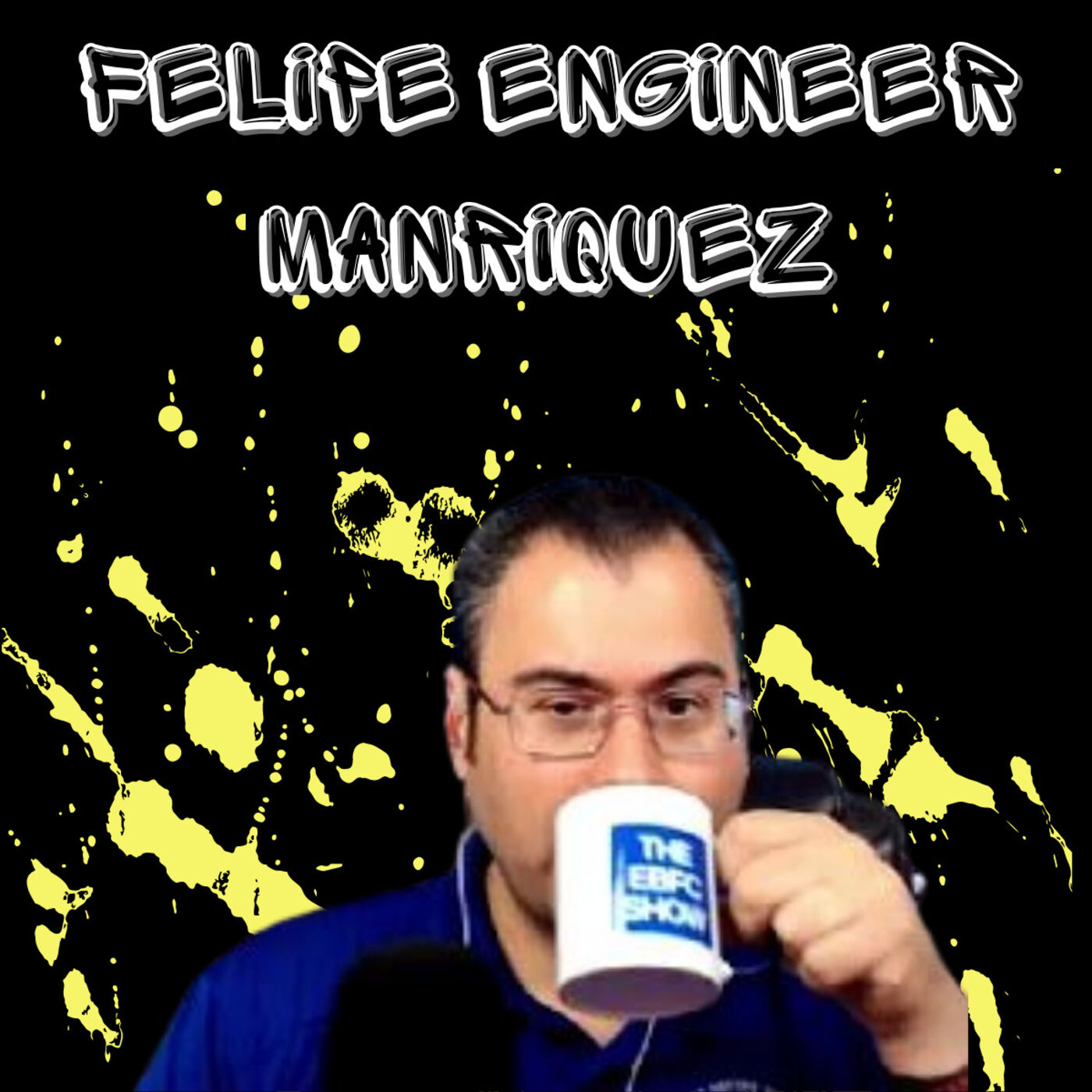
Felipe Engineer Manriquez on Delivering Value and Resource-efficiency in Your Work

 Apple Podcasts

 Spotify

 Overcast

 Castro

 PocketCasts

 RSS Feed

 Amazon Music

 Audible

 iHeartRadio
How do you more in your work while still managing to deliver value with efficiency? By intentionally balancing your flow with resource efficiency, you’re enabling yourself to live an amazing and balanced life.
In this episode, we have Felipe Engineer- Manriquez, a construction scrum expert, national director of lean construction, and the host of the EBFC show podcast. He’s also an international keynote speaker with decades of experience in process improvement, project planning, execution, change management, and employee engagement in the construction industry. Felipe explains how scrum changed his perspective in life and effectiveness in his work and other exciting things.
Listen in to learn how you can adopt a framework that enables you to manage yourself through flow while delivering value. You will also learn the value of putting yourself in uncomfortable situations to give yourself opportunities to grow beyond your imagination.
Connect with Felipe at:
https://www.theebfcshow.com/
https://www.linkedin.com/in/engineerfelipe/
Connect with us at:
https://www.learningsandmissteps.com/
How much evolution are we going to have to do to get to where they're at?
SPEAKER_01Um, we just need to stay on the path. We're on the same path. We are absolutely on the same path. Like when you walk into it, I mean, I think one of the only differences why it looks like it's so much further advanced is because people stay together. And in construction, in construction, Jesse, we're constantly mixing up the family.
SPEAKER_00That is my buddy, Mr. Felipe Engineer Manriquez. Y'all probably recognize his voice. And for those of you catching this on YouTube, probably recognize that handsome face from the Collabo sessions that he and I did on the Lean Builder. Well, this time we get a little more personal with Mr. Felipe. He shares with us the book that he's fixing to release. You already know how much value this man brings to our industry, and he's just gonna keep on doing it. Help us support him, please. And believe it or not, we ain't just talking about lean and scrum malicious, delicious stuff. We get to talk in some real talk. Stuff like balancing job knowledge with emotional intelligence, uh, which you know that might be a little soft notion, but it's extremely powerful. We also talked about the emotional baggage associated with being dishonest, uh, dishonest with yourself and dishonest with others. It's gonna get a little deep, but you know, that's how we do it, baby. So here we go. Here we are with Felipe Engineer Manriquez, host of the EBFC show, everything better, faster for construction. Did I get that right?
SPEAKER_01Almost, man. The easier, better for construction podcast. Where we're rocking it every two weeks, baby. People from all up and down the construction supply chain, inside, outside, anyone and everyone working to make construction better today than it was yesterday, Jesse.
SPEAKER_0010, four, and we were just chatting about a magical trip you had across the pond.
SPEAKER_01I just crossed over the Atlantic Ocean recently, and I just found out this morning that one of the countries we were visiting just shut its borders down to American citizens. So we got in and out just in time. I was like this close, Jesse, to being trapped in Sweden, where I would have been definitely a victim of Stockholm Syndrome. Because if I would have been locked down there, you would have left here. I could tell you that they treated me so well, I did not want to leave. We started off in Germany, I landed in Munich, and I was able to meet some very high-level individuals practicing lean construction, just like we do, Jesse. My friend Yanush and my friend Marco. And I was there with uh Jason Schroeder, Spencer Easton, and uh Jason's son Reno. Shout out to Reno, absolutely love Reno, he's gonna be amazing. He's gonna study business, he's just getting started joining the working world, and he was hilarious. We connected instantaneously. I mean, as Jason and Spencer are already my boys for forever, right? We're all brothers from another mother, so it was just really fun. Got to drive on the Autobahn, Jesse. Uh-oh. With no speed limit. Oh, watch out! I lived. We lived. You made it back. And I got passed up by uh, you know, a lot of uh very high-powered automobiles because we were we were out there just having a good old time.
SPEAKER_00Yeah, yeah. I bet it was fun. I it was I got to see some of the posts and stuff. It's like, man, that that seems like some good company for an amazing mission, and a ton of learning was taking place.
SPEAKER_01Ton of learning, and the the main connector of all of us, Jesse, is that we all believe in learning, and we all agree that things can get better every day, every day, things can get better, and they do get better, yeah. And so, like-minded individuals working together now with technology, Jesse. We can cross borders, time zones, it's no problem. As my friend Yanash always says, this is no problem. We can solve anything.
SPEAKER_00We got it, baby. Yeah, and I got everybody to oh, go ahead, Jesse.
SPEAKER_01Go ahead.
SPEAKER_00No, it's just everybody it I the group that you went with, they're kind of aligned with the title of the easier, better, faster for construction idea, huh?
SPEAKER_01Easier, better for construction. Absolutely, absolutely, Jesse. It's everyone's aligned, and and there are open invitations to our friends to join the podcast, and uh some of those will be coming out uh this year and next. Many opportunities. And there's also like I want to just preview there are some connections to these high-level players working in industry in general contracting, uh the owner side, industrial construction, other construction, and even BMW car assembly and production. I got to tour the BMW production line behind the scenes in Munich, and I got to see exactly how they're employing lean every single day. Oh man, I bet it was sexy, huh? Oh my god, I was in heaven. I told uh my friends at BMW, I said now I have to say at Toyota and BMW.
SPEAKER_00Oh it's so how big of a gap is there between our industry and that um what's what's the word? How much evolution are we gonna have to do to get to where they're at?
SPEAKER_01Um, we just need to stay on the path. We're on the same path. We are absolutely on the same path. Like when you walk into it, I mean, I think one of the only differences why it looks like it's so much further advanced is because people stay together. And in construction, in construction, Jesse, we're constantly mixing up the family. Yes, like we come together for a project, you know. For on average, projects are the types of companies that we work at. A typical job is about two years. So every two years, we're making new families and breaking it up, we're breaking up those project teams that don't get to stay together for a lot of different reasons. Whereas in manufacturing, people are way more stable and they get to stay together. And if you're gonna make a career out of something, you want to make a good go at it. And so there's a massive incentive for personal, intrinsic, and extrinsic reasons to make it amazing. So they're gonna be further ahead. Whenever you drop in, and I I recommend to anybody that gets the chance to tour a lean production facility of any kind whatsoever, it be it construction or manufacturing, take advantage and go see it. Yeah, because it's gonna shift your mind from what you think is possible to new possibilities. And that's what happened to me. Like I saw things, Jesse, that you know, I've read about it in books, I've seen videos, and when you're in the space, surrounded by the people doing it, and you just feel it. Yes, like we were inside this one part where there's a lot of welding machines, and I'm standing and I just turn my head just like this much, Jesse. Watch my head. This much.
SPEAKER_02Yep, yep.
SPEAKER_01And I was like, Oh my god, oh my god, there's the supermarket, there's the supermarket that I've read about in John Shook's book, Managing to Learn and Learning to See with Mike Rother. I'm like, there it is, that's the supermarket. And I asked our guide, and I said, Is that the supermarket for all the parts that people need in this area? And he's like, Yes, it is, with a big smile. Like, yeah, yeah, like these concepts work, and we can use supermarket concepts even in construction. We've done that, right? I've done that with teams and parking structures, and just having that little idea of like, if I could go someplace and get what I need and it's replenished in a certain way that feeds what we're doing, putting work in place, that's been multi-million dollar impact on projects in construction. So these ideas and manufacturing 100% carry over into what we do every day, Jesse.
SPEAKER_00So there is hope for us. Yes, sir. Um, I I you said something that I think is really key. In our industry, a lot of the concepts, like we'll stay with supermarkets, are conceptual. Not very many of us have seen it in action. And when you see it, is so two things when I've toured manufacturing facilities that are on their lean path is one, you can see it, and it's directly in front of you and it's in order. It's like, holy, this is it. This is the whole thing that I've been trying to understand and wrap my head around. Right. And the other thing that stood out to me is they don't talk in the jargon and the terms that we are trying to understand, it's just their job, right? It's just the way they do their work. And and to your point about the family stays together longer, 100%. The work is the work, but when people come in and come out, we gotta realign, we gotta build relationships, we gotta establish trust, we gotta establish uh communication expectations, and that takes a long time.
SPEAKER_01And what are the people we visited? We I went to go visit uh Marco at uh Weisenberger Bau in Karlsruhe, Germany, which is not close to Munich at all. Okay, it's a long drive. Okay, and uh I wish I could remember better, but I think I was I was averaging like five hours of sleep a night because I was waking up so excited every day I couldn't sleep, plus the jet lag of being on the other side of the planet. And uh I kept asking, Marco was just full transparency, completely wide open. They're a general contractor doing residential construction in uh in that part of Germany, and it was just basically the uh the southwestern part of Germany, and they're moving northward, moving north up, and then they're gonna move uh towards the center and then to the east. And and they're growing, and they're growing because of what they've been doing with lean construction. And they have buy-in from the executives, and they have you know people on the front lines, and they have people supporting the learning, the coaching, the experiments all over the company with with subcontractors, trade partners, and they said trade partners, just like we say trade partners. Yep, yep, and it's taken time, it's taken time. Like we we we looked in in awe, and and number one, shout out to Marco, his wife's a scrum master. Nice, love that. I love to see scrum masters like everywhere. They're using scrum all throughout the management side. We we toured through their corporate office and I saw scrum boards in every center of uh every work cluster of people. There were scrum boards, Jesse. I was in Scrum Heaven. Jason Schroeder put a video out on uh YouTube about this under the Lean Tac channel. Yep, and they he does pan to me with a big giant uh goofy smile on my face as we're coming across like the 55th scrum board in the office. And uh, and the thing that Marco said, like as impressive as it is, he's like, I want you all to know that it took time, it took time to get to that level. And I'm I'm excited, I've been consistent with Scrum Jesse, as you know, for a long time. You were in one of my early scrum courses back uh with LCI in San Antonio, yep, and and we're still at it today. I just finished a course yesterday, yeah. Yeah, with some more partners, and and people said like they were like, Wow, you're just you're just like so into this. And I said, Yeah, because it's liberating, yeah, it liberates people. Yes, and so I have infinite enthusiasm for it because it helps people do more of what they want to do. Yes, and so I I love it, and uh seeing it there and just hearing that it takes time just reinforces uh what I've been doing. And Marco's two years ahead of me. He's like he's been he's been at it for eight years. I've been full-time at lean transformation for six years, and we're not that far apart. But our our our company size, Jesse. The hold on one second here. I got so excited I kicked the I kicked my desk. I was like the the company size between like where I work at McCarthy, we're almost 5,000 employees, uh full-time and and craft workers, and then his company, they're only you know a fraction of that size.
SPEAKER_02Right.
SPEAKER_01And so we know, we know from our scrum training, Jesse, that there is this concept of communication channels, which it's you know part of psychology. There the the fewer people you have, the faster you can communicate, and the quicker you can make changes effectively, the more people it creates some complexity and there's different things you have to do, but that's that's getting too nerdy for what we want to talk about today. But if you're if you're out there listening, learning to miss the family, it's just like your own family. If you're family, if you're in a family of two, um, it's very easy for both of you to get on the same page versus being in like like my family on my dad's side, you know, it's I can't there's probably like 12 Felipe's just in the Felipe name. So for all of us to get on the same page, plus all the cousins, aunts, and uncles, you know, brothers and and different family, it takes longer to get on the same page because you have to have more conversations and experiences together. Because I can tell you, Jesse, I could tell you how awesome Scrum is, but until you experience it with me, yeah, it's not the same.
SPEAKER_00Yes, agreed. So I'm gonna give it another shot because I screwed up the name of your show twice already. So let's see. Uh the easier, better for construction show. Yes, yes, you got it, baby. Would the eBFC show excuse me? Would the EBFC show have manifested without Scrum?
SPEAKER_01No, no way. Because in order to, if you think about it, I have a full-time job. Yep, and uh you run a podcast, so you know, you know, and I know how many hours it takes. And we have a friend, like our friend Jason runs a podcast that puts shows out on the daily daily, that is daily, and you and I are both like every time we think about it, like, oh my like your eyes open up, my eyes bug out too.
SPEAKER_00Negative.
SPEAKER_01Not yet. So it it does, it takes time, it takes time, and so using the scrum framework allows me to manage you know all that I'm doing at work, plus serve my audience, yes, plus honor my guests, and I I go into a cycle. My sprint cycle for the show is two weeks, it's a two-week cycle. My my work cycle in my day-to-day is on a five-day cycle, Monday to Friday. And I I work with teams that are on a monthly cycle where they go, you know, calendar like uh first day of the month to the end of the month. So they're on a rolling, you know, 22 workday or call it a 30-day calendar day cycle, and then variations in between. And until I understood work as a cycle, yes, I I was just barely treading water. I mean, scrum was an absolute game changer, and I had learned about lean construction, Jesse, for like five years, maybe six years, even before I had ever heard about what Scrum was. Yep, and lean helped me get better, but Scrum exponentially helped me jump and do things that I could not do with just what I learned about lean. And that's just a function of how I was. It's different for other people. Sure. Yeah, there are other people that uh have found other things and it's made massive improvements for them, like tack time uh and other visual controls, Kanban for some people, which is just uh you know, using visual signboards to help them make decisions and pull work ahead, limiting work in progress. I mean, all those cool things. The thing about Scrum is that Scrum brings in some intentional feedback loops, yes, so that it forces you to see how you're handing work off. And that was a big game changer for me. That allowed me to because I had known what waste was, I knew what the eight the eight wastes, but once I saw from the customer's perspective of the people receiving my work, Jesse, totally changed where I put my time and energy, made me much more effective, yep, and allowed me to do other things like start a podcast, serve on multiple boards, get involved in other companies outside of McCarthy, volunteer my time at organizations like the Lean Construction Institute, the Construction Industry Institute, and some universities. Right. So all of those things happen because of how I manage myself through flow with delivering value, not by keeping myself busy. What our friend in Sweden, Nicholas Modig, calls the efficiency paradox. So balancing flow with resource efficiency.
unknownYeah.
SPEAKER_01And it is it is a balance.
SPEAKER_00Absolutely. A constant balance. It's not like you balance it out and it stays there. It takes constant maintenance.
SPEAKER_01And the balance between those two things, resource efficiency, like if I consider myself a resource and I'm awake for you know 16, 18 hours a day, if I just work to keep myself occupied for 18 hours a day, that doesn't have any kind of functional correlation on what people need for me, what I'm delivering, how am I transforming the world. Now, if I work to flow to deliver value, flow towards value delivery, yeah, and I try to balance those two, I'm gonna be in tension all the time.
unknownRight.
SPEAKER_01I'm gonna be in tension with being in a state of flow and then also utilizing myself. And so that when I say putting those two in balance, I'm creating tension like a bow and arrow pulling on a string, and it's creating a lot of potential. And as I let that go and and put forward value delivery, it's constantly like a reinforcing cycle of more amazing and fun life. As you know, Jesse, you've never talked to me and I've been like in a bad mood or having a bad day. It's always I'm always like energy 11, baby.
SPEAKER_00Yeah, man. It's the only way to be, but you got to figure out how to get there. So, you know, Felipe, we I I feel like I have just a backstage pass, VIP access because you and I we've done the the seven, eight collabo sessions, uh and sharing all of our um trauma in the industry.
SPEAKER_01That's a perfect word for it, Jesse.
SPEAKER_00Right evoked by the lean builder. We got to have a conversation with Joe and Keon, which which I think was awesome. It was a beautiful conversation. Um, we collaborated on the construction change makers live stream uh deals that we've had out on YouTube, and we'll be doing more of those, Jesse.
SPEAKER_01I just got uh two times Adam Hoots this week that said it's time for another one, so there'll be more. There are more coming.
SPEAKER_00Yeah, beautiful. And and that inspired me to do to go out on the live stream edge myself. We did one uh a few weeks back on uh Gamba-based improvement, and I'm fixing to do one with Miss Jennifer Lacey on um 5S in relationships. Oh, look at you. Oh, watch out. We start next Saturday, um, 8 a.m. Central, and we'll be going on every other Saturday. And to your point, you know, when I took the scrum class with you here in San Antonio, I'm like, ah, because I was trying to do like apply some of the last planner stuff to my life, yes, and it it it translated, but it wasn't as fluid. And then you know, I but had been introduced to personal Kanban, and same thing is like okay, I get it, but the reflect the loop, the feedback loop was kind of it was just what absent. Um when I got introduced to to Scrum in that class, I was like, okay, this this is exactly what this is the framework that's gonna help me. And and I'm following in your shadow, so it's awesome because I get to learn from you, and you've been very gracious in and sharing your knowledge with me and coaching me through some stuff. I've been able to incorporate all these other things, right? Serve my community, be a better brother, be a better son. Um, and that's not hard to do. Like, all I have to do is not be a jerk because that normally I am, but um do the podcast, do live streams, speak. Um I'm gonna be speaking with some students at San Jose uh from San Jose University.
SPEAKER_01Oh, I know that I know the group. AGC student chapter. Oh, yeah.
SPEAKER_00The AGC student chapter, and so all these other things that I used to have to say no to or be stressed to the kilt because I did want to offer or provide value, but because I was so busy, I I couldn't, or it was just it was not a pleasurable, entirely pleasurable existence. Whereas now it's like, yeah, baby, like let's do it, let's have some fun, it's gonna be good. We're gonna have a damn good time. Um, so for anybody, read The book, uh, but getting twice the work done in half the time, yeah.
SPEAKER_01And I got a surprise for y'all, too. I got uh my own book coming out. Bam! This is just the prototype, baby. Construction scrum. Construction scrum will be coming out this year, 2021. It's gonna be phenomenal. And we've got a ton of free stuff. If you want to learn more about Scrum, visit the ebfcshow.com. There is a blog on my site. I got I borrowed inspiration from you, Jesse, and started blogging. Uh-oh. Watch out, baby. Come on. And so I've got uh a few articles on things that have been very beneficial to me, such as Scrum. There are some videos there as well. The live streams that Jesse mentioned are all on that uh website. So you just click in the top header for live stream, and you can watch Jesse and I getting after it, talking about different concepts as long as as well as with other change makers. And so the resources are there, tons of free resources. And of course, I'm still always teaching uh Scrum to Scrum Masters that want it, because that's there, and a lot of people want to get certification and get a really deep dive in. We're doing that every single month, and so that's open to anybody and everyone.
SPEAKER_00Lost you. Okay, you're back. Oh, you lost me for a second? Yeah, you said it's open to everybody, and then it started.
SPEAKER_01Here, I'll I'll go again at www.theebfcs show.com, or you can just punch in on your favorite browser, the ebfcshow.com, ebfc show.com. You'll find free resources on the blog, things that have served me well, Jesse, such as scrum, A3 thinking, and more lean concepts. I've got useful articles and some how-tos there. And every single month I'm teaching future scrum masters how to use Scrum at a high level with lean compliments of Scrum Inc. I am a Scrum Inc. approved instructor for Scrum Masters and product owners. So we do teach both. Right now we've got Scrum Master courses every single month. So check that out on the site. Tons of information there to learn more, as well as free resources. Always, it's always there for free. Just use some curiosity, cuddle up with your favorite beverage. Mine is uh coffee, I like it black. Yep, and then uh read on, watch some videos, get inspired, and start trying it out. And Jesse, just like you, I'm always available to people that have questions. I even had um a partner in Florida, and I call everybody who works in the construction industry a partner because we're all in the same industry together. Jesse, did you know that one out of six people working today in the world work in construction? I did not know. One out of six. So we have a massive worldwide construction family and family. If you're out there and you need some time, hit me up on LinkedIn. I'm more than happy to connect, answer a quick question. We can jump on the phone or exchange emails, and uh, you don't need to reinvent the wheel by yourself. I've benefited tremendously from some powerful mentors that have just been so giving with their time, and it's had such a massive impact on me. I'm doing the same thing, taking a page out of my mentors' books and sharing with everyone that I can. Anyone that's curious, drop me a line. Let's get crazy and do something.
SPEAKER_00Oh well, I think it it can be said that we are lean fanatics and we want to help the industry, and most of the people that know us know all about that. Yes, and and so, but we're also kind of human beings on the side, also. Um, and so with that behind the lean stuff, you know, I want I want to help people understand, uh, give them a glimpse into get to know you. Oh, you want to peel back the curtain? I want to peel back some of that curtain, baby. Um, and so you know what should people know about you, Felipe? I mean, we talked about the lean, we talked about the scrum. Uh what else?
SPEAKER_01Yeah, I think uh people should know that I grew up in a uh blue-collar family back in the beautiful Chicago, Illinois. And depending on uh what time of day you hit me on, I pronounced that word differently.
SPEAKER_02Okay.
SPEAKER_01And I'm actually ESL. I'm English as a second language. I grew up speaking Spanish first, even though I was born in the United States. You could check my birth certificate. Yeah, yeah. But in my household, um, we grew up speaking Spanish in the house and then went to to school on the south side of Chicago in the suburbs, just barely outside the city. Yeah, and uh it was it was interesting. I had a good, uh, a cool upbringing where it was always mixed cultures, so all the time different cultures. And uh yeah, I was never in the majority group. So, and then the same thing happened when I went to high school. I went to a predominantly black high school uh a couple towns over from where we were. It's just how the lines were drawn, yeah, uh, going through the public school system, and then going to university. Um, I went to the University of Illinois at Chicago and I studied first computer engineering, Jesse. Did you know that?
SPEAKER_00I did not know that.
SPEAKER_01Are you surprised now, like how nerdy I am with the tech?
SPEAKER_00I'm not surprised at all.
SPEAKER_01Yeah, I've I built the I built my first computer when I was 14 years old from scratch. And uh, I've just loved playing with tech all the time, even though I am, as Jesse knows, a post-it note fanatic. I always have the notes ready on the ready.
SPEAKER_00You gotta try these out. Try your race, post-it notes.
SPEAKER_01Try erase. I like that.
SPEAKER_00Yeah, baby.
SPEAKER_01I've had those uh a couple of times, but I've not uh not had a decent pack, so I think I need to experiment with that a little bit more. And then I went to uh I was in school during Y2K. I changed majors to electrical engineering, and then I toured a construction site with a friend of mine that was in school working for Turner, where you used to work, Jesse. And I fell in love with construction, and I I got a job there, and I worked in construction and have been for over two decades, but uh my parents were you know not uh college educated. All of my on my dad's side, most of my aunts and uncles all went to university. We've got you know, doc, we've got nurses, teachers, all kinds of professionals. And on uh on my mom's side of the family, we've got people also working in the construction industry, we've got musicians, I mean, we've got all kinds of people in the family doing all kinds of different things, even some politicians, Jesse. Uh-oh, watch out. I know it even some politicians, and it's been amazing. Uh, and on my wife's family, you know, some professors and uh and other teachers, and all the mix of everything. And so it's been a blessing to have so many different people in the family for inspiration growing up. And we and we just kept uh we I luckily, my wife, amazing, amazing human being, my best friend, was incredibly supportive of all the things I like to try because I do like to try things, and I I tend towards following my passion, as you know, Jesse. So people that don't know me until you get to know me, you'll realize that yes, yes, it's true. I do follow my passions daily. And uh that's been incredible. I think one of the things, you know, aside from that background growing up in the South Side, and I lived and worked in Chicago in construction for a while before coming to California in the late 2000, I think it was 2008, 2009. Skin, it's so far away, Jesse. It's hard to remember exactly which year it was. I lived in Southern California for a while, and now um we're just north of Sacramento, a beautiful area here where I say I tell everybody it's the land of lean honey because it's just uh flowing. I think it I think it's really flowing out from Berkeley, California, Jesse. Believe it or not.
SPEAKER_00Yep.
SPEAKER_01There is a lot of cool stuff coming out of Berkeley, University of California, Berkeley, that's influencing lean thinkers worldwide. And so, you know, people I didn't I didn't even know what lean was until I was halfway through my career. I was all 100% traditional, you know, working in construction on the project management side. I've been a superintendent before on high-rise construction in Chicago. I've been a cost engineer, I've been a field engineer, I've been in many different roles inside of the industry. And uh, I've even gone and gotten my advanced degree, uh, my MBA, and now I'm getting I'm getting some peer pressure from some of my friends over across the Atlantic to get my PhD in Scrum, which I was just like, that sounds it sounds so amazing, Jesse. It's yeah, doesn't it sound amazing?
SPEAKER_00It does, and I imagine you've got plenty of case studies, firsthand experience that you you would be, whatever your um dissertation would be, would bring tremendous value and real observations contextualized to our industry.
SPEAKER_01Oh, and the funny thing is, Jesse, like in in my company, I've been accused of being too academic. Now, when I work with project teams, because that's what I do day in and day out, I work primarily with project teams and support on how the business works, but uh I can connect instantaneously with people at the front, right? Right at the front line. And we even did this, we got tested. Uh Jason and I got tested in Germany. We got to tour behind the scenes with a general contractor, and we instantaneously connected with frontline workers. Yeah. And and that's and it's like I think that's a testament because Jason, like myself, we've worked in so many different parts of the industry. Yeah, I don't lose touch with where the value is created. Yeah, even though I love to learn and I like school and I like training myself and learning all the time, that everybody else isn't that that way. And you don't have to go to school to learn these concepts. You can learn them on the job right where you're at. You can watch a YouTube video, you can be listening to this podcast, and you can get inspired and go try and do something that changes your whole trajectory. Yeah, so let's let's lower the bar. There's no pressure to have to do all these other things. I'm just following what I love to do, and I understand that the paths are different for everybody. Yeah, totally understand that.
SPEAKER_00You know, I here's my hypothesis, Philippe. You mentioned that you were an ESL learner, um, and and overcoming that or working through that helps you maintain an empathy for other people that are learning from different different backgrounds. And so on that note, what was it like? Could you do you remember? Can you describe what it was like going through that transition?
SPEAKER_01Oh, yeah. I mean, when I was in, you know, in the house, when you're a kid and you just grow up in your family, you don't know what the outside world's like. When I went to school, Jesse, I wasn't uh a straight A student through elementary school. Okay, and uh, and even through junior high, I was kind of like uh I wasn't a bad kid, but I definitely had seen the principal's office more than a handful of times. And uh and I did have a couple of in-school detentions for you know various different reasons, mostly related to believe it or not, Jesse, running my mouth.
SPEAKER_02Can you believe it? So surprise so shocking.
SPEAKER_01And then when I went to high school, it was uh, you know, something just clicked and I became a straight A student. And I graduated valedictorian. I and I I tell people that I'm a slow learner, and I look at all those years through eighth grade, it was like my ramp up to learning how to learn better. Yeah, and then I did much better. And then when I got to college, I got I was surrounded by some super A players. I went to engineering school, uh, studied electric, ultimately graduated with electrical engineering, and uh some of the people that I was in school with had known that they wanted to be an electrical engineer like 10 years before they got to school, like they had they had been like working towards it forever. And when I had looked at what to study, I literally just looked at all the options. I was like, Yeah, this looks interesting, and I kind of just picked it that way. Yeah, you know, it wasn't like I had a ton of analysis on it, which is totally different from how I approach things now. It's been an evolution, and and it was a struggle, and sometimes I think because I can think in two languages, right? I don't I don't translate in my mind. Now I will occasionally struggle for words, but uh I can think in two languages, and it it does actually affect how I see and think of things because of the two languages, and the language being Spanish, for those of you that can't figure out que si hablo español, sin no entienden, okay. Well, yeah, baby, yeah, and it's been uh it's been good to have that challenge. And uh I always tell people like if you're having a problem or you're struggling, that's amazing information and opportunity. And all the times in my life, Jesse, when I've had to learn something and I wasn't and I didn't do it well, it created conditions for growth. I have I have no examples, zero examples of amazing things happening by accident or things been just given to me. I have incredible stories and experiences where I've had to grow and expand my skill set and learn and make mistakes and do it again and say the wrong thing and have to apologize to people and make amends, or to have that once or twice. Yeah, I know you have. I know you have, Jesse. And so, you know, all of those things make for a much more interesting life and experiences.
SPEAKER_00Well, and you said you uh an arrangement of words that you used was you learned how to learn, uh and and I think you know, learning that so I had a different experience when my mom brought us up, and she did not, we did she was intentional about us not speaking Spanish because her experience when she was in school is she would get punished, she would get in trouble for speaking Spanish, and so because of that, she was very focused on us only speaking English, and and I remember the feeling when I'd visit my dad's side of the family who primarily spoke Spanish, or my grandparents, my mom's parents who spoke Spanish, most of the at home. I mean, they they were bilingual, but at home it was always Spanish. And I struggled to communicate. And I remember the that the insecurities or those weird feelings about like I'm doing something wrong, or I'm being treated like I'm doing something wrong. And I don't have a lot of control over that. Uh it's like it's not my fault, man. And so that that feeling, and then figuring out how to overcome it and figuring out like, okay, I I see what the gap is, let me do something about it. Uh and that's that little sensation, that little feeling that I experienced because I couldn't speak Spanish. Um, I've recognized that feeling now as just a call to learn, a call to expand my skill set, a call to expand my knowledge base. Because that feeling does arise in different arenas, you know, when when hell, you know, our industry, uh, or when I started getting involved with the school districts, when I started volunteering and and and speaking to students and speaking to teachers and parents about the careers in the industry, public speaking all of a sudden, like I couldn't drop an F-bomb every other word. I know, right? Like, whoa, I gotta like or or just that, all of those experiences at the forefront. The very first time I get to the edge of that comfort zone, I remember back to when I'd get the snicker or the side comment about me not being able to speak Spanish. Uh, and I feel like that equipped me to be able to deal with all that other stuff that we get to deal with on a daily basis.
SPEAKER_01On the daily. And that that right there, Jesse, is perfect. Discomfort. Discomfort. I mean, when I'm working with people in teams, and and sometimes I tell people, like, hey, we're gonna do this thing when I get invited to a project to make an improvement or to help them go through something or learn a new skill. I tell them, like, you're gonna look at me at times and think like I'm a genius or magical.
unknownRight.
SPEAKER_01That's like, and it's the wizard or something like that. And I said, and let's not, let's, let's lower that. There's gonna be times where really what's happening is that I'm just comfortable because I've been training myself to learn and be very adaptive in all these situations, and that's why I can you know drop in and help teams no matter what phase they're in, and make improvements, because I'm already okay with being uncomfortable and discomfort. I've just decided every day, and I'm not the only person, there's a lot of people on planet earth that that take this approach. Like we just decide every day, let's spend some time being uncomfortable and let's get closer to discomfort so that we can grow. And that allows me to to do what I need to do. And I tell people, like I I watch them, I watch as we're as we're trying to do something new, and it's like they're not quite getting it at first, or they're struggling, and I say, Oh, you're experiencing discomfort. And it's because if you if you don't experience discomfort and you just stay the same, then there's no change. You stay the same, and whatever trajectory you're on, that's just what you're gonna get. But if you if you open yourself up and say, Okay, I'm gonna be uncomfortable, I can say, I don't know. I can say I'm not sure. Those two phrases are signaling discomfort and and some awareness that there's a gap, like you said before. And so if you open yourself up to that discomfort, like and some of us don't have a choice, we just get lucky to not have the ability to just be comfortable. Yep, and so that that is something that it's available to anyone listening, anyone listening every day intentionally. I decide that I have to do something that I don't want to do so that I can experience some level of discomfort and grow. I don't, you know, it's not like I'm I jump off with my house and say, like I'm gonna sprout wings and fly. You know, use use some some of your experience to know what some good limitations are for you, but do absolutely do something that's a little, even just a little bit uncomfortable.
SPEAKER_00Yeah, yeah, that's phenomenal advice for for all of our people out there. I know that we're gonna have a uh flood of young listeners. Uh, I've got an uh uh interview with Miss Krista Accles, who is uh Program Manager at Construction Careers Academy. Um where it's a high school and they're they're they're teaching kids and bringing them into the industry. So it was an awesome conversation. And and I hope that all of her students jump in and and catch after her episode, listen to this episode and catch that bit of advice. So get out of your comfort zone, go to the edge, because that's where the growth happens. So, Felipe, when you you said you built your first computer when you were 14. Um, what was your career aspiration back then, back in them days?
SPEAKER_01Do you remember back in them days? Oh, I do remember Jesse. I was convinced at that time that I was gonna go work for the power company. Ah, I was absolutely convinced, and I even though I was building computers, I loved and have always loved since the first time I took apart an extension cord and made sparks in my bedroom and did not burn the house down.
SPEAKER_02Yeah, yeah.
SPEAKER_01I know mom and dad aren't listening, but they know the story, they know the story. I said, Man, there's something cool going on here in these wires. And so I've always been fascinated with electricity. And so I thought, uh, I'm gonna definitely go work for the power company. And when I went to school, even as a computer engineer, I thought there would be a way for me to make that happen. Right, and it just never happened. Like every time I had to we had to take courses, the power company courses, like where I grew up in Chicago, Commonwealth Edison is a very big company there, and they're one of the largest employers of people getting that type of training at the time, you know, electrical engineers and that sort. I did not get the right courses to get in. So what ended up happening to me is I ended Taking a lot of courses on uh control systems, feedback loops, even some industrial engineering, which is one of the foundations for good lean thinking. Hello. Yes, yes, yes, and uh and different things like that, uh, communication theory, signal theory for uh electrical systems, and so all of those things you know shifted me towards something else. And then when I went into construction, so I really got out of school and went straight to construction. I was always gravitating towards the mechanical electrical plumbing trades because it was closer to what I was used to. But it again, circumstances on the first job, Jesse, they're like, Oh, all you're gonna do is close this punch list out. So, or you're gonna just do this data entry. You're gonna just take these daily reports that are handwritten and get them into Prologue because that's important.
SPEAKER_02Yeah, yeah.
SPEAKER_01And so, and so I I I shifted, but it created a learning opportunity where I got to learn about structure, how things come together, what defects are at a very high level. Like I got to find in a 12-story building, I literally got to find every single defect. It was like an Easter egg hunt, and they were just everywhere.
SPEAKER_00Right.
SPEAKER_01And but it taught me how to working with the foreman to close the issues out and make the corrections. It taught me how things actually come together and fit. Yeah, which is something I did not learn in school, but I learned it on the job. And then, like two years later, Jesse, people started guessing. I would make people get like, guess what I learned? Guess what I went to school for? Because you know, when you're young, people like to say what you go to school for. Right. And I was getting confused for being a structural engineer, which I was like, oh yeah, I took it always as a compliment. Yeah, yeah. Because I understood how the structures went, how things got put together at a higher level. So I was like, this is good. This is this is good, this is a good thing, and I really enjoyed it.
SPEAKER_00Yeah, well, I you know, you talk about punch lists, and I know how miserable that can be. Uh, but one of the benefits and unspoken benefits that I think rather I know you capitalized on, and too many people don't, is tracking and closing those punch list items gives you in an enormous amount of cycles, an enormous amount of reps in relationship building, right? In communicating with human beings and expanding the way in which you communicate, understanding personalities. What do you is that uh is that like an outer space thought, Philippe?
SPEAKER_01No, you're completely accurate. I mean, when I was on that job, I started as an intern, and because of the relationships that I made with closing out those items, the owner said, we want Felipe to stay on and finish this through. So I got to transfer from intern to cooperative education. So I was going to school part-time and working part-time, and then that led to a full-time offer because of the relationships. Yeah. So 100%, Jesse. You were you're right on. You are on point.
SPEAKER_00Ted four, but we we don't talk enough about that. I was having a conversation with Adam, one of your pupils, over the past couple of days. Um, and and we got we got into a discussion about the soft stuff and and like the real stuff. And I, you know, I straight up I'm biased towards the size, soft stuff, relationships, culture, how do people function, how are people gonna react, how are they gonna feel. Um, and some people are biased towards building stuff, like we build, build, build output. And and I I we need both. And there's probably another component in there somewhere that we haven't really um been able to figure out. But the human side and the process side of executing the work are 100%, like they're not synonymous. If if we just focus on on the squishy stuff, we're not gonna get a lot done. And if we just focus on the getting done stuff, we're not gonna have the people to do it. Or we'll have the body, but we won't have the heart and soul, and we need that. Um and so I you know, I wonder, you know, we got this curriculum, we got all these programs, uh, these education systems out there that are teaching people things. What would it take to be focused and and develop or teach people the other stuff, the communication, the relationship building, the listening. Uh I feel like we got a long way to go before we actually have something in place that can accomplish both.
SPEAKER_01We do, we absolutely do. And I mean, one of my mentors, Jesse, is a gentleman by the name of William Edwards Deming. And Deming said that uh in the system of profound knowledge, psychology is one of the core components. Yep. And he said you don't have to be eminent at any area of the system as he described it, but you do need to have knowledge of it. And psychology is both understanding yourself and understanding yourself in relation to others. Yes, it's both. Yes, and so I spend a lot of my time. A lot of people don't know this, Jesse, but now your your listeners are getting some behind the curtain. We're still behind the curtain, baby.
SPEAKER_02Still behind the curtain.
SPEAKER_01I spend a lot of time studying psychology so that I can be better with myself and better with other people. Yeah, it's critical. Actually, I this actually happened. True story, Jesse. This February of this year, I went to a job site in Nevada and I met uh the team and that I did an introduction to who I am and they said what why I'm here. And I was there for an entire week. We were working on in improving some flow and throughput. And uh one of the superintendents came up to me afterwards and he said, uh, what school did you study psychology at? And I said, I didn't study psychology. He's like, Oh my god, he's like, You sound like a doctor. Yeah, yeah. So it was like, okay, things I've been confused for, structural engineer and psychologist.
SPEAKER_00That's not bad. That's not bad. I'm not gonna say what I've been confused for, except for um, except for a uh stripper. I've been confused for a stripper a couple of times. I could see that that was a long time ago.
SPEAKER_01I could totally see that. I've heard I've heard stories about your dancing capabilities.
SPEAKER_00Oh man, can't get enough of that. You know, one you you pointed to something that I want to say so that our listeners, especially the young folks that are gonna be jumping on, um I think it's critical, is one criteria that I have for the people that I include in my circle, which if you didn't know this, Felipe, you're in my circle. Of course I know I'm in, baby.
SPEAKER_01We're on a we're on a hug, heart-to-heart hugging basis already.
SPEAKER_00Yes, yes, you complete me. Um is this the criteria? Is this there's a lot of people out there that are very smart and committed to digesting information and reading books and expanding their knowledge. And I those are the type of people I I like hanging around. Now, the people that get in the circle are the people that do that from with the purpose of further understanding themselves. So they internalize what they're learning to better understand how they function and how they operate and how they impact other people, and they use that knowledge to have uh more responsible ripples of impact. So, for example, have you read uh Jacko Willink's book? Um Damn it, we're extreme ownership. Extreme ownership, thank you. Extreme ownership. Yes, I have okay. How many people have you met that have read the book and said, Man, gives you a list of names of people that should read the book?
SPEAKER_01Oh, many people, yeah, many. I've recommended that book uh many times, and I've reread it, Jesse, several times.
SPEAKER_00Yes, and you reread it for yourself. That's right. Now, so that's the like to to to delineate the and I would uh it's kind of funny that you mentioned that, Jesse.
SPEAKER_01Look over my shoulder. You see those three white plaques over my shoulder?
SPEAKER_00I do.
SPEAKER_01Two out of three of those are pages that I retyped from Jocko's book and framed on the wall.
SPEAKER_00Nice, nice. So some stuff that you adhere to and is part of just your your diet of existing.
SPEAKER_01I come in here and I look at those and I and I reread. Those were like things that really stood out. Like when Jocko talks about standards in particular, that's one of them. One of them is his phrase on standards, and he says that standards are not what you preach, they are what you tolerate. Oh, yeah. It's not what you say, it's what you accept. Yeah, baby.
SPEAKER_00Yes. And so that's an that is evidence, Philippe, that you read it and you internalized the message, the the principle, the thought, the idea to help you function at a higher level. Where a lot of people will read the book and not internalize anything, and they'll say, ah, this information this person needs. So they deflect ownership, they deflect ownership and say, if some if everybody else would read this book, things would be better for me. Like, no, like you gotta do it, it's about you, man.
SPEAKER_01Yeah, and I love uh people if you're listening. Jocko has a podcast that's phenomenal. Oh, yeah, and I listen to it all the time. I mean, that's why I keep the microphone right here in my face because you gotta get after it, baby.
SPEAKER_00I love that those guys are they're amazing, they're part of the several people out there that helped me get the courage up to start the podcast. I love uh let's give a shout-out to Echo Charles.
SPEAKER_01Echo Charles, yep, Echo Charles. We love you, Echo Charles.
SPEAKER_00Yes, yes, and you know, yeah, when I started watching their YouTube stuff, I was like, holy moly, that dude's a beast! Like he's he's a monster, and but his personality, just hearing him, he doesn't sound like a big giant, super ripped beast animal, you know. You see, like son of a gun.
SPEAKER_01Okay, Echo Charles has biceps that are like the size of my head, yes, yes, and of course Jocko does as well. I mean, they they get after it. Jocko's always, I mean, he says his motivation every day is that he's he's training himself to be ready because he knows that somewhere his enemy is training and he will not let his enemy overtake him.
SPEAKER_00Yes, yes, you gotta be prepared, and you don't prepare, you can't prepare at the last minute, you gotta prepare every single damn day. So along the lines of uh But let me let me go back on that, Jesse.
SPEAKER_01So when I when I read books or I learn something, and I've had uh one of our friends comment this on me. She says that every time I talk to you, because we don't talk all the time, she's like, every time I talk to you, you're like jumped in what you've done. And I said, Yes, because everything I learn, I test it right away. Yeah, I test it right away, and I don't I don't prescribe things to people. Like sometimes people say, like, hey, what book should I read? What do you recommend? And it's like, well, I don't know you, so I have no idea what to recommend to you. I was like, you gotta talk to me a little bit first, right? And then we'll figure out you know what your need is and what you want. And so, like, the same for books. Like, I've never I've never given somebody a book and just said, Hey, you need to read this. Like, never have done that. Never because that doesn't work. Yeah, because it's like you said, you know, a lot of people just read passively, and I don't read passively because I don't learn that way. I am I am actually slow to learn things, and I have to experiment and experience it with more than just one sense. I need multiple senses to internalize it. And I know from experience that when I've learned something, it stays with me forever, permanently.
SPEAKER_00Yeah, because you've put you said it, your multiple senses. You put your hands on it, you felt it, you smelt it, you listened to it, you saw it. Sometimes I gotta taste it. Sometimes you gotta taste it, baby. Oh, I love it. Uh, so along the lines of this, you're not recommending books to people that you don't really know, you don't understand what they're coming from, or even if the damn material in the book is gonna benefit them. Uh, my assumption is you learned that.
SPEAKER_01Oh, yeah, I learned that from from recommending books to people that they didn't do anything with. Yep, yep, yep. Yeah, because uh I don't forget what I give somebody or what I remember. Like I have we have a friend right now, Jesse. We have one friend that I gave I gave him a book that he didn't ask for, he has not read it, and it's been one year. That's no surprise. And so, see, there's like it's been you know 10 years since I made that mistake. Well, in year nine and a half, I made the mistake a second time, yeah. But I guarantee you, in the next 10 years, I won't make that mistake a third time. That's it. Done. No more.
SPEAKER_00So, along the the line of mistakes, what is a significant learning that you've had as a result of a pretty traumatic, painful misstep? It's gonna be oh yeah, gotta do the announcement for that fans only content. This clip is gonna be available through patreon.com slash learnings and missteps. Signing up for the composite crew, which is like three bucks a month, gets you the LM Backstage pass. We've got multiple levels. We love that you're here with us, and we are grateful for those of you who are willing to join the other patrons who have been contributing and help us keep this commercial free. Except for me. We're starting to get a little fancy. Check us out on YouTube. You'll notice a marked difference in the content we're putting out. So enough selling back to Felipe and then own it and then move.
SPEAKER_01And so I have that lesson of my two years loss due to my own poor decision making that helps me reinforce why I would rather be uncomfortable and honest than to have temporary comfort, dishonesty, and lose more time. I am no longer willing to lose time, Jesse.
SPEAKER_00Can't you ain't gonna get it back? That's a phenomenal lesson, and I think it'll provide a lot of value to a lot of people. Uh you gotta get there. It's liberating, um, it's humbling, it makes us better people. Uh, and so in terms of better people, you're a pretty damn good person, Felipe.
SPEAKER_01Oh, thank you, Jesse.
SPEAKER_00I appreciate that. Yeah, man. Uh what footprint do you intend to leave? Oh, the heart, we got the heart. Got the little heart, baby. What footprint do you intend to leave on the world?
SPEAKER_01My intention for the world, Jesse, is that people recognize, and and I'm helping to make that a possibility because it's not always obvious, that people recognize that the life you live right now is nothing more than a series of choices. And I want people to see that you can change those choices any day at any time, no matter what. You are not stuck in your circumstances, you are bigger than that. So it's my it's my mission, Jesse, to put forward to the world. Just like my shirt says here, where I got my my master's, we have a bright future. It is my intention, my action, my purpose to inspire people to see that option is available to everyone, regardless of circumstance. And I want to pour and overflow my energy and enthusiasm, as I've even done with a lot of my friends and the change makers, as you know. I overflow that enthusiasm. I'm tapping into an infinite amount of energy to allow people to see the possibilities that are before them that sometimes they can't see because they feel trapped or they think that the circumstances are beyond their control. And so that's what I'm that's what I'm gonna do, Jesse. That's what I'm gonna leave forward. And I don't care if people remember my name or if they remember the the right what the EBFC show stands for. That doesn't matter to me. Yeah, what matters is that in every single interaction with every person that I meet, whether they it's direct or indirect, that I give them the spark to see that there is an option to change their circumstances and to have an amazing and incredible life that they wake up excited for every single day. That's what I'm working towards, my friend. That's going to be my legacy. And I want to see that just cascading through. That's why I'm using technology, media, and all my relationships to serve that purpose so that people out there listening, if you're listening out there, people, this energy is for you. I'm pushing it out there right through, through the microphone, through the camera. I want you to know that you can have an amazing life. It's ready for you. And it's just a matter of making one decision and then another and then another, and then you wake up exuberant, joyful, happy, excited every day, all the time. Jesse, somebody hit me up yesterday. We got on a call, camera on, and I was smiling and I was listening to some music, and the person made a comment on boy, you are just always happy. And I said, Yes, yes, I am, because I'm alive right now. And so long as I'm alive, I'm going to tap into that infinite energy and overflow it into everybody that I interact with. That's this is what I'm gonna do. That's my choice, and that's what I'm doing.
SPEAKER_00Boom, and you're doing it. Like I've been around you long enough to see you just steadily doing it. You know, it reminds me of uh uh uh a quote or a excerpt from Victor Frankel's book, Man's Search for Meaning, that totally transformed my life. Um, and I'm gonna jack it up. So go ahead. I I read it too. I hope right. So he he taught he the statement that just got stamped in my brain, or the idea that got stamped in my brain was there's a space between stimulus and response, and within that space lies our power to choose. Then he goes on to say when we start choosing and recognize that that space exists, it becomes bigger and bigger and bigger. So when I have those major life pains that we all have, yes the the the pause to reflect and think about how will I respond has transformed my life entirely. And and I think your energy just adds to that, right? Makes it like, yes, like that's where I want to be. That's where we want to be. We want to be having fun, and we have complete power over it. So I, Felipe, however, I can help you in that mission, let me know, my man, because I want to contribute.
SPEAKER_01I will. I'll keep calling on you, Jesse. You have been a friend, a confident, and a fellow change maker. We need more change makers in the world. So I thank you for all the things you've done for me. You are helping me, and I will continue to call on you. We got lots of work to do, Jesse.
SPEAKER_00We certainly do, my man, and I'm happy we're doing it together. So, was there anything that was that you really wanted to talk about that we missed? I mean, we talked about scrum for like 10 minutes, so at least people are gonna be shocked that we talked about scrum, Philippe.
SPEAKER_01I think I think the other thing I I want to share, Jesse, to to close it out is that you know the the person you're listening to now is not uh I wasn't just like poof and I came into existence. This has been a journey that's still ongoing, and I'm still learning and growing. And I've benefited, I mean, beyond words. I have benefited from amazing human beings in my life, both living and not. You know, through the power of books and other media, I've been able to learn from people spanning time. And I think all of us in the human family, we're all in the same family, all on planet Earth. We can learn from each other. We have an infinite amount of resources at our disposal, especially now in these times. And I know it's not always positive out there. You've we've got a worldwide pandemic, people have died. I've lost family members. Everyone listening has known somebody that's been impacted by by COVID. And these times are very difficult. And I want everyone listening to know that you're not alone. We're out here together. We're all part of the same family. And there are people that care whether you know them or not. There are strangers that care about you. Even if you don't know them, you care. If you hear my voice, you can hear that I care about you. I need all of my people, all human beings listening, to remember that we're all interconnected. And that's the one thing I want to share. And I just even talked about this with my parents last night. And my mother said, she's like, I can feel it, even though you're 3,000 miles away. And I said, every day you should feel it. We're all connected. And I love that. It's amazing. This experience that we have called Living, Jesse, it's incredible. And words, even the words I'm using now, don't do it justice for how amazing and how much of a gift it is. There was a philosopher that lived some years ago, Jesse, and he said that he used to look out into the night sky. And he he was like camping or something. He was far from civilization. And he saw all the stars shining. And he said, it was like looking at a fireworks show that's on every single night, no matter where you are on planet Earth. Life is a celebration. Let's enjoy it. Let's live it. Let's celebrate. So it's just that's just the last thing I want to leave people with. That's how I see it, Jesse. It's a celebration. Let's celebrate together. Find somebody to celebrate with, and let's have fun.
SPEAKER_00Beautifully said. And we'll just let it end on that note. Yep, that's my homie, Felipe Engineer Manriquez. When you get a chance, check him out. The EBFC show. He's got some fine content on YouTube, and he's available everywhere else you can find us. And of course, we got to give a shout-out. And this one is a very, very special shout-out to Miss Mari Corpus, who is a dear friend and who was participating in our live streams of 5S in relationships. And so I got a little text from her. Her text says this, Jesse, I dragged my behind up on a Saturday morning to attend your live stream, and I didn't get a shout-out on LinkedIn. Apologies, Miss Marty. I have amended the shout-outs on LinkedIn, and I'll give you an extra special shout-out on this episode. And I hope to the rest of the LM family out there, give us some feedback. I'd love to shout you out. I'd love to learn where we can do better. Nothing but love for y'all.
SPEAKER_02Peace.
SPEAKER_00Man, you are one dedicated listener, sticking with us all the way through to the very, very end. Please know that this podcast dies without you. And we invite you to share how the episode's impacting you, along with your thoughts, questions, and suggestions. You've been gracious with your time, so we added social media links in the show notes to make it super easy for you to connect with us. Be kind to yourself, stay cool, and we'll talk at you next time.


