
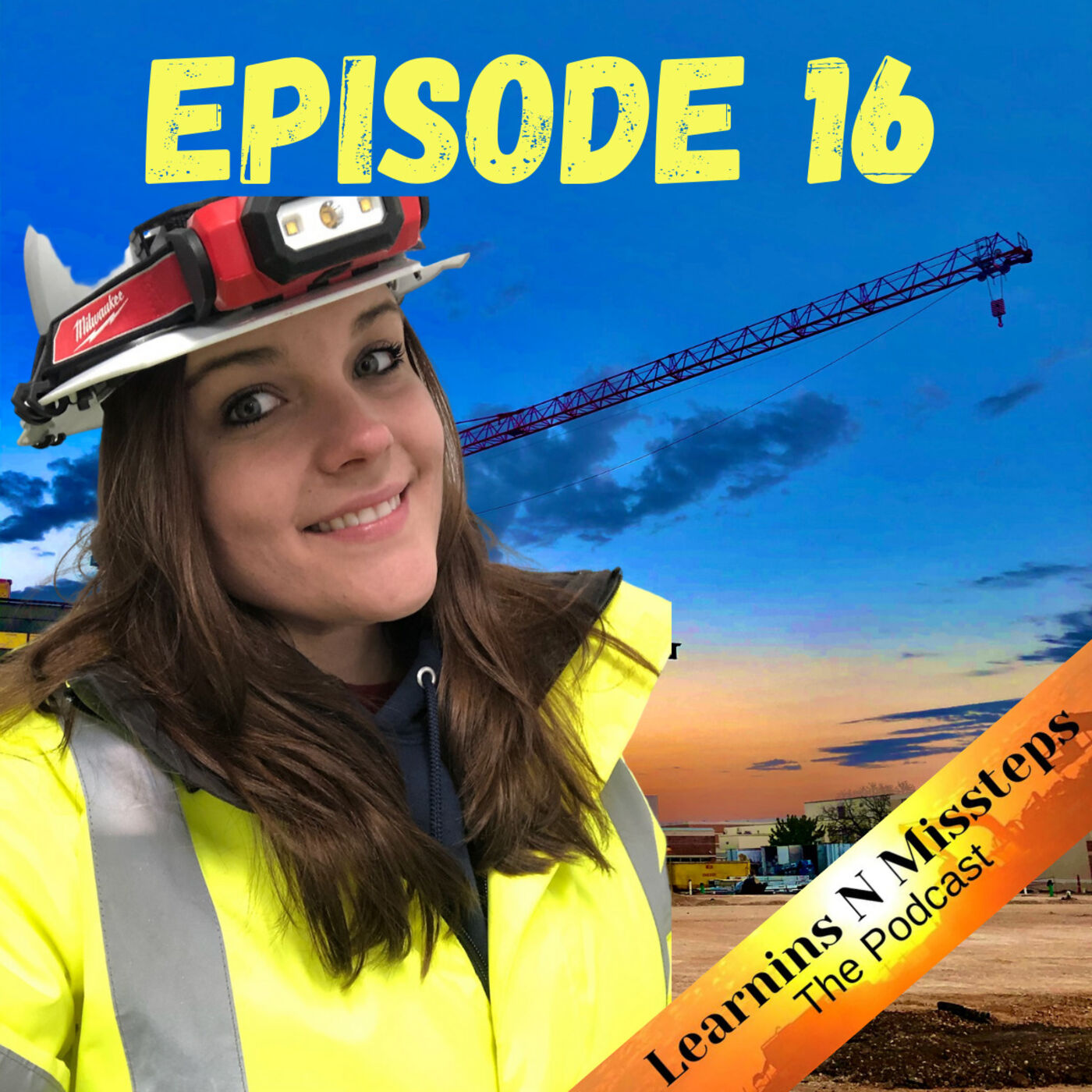
Episode 16: Examining some dirty details and a path to wellness with Jillian Hubbard, Electrical Apprentice.

 Apple Podcasts

 Spotify

 Overcast

 Castro

 PocketCasts

 RSS Feed

 Amazon Music

 Audible

 iHeartRadio
Jillian Hubbard (Mother, Healer, Electrical Apprentice) brings her "A " game in this conversation with Jesse.
She holds nothing back as they discuss many of the ugly truths that exist in the construction Industry.
Jillian exhibits real leadership qualities as she goes beyond pointing at a problem and gives her blueprint for correcting these problems.
Her thoughts on starting a family, keeping your dreams alive, and building a career will benefit anyone in their journey.
Her courageous spirit inspires our Host to open up and share a personal truth. So suit up and take in this morsel of goodness.
Connect with Jillian at:
https://www.linkedin.com/in/jillian-hubbard-ab684a141/
Support the mission at:
https://www.patreon.com/learninsnmissteps
Connect with us at:
https://www.linkedin.com/in/learnins-n-missteps-6525b41b7/
https://www.instagram.com/learninsnmissteps/?hl=en
https://twitter.com/MisstepsN
https://www.facebook.com/learninsn.missteps.1/
For the faces behind the voices check out:
https://www.youtube.com/channel/UC4yLjr8swfqCt_vMp74oiXA
In my brain, everybody's my opponent. I gotta beat everybody. And the ones that were closer to me, maybe not beating, I would make things hard for them, right? Because I wanted to outperform them.
SPEAKER_01So basically, in a zombie apocalypse, be faster than you, but maybe not too close because you'll step on my toes.
SPEAKER_00I will trip you. You need to stay at least five feet ahead of me. If you're within two or three feet, you're gonna trip. You're listening to the Learnins and Missteps podcast, where we intend to change the image of careers in the trades. We celebrate the real men and women who have built careers in the construction industry by bringing their personal stories straight to you. I began my career as a plumber's apprentice in the late 1900s. Over the last 26 years, I've had the fortune of meeting some of the most resilient, intelligent, and inspiring people who happen to be construction workers. My career path as a plumber has provided me with experiences and opportunities I thought were inaccessible. And I want you to know that the trades are a place where dreams can come true. These stories are brought to you by three brothers who share a mother. I am Jesse, your host. Our in-house writer is Ernest, aka La Voz. Hello. And our co-host, Renee. What's up? Welcome back, LM family, and to all you newcomers, super excited to introduce to you the culture building one and only Jillian Hubbard. She's a mother of four, electrical apprentice, started her career in the trade years back, took a pause, came back to it, and she's she's ready to tear it up. In this episode, Gillian does not steer away from the down and dirty details that that many of us have experienced out there in the industry. It's not the most hospitable place. In some cases, it can be amazing. But we get we get into the reality of what the hell to expect. Jillian ensures that we talk about the realities of what could be in the industry. And through that courageous conversation, I end up sharing a personal truth that hasn't been talked about on this podcast yet. So hang in there and hope you enjoy the show. One last thing. We've set up a Patreon account for those of you who want to further contribute to our mission of changing the images of careers in the trades. Signing up at patreon.com slash learnins and missteps will get you access to exclusive content and your names in the opening credits of the video versions of these episodes. Yeah, you heard me right. We got that five for you, baby, on YouTube. Love y'all, and here we go.
SPEAKER_01I forget what it is that you do.
SPEAKER_00So I get to deal with a lot of rejection. And once we get past the rejection, I get to help people make their day suck less.
SPEAKER_01Nice.
SPEAKER_00Like that's the whole point of it. Uh, but it's change, and and people, you know, we don't like change. Human beings don't like change.
SPEAKER_01I'm one to embrace it though.
SPEAKER_00It's so much more fun, right?
SPEAKER_01I flourished with constant movement and change. Right. I think that's one of the reasons why I like construction so much, is we do get to experience so much. If I ever had to sit in a cubicle and try to work at an office, I would be so bored.
SPEAKER_00Oh my goodness, I would get fired.
SPEAKER_01Yeah. Stimulation.
SPEAKER_00You nailed it. It's the stimulation, right? The auditor, visual, like everything on a job site will keep me calm. But in an office, there's just not enough stimulation that I start like all my weird ticks come out. I'm loud, I talk a lot, I make noises. I don't even know I'm making noises, but I make noises or I sing and I hum. And when I first hit a job site right out of high school, like nobody nobody's getting mad at me for all my stuff. The environment is amazing. And it's not for everybody, but I think there's a lot of people out there that are probably already predisposed or best suited for it.
SPEAKER_01A hundred percent agree with that, especially with kids. It's not something that comes naturally. Their way of being and their way of working outside of the box, where a lot of times it could be considered strange or odd, it actually is way more common and they would flourish in more of a hands-on blue-collar atmosphere instead of an office space because they're not built that way. Like for me, the way that my brain works, it's like a it's a problem-solving brain. So I'm constantly dissecting. It really helps with construction. I am able to see different objectives. And a lot of times when you're out in the field, you need to be able to work on the fly like that. You know, when we have the plans in front of us, we have like a set list of what it is that we need to get done, but nothing ever works like a perfect puzzle in the field. And so we need to be able to adjust and adapt. There's a lot of times where people who think too much and overprocess, it actually works out really good for leadership positions in the field.
SPEAKER_00That brings a question to my mind because I have a theory, and so we're talking about kind of the the environment that best suits people uh for their way of thinking and the way they function and interact with their space. Or maybe I'm just trying to make myself feel better. But hear me out. My theory is there there are people that struggle with the status quo, and there are people from a young age, let's say middle school and up, they struggle with just following arbitrary rules, they need to understand what the purpose of the rule is. And so they end up becoming this kind of rebel against everything, right? That's what people see in them. Like, man, can't you just be like, can't you just go with the flow? As they're maturing, they may take the path least traveled, they may be troublemakers. And my theory is that those types of instances prepares them for what a leader actually has to deal with in terms of guiding a team, being uh uh adapting to a situation, problem solving in the moment to go down a path that has not been established yet. What do you think?
SPEAKER_01I definitely agree with that. I've definitely in the field been considered a problem. And I and you know what's funny is I've been considered a problem because I'm extremely passionate about safety and making sure that my team and those around me are safe. And I have been vocal about situations that were not safe and were not good environments, and I'm ballsy enough to actually open my mouth. Whereas a lot of the guys, they just kind of like you said, they just they just follow the lane of least resistance for me as somebody who holds myself to a standard. I also hold those around me to a standard. Sure. Um, and so that can be a little bit challenging, especially as a female, because as much as I'd like to say that we don't have that stigma anymore in the industry, we definitely do. There's still a lot of like old mindset when it comes to females in the industry. Last summer there was a situation on a job site, it was a near miss. I almost got smashed in the head with two different tinder blocks that came from the third story. Um at the time I had just gone to my foreman on the job and I had said something to him. I said, Hey, I'm pissed. He's like, Why are you pissed? I said, You know, this just happened. I'm and he's like, Okay, well, what are you gonna do about it? I said, I'm gonna go find them and I'm gonna say something because this is not okay. So I had ended up getting into verbal back and forth with him on the job site, which is inappropriate. It is inappropriate, but when you almost die on a job site, you're gonna get into an argument. I I got punished. I ended up take cooling off with my team, having coffee. I was good. I was gonna continue my day. My company sent me home for the day because the GC had threatened to take me off the job site indefinitely. So they wanted to appease them because they do a lot of work for that. Of course. And later that day, I get a phone call from the owner, right? And I'm still like rattled. I'm still I will never forget the first question that came out of their mouth. It wasn't, hey, I heard what went on. Are you okay? Do you want to let me know what it is that had gone on from your perspective? It was so what's your plan? First sentence. And I'm like, uh, I don't know. What's my plan? Am I supposed to be scared and leave the industry because one asshole like did something terrible? And he next said, Well, we want you to go back to that job site tomorrow. And I'm just like shocked, like and uncomfortable because now I'm not only was I taken off of a job site and been treated as though I was in the wrong, I I had caused a scene, but not only did I cause a scene, it was a chain of issue. Even though we're all supposed to vouch for our own safety on a job site, and that's what every OSHA class you ever take says. Being a female and being an apprentice on a job site, and then also being passionate about safety and also a mom, like all these things, it really is hard to tell when to shut up and when to advocate for myself. And so for me, it's like, okay, well, when is it appropriate? When is it okay for me to advocate myself if I'm getting told that I'm wrong when I'm I almost get hit in the head with two cinder blocks and it could have been anybody, you know, that that's not okay. It bothered me because it was putting myself at risk, but it was also putting everybody else around me at risk. And there was multiple things that were going against Osha. And I know, I know in the industry we always have things that are like, uh, that's kind of that's frowned upon. But there are certain standards that that shouldn't be crossed. And that was one that that definitely it rattled me and it made me definitely see my team that I was working with, it made me see the upper management in a different light. And it made me realize that I didn't matter. I wasn't even asked how I was, I was just told that I was wrong. And I felt like from that moment on, I was put into situations that were intentionally made challenging so that I would potentially quit. And I never did. It wasn't until I got COVID from a job site, I got really sick with the upper respiratory virus and I'm an asthmatic. And then I struggled with being able to go back. I said I really couldn't do it unless I could just be socially distanced. It was just this whole thing within 24 hours. I was laid off because of lack of work. You know, at first I was like, holy crap, like wow. I was so disappointed because I had given myself so much to to this company, but I could tell like it's it didn't start then. It started back in July when this thing was. And then they were they finally saw the opportunity to remove me and and they took it. And to be honest, best thing they could have ever done. Because quite frankly, I got I got COVID really bad. Like I said, I I am an asthmatic, and so now like I'm still recovering a little bit, like my breathing is is still labored, even like talking like this, it's a little tight in my chest. It really did work out in in a good way. It's just so wild how things really shift when you're in the industry. And my point for saying that has kind of gotten away from me. But basically, there's a big difference between leaders and people who are in leadership positions. Oh, and I think that there's a lot of times when these people who are more trouble considered troublemakers, it's it's really that they're not troublemakers, it's that they have they exercise their freedom of thought and they exercise their freedom of being. And the people who are in charge, it can be challenging for them because they feel threatened or they feel challenged in some way. And I think that when you're a leader, you have to be able to be open-minded enough to understand that everybody around you isn't going to think the exact same way as you, and you have to accept that.
SPEAKER_00You just gotta have the substance to say, I don't have to know everything. And you know what? I'm surrounded by a dozen people, and I bet with everybody's idea, we can come up with something great. When you're talking about leaders and people in leadership positions, sounds like the organization that you were with has a command and control style, or and that GC that you were on that project working with, command and control. Like that is prevalent in our industry, and so it's kind of shut up and do like just do what I tell you. Unfortunately, they have had success functioning that way, years, decades of success. So the likelihood of them changing their style is is very small. Leaders, not people in leadership positions, leaders recognize that their primary function is to keep the people safe and help them develop their capabilities. It's a whole different ballgame. So it makes me wonder. So you worked with this one company in that one job site, and my assumption is that that's not the only company or job site you've ever been on.
SPEAKER_01No, no, it's not. Um, back in 2006 and seven, I worked with a couple other companies.
SPEAKER_02Yep.
SPEAKER_01The first one that I had ever been on, and mind you, at that time I was an 18-year-old girl, fresh out of high school, thrown into the fire. You know, 2006 was a much different world than 2021. As an apprentice, and like me being a mama four, an apprentice and a female in their 30s, you know, like obviously I want to be here, people. I came back for a reason. As an 18-year-old girl being on a job site, it was before all of this like feminism. It's before the Me Too movement. There were all sorts of drawings inside of the borderless with me all over it. There were cat calling, there was touching sometimes, there was inappropriate language all the time. Yes, it was a much different world. So, like having the butt up and shut up matched with the female side of things too, it's kind of like a double negative of struggle and like even harder to navigate, like I said, with like when do you advocate for yourself and when do you just be a good apprentice? There was a lot of stuff on that job site. It ended up coming down to one of their journeymen didn't like me or like that. I was a female, I'm not exactly sure. And they basically gave them an ultimatum of me or them, and they were there forever. So, of course, I got the boot. But the funny thing is, the low voltage company that was on the job site that I was on was like, we just saw everything that went down, and we heard they're getting rid of you, and we are so excited because we want you. So all the way back to the shop, uh, we see how you work and we see what you deal with, and like we want you on our team. And I worked for them for a while before I moved from Connecticut to outwest, and I loved it there. I did um like low voltage and fiber optics and building data rooms. I actually really enjoyed it a lot. So there was those three companies that I really worked with. So I have had good experience, but I I wish I could say I had more. I'm still looking for the for the team that I can like be brought into and like trust and like know that they have my back and also like grow as an electrician and like become an efficient, effective, able-bodied electrician, and like also help them grow their teams and their business and their company. Like, I'm still looking for who it is that will be my fit.
SPEAKER_00Yes, this is gonna sound calloused, but I'm very pleased that you have had a negative experience in the industry. I said it, and now like that doesn't sound right. But anyway, I know what you mean. You know what I mean? Because you know, I've we've interviewed I don't know, half a dozen ladies so far uh on the podcast, and they've all had like really great experiences. And of course, the dudes, right? We have we don't have the same struggles that you do. And the reality is it's not always a welcoming environment, it it can be very, very challenging. Personalities, very short-sighted thinking or old thinking really affects people in general, but ladies, especially. I mean, I remember when I was a first-year apprentice, I worked with the journey man, and he he gave me an assignment. Like he he asked me to do a couple things. He said, Grab the bandsaw and cut this. I'm like, what's a bandsaw?
SPEAKER_01Yeah, right.
SPEAKER_00All right, you don't know what yeah, exactly. He said, Get the snap cutters and get me some of that cast iron. I said, What are the snap like I didn't know? I was I just freaking got out of high school, bro. Like, I don't know. And he says, You know what? Take this plum bob. This was before lasers. It's okay.
SPEAKER_01I know what a plumb bob is.
SPEAKER_00Awesome, awesome. Back in the, you know, back in my day. So I he said, take this plumb bob, go upstairs, drop it down the hole so we could center up and just hold it there until I call you. I say, All right, and cool. So I and he left me up there for four hours.
SPEAKER_01Jeez, and my he didn't tell you to move, so what are you gonna do? You got it.
SPEAKER_00And my for the foreman comes up and he's like, What are you doing? I'm like, man, I've been only this thing here. He's like, Really? Like, how long have you been here? I said, Four hours. He says, uh, and he was pissed, right? And but he didn't take it out on me. He went and jumped on old boy. So what the hell are you doing? And he's like, Well, that guy don't know nothing. You know, the whole my point is there are journeymen out there that feel threatened by youth.
SPEAKER_02Yeah, right.
SPEAKER_00Like, like we're gonna take their job, or not we, but the youth, the younger folks, the younger generation are gonna take their job. And so that's that's transcendent, right? Whatever gender you are. And then you're a woman, like that's a totally different thing. I have I have no idea, but the point in it is is is for the LM fam out there that are thinking about their kids or their friends or family member entering the industry, is be very selective about the company you go work for.
SPEAKER_01Yeah, you gotta remember what your worth is. There is no reason why you should go home feeling like garbage and come into work dreading it. Aside from me doing electrical and being in construction, I'm also a holistic healer.
SPEAKER_00Oh, I I am interested in that.
SPEAKER_01We could get so much more out of our teams if we focus more on culture and how our people are feeling and like doing these different personality tests and matching personality tests with our people and then teaming them up that way. That's why I'm gonna run my company. I'm just gonna throw it out there right now. Like, I'm gonna have an extremely efficient company that is very family focused and people are gonna love it. But like, it's it's so important to understand how other people work. It's like, what's the perfect journeyman? What's the perfect team? Nobody has every single one of those facets, but if you pair the people together that have all those sides, they're unstoppable.
SPEAKER_02Oh, yeah.
SPEAKER_01They're the most efficient team that you can possibly create. And people don't focus on that. And so one of the things that I've noticed as an apprentice is like, okay, so I don't know what that is, or I'm taking too long. Show me how to do it faster. I understand me having to figure things out on my own to a degree, but if we're in a time crunch and you need that production, then I'm sorry, but don't have me try to figure it out 18 different ways or struggle for like three or four hours and then complain about how I took too long. Just show me how to do it. Show me how to do it efficiently the first couple of times. So then you don't even have to show me, you can just tell me, and I will know exactly how to do it correctly, the most efficient way possible. We expect a lot from these green apprentices, like with you, and we expect so much. Like, okay, if if you didn't know what the saw was, you didn't know what these different objects were. He what he should have done is taken an hour to show you all the different things that you guys work with or everything that's relevant for that job, yep, explain how they're used and which things go together.
SPEAKER_02Yep.
SPEAKER_01That way, when he's like, okay, this is setup one, this is like setup two, this is what setup three is, and this is what it's for. If we looked at people not as not in not in a way that we shame them, because that seems to be very prevalent in the industry. Shame people, don't shame people and then also bitch about their productivity because that's on you. I've also been told by journeyman that it's not their job to teach me. And I'm like, that's literally your job. Like, I am here to learn. That's the whole point. I'm supporting you, and you teach me. That's that's this.
SPEAKER_00That's what that's the relationship. That's that's the deal, man. You you nailed it. I'm sharing this because I want to give you some hope.
SPEAKER_01I think I already heard I'm I I'm still really jazzed about the industry, and I have had like positive experiences. Um, it's I'm it's definitely, but I'm also a very honest and real person. So I don't want to paint a picture that it's just like all sunshine and rainbows, because I do think that there's a lot of people out there that are talking about the industry, and they are painting it in a way that it's really great. It is great, but there is challenges, and if we're not talking about those things, those things aren't going. To be improved, we have to talk about our shortcomings in order to be able to fix them. I still I love all of it. Like obviously, just like anybody else, like watching something go from nothing and just blueprints. I love blueprints, I love checking all that stuff out. Although I do think architects and engineers should have to have field experience before they can actually make plans. Like I love seeing something go from just plans to something grandiose that everybody for decades gets to enjoy it. It's so fulfilling. And I think it's one of the reasons why all of us are in our industries.
SPEAKER_00I agree. You know, we get the plans, it's a good map, but it doesn't tell you that there's gonna be an accident on the freeway, and you're gonna have to exit and detour and reroute to get to your destination. And that's where the problem solving comes in. Like, ah, okay, I've got to fill in the blanks and I've got to do it safe, and I gotta maintain quality and I gotta maintain production. And we get to do that, and at the end of the day, we get to say, Man, look what I did, right? Every single day you get to turn around and look at it. Those are the great days, but to your point, there are a lot of really crappy days. I, you know, talking about reality, it was the first time I got I was a foreman on a project. I spoke up, right? We were having this round table, worked for an amazing organization. So we had a round table breakfast with the CEO, right? Which is scary, right? And he asked, he just asked the group, like, how are things out there? Everybody said what they were supposed to say. Oh, it's great, it's such a wonderful opportunity to work for the company. And I've been there about a year, and I'm like, Well, it's not that great. People use it. I saw you post something on LinkedIn, right? Uh, drug abuse and substance abuse on the job site. Like, this was back in 1998, 99, maybe 2000. Anyways, it was happening on the job site with our people, and so I'm like, you know, I came to this company because the culture talked about servant leadership, career growth, you know, different type of thinking, but I'm not seeing it out there. And immediately after that, two other people after I spoke up, they they jumped in also. One person was demoted and sent to the project furthest away from that's what happened to me.
SPEAKER_01I'm a mother of four, and I was sent 140 miles a day, it was an hour and a half each direction.
SPEAKER_00Exactly what they did. So the other guy he stayed on the job, and I got a call from the big boss, and he said, not the CEO, like the the production manager inside the business unit. And he says, I want you to get so-and-so, get him under that building, because under the building, there was about four feet of space. Crawl space, yes, crawl space. So you couldn't stand up, so it was just enough to really bust your back all day long.
SPEAKER_01I know exactly what you're talking about.
SPEAKER_00So he said, I want you to get him under the building, I want him to dig a ditch, and when he's done digging that hole, right? Dig it eight foot long by three foot wide by two foot. No, he said, have him fill it back up. That's what I that's what he he needs to learn the lesson. And I said, Yeah, I'm not gonna do that. No, I've got property.
SPEAKER_01That's literally considered retaliation. That's harassing.
SPEAKER_00You got it. You guys, I'm not doing that. I've got I've got a schedule to meet, and he's a human being. I'm not gonna do that. Do what you you want to send me to that other job so I can go push a broom, or you want to fire me, please do so. I'm letting you know right now that ain't gonna happen. And that you know, it's a few weeks of that kind of stuff, but it was real. Like, this isn't make-believe. What you're saying is not make-believe. There are shitty people out there that will not respect you, they will do what they can to undermine you, discredit you, and make you quit. Here's another confession when I was young and early in my career, I had a lot of the same traits. If there was somebody on the team that I felt was an opponent, like because everybody in my brain, everybody's my opponent. I gotta beat everybody, and the ones that were closer to me, maybe not beating, I would make things hard for them, right? Because I wanted to outperform them.
SPEAKER_01So basically, in a zombie apocalypse, be faster than you, but maybe not too close because you'll step on my toes.
SPEAKER_00I I will trip you. You need to stay at least five feet ahead of me. If you're within two or three feet, you're gonna trip somehow. I can't blame that on the environment because I know myself, I'm a very competitive person, and you know, in those early immature years, I win at all costs. Now, because I know that I'm a competitive person, the way I leverage that is I surround myself with amazing, super talented people because it pushes me to grow and learn more.
SPEAKER_01Exactly. You weren't being challenged enough with those around you, so then it was like you were acting out like those kids in school.
SPEAKER_00Yep. How am I supposed to soar with the eagles when I'm surrounded by turkeys? Uh construction, I love it, and I've had a lot of miserable, really miserable ass experiences. It sounds like you have two, and it's very easy for me to focus on all the amazing stuff because I have had tremendously amazing experiences, and it's a direct result of choosing a career in the trades, but I think you're right. Like, I don't think I know you're right in that it is irresponsible to not talk about the realities and what needs to be done to improve it. I was uh talking to a friend the other day, you know, I work for a pretty amazing organization where our porta pot we've got rules. If there's any graffiti in the port-a-potty, job shuts down. Like we're that's not gonna be tolerated, right? Yeah, we have every job site I go to across the country has specific facilities for the ladies.
SPEAKER_01I adjusted a borderlet on the same job that I almost died on. That was an issue. I asked where hand washing stations were. We were in the middle of COVID, there's no way to wash our hands and there's no sanitizer anywhere. I asked about it. That puts me on the chopping block.
SPEAKER_00We shouldn't even be talking about that, it should be automatic, right? And that and that's today, that's modern day, right? I'm with an organization that we're gonna have plenty of clean portalettes. I mean, I'll tell you what, here's this might sound silly, but since I've been with this company about three years now, I have never walked into a port a potty that didn't have toilet paper.
SPEAKER_01That's amazing. There you go. Boom.
SPEAKER_00Like, I mean, we're talking about basic human needs, and we're celebrating because before it was like you better bring your own because there ain't gonna be no toilet. Forget about facilities for a lady. The point is, we have both of these situations out there and everything in between, right? You got the one out there like yourself. Hey, oh, I'm on site, I should have a port apart. And somebody's say, like, what do you mean? Like, you use the use the man, like, bro. I know you don't use it. I know you jump in your truck and go down to the gas station to go because you know how horrible those freaking things are, get cleaned once a week or once every two weeks because they want to save a penny. There are realities, and I I thank you for bringing that to the forefront of this conversation.
SPEAKER_01I try to keep things as real as possible. I I I love the industry so much, and that's why after having a 12-year gap, after raising my kid, me finding out that my apprenticeship hours were still good, that I ran as fast as I could toward the opportunity uh to really get back in there and reignite my career. And I had first discovered construction my freshman year of high school, because I actually went to a vocational technical high school. My freshman year, I was able to sample about a dozen or so different trades. And my favorites were carpentry and electrical. I actually had gone there for culinary because I liked cooking, but my my passion for electrical just like grew every single moment I was there and like magnetism and the theory and all of it. Electricity is cool. There's so much. And on top of me, having like a very articulate, very problem-solving sort of brain, I'm also a very visual person. And so the lighting concepts and coming up with different schemes, it gets me really jazzed up.
SPEAKER_00You mentioned in high school freshman years when you you first got exposed to construction, carpentry, and electrical. Yeah, there wasn't plumbing, but you know, they saved that for the elite people, right? That's a different school.
SPEAKER_01Now so what the way that they ran my high school is uh two weeks in shop, whatever one we had, and then two weeks academics. So it is so for people like us who like that constant change, yeah two weeks and two weeks was kind of nice because it broke things up.
SPEAKER_00Oh, yeah. Now, in middle school, what was it that you wanted to be when you grew up?
SPEAKER_01I don't know. I always really gravitated towards science, which I guess with doing like breaky and and my holistic healing stuff, and then also um, you know, electrical. It's all kind of science. I don't know. I don't really know what I wanted to be before an electrician.
SPEAKER_02Really?
SPEAKER_01Electrician was like the first thing that ever really, really I really gravitated toward on a serious level. And and so, like in high school, I wanted to become an electrical inspector. Like that was what I wrote my paper on my senior year, and I had this whole like map drawn out, like how I'd become an electrical inspector by like, I don't know, 36 or 37. But nowhere in there was there any time to become a mother. That's another thing that we don't really talk about with teenagers because we don't want to talk about sex when you're deciding your careers to as a teen and as a parent who's who's you know helping their team do these things, like family planning, as silly as it is, figuring out like when you might want to be a parent is important too, because these apprenticeships, I'm not sure how the other trades are, but it's at least five years. Then you also it's around the same as college and stuff, but you know, sometimes kids take time off, but they don't think as far as as parenthood goes and how our careers affect our parenthood, how a career in construction is challenging in the way of child care. Child care is extremely challenging because I don't have a significant other at home every day who can help me get the kids on the bus. So I'll have to leave the house at like 5 a.m. a lot of the times to get to my job. Daycares aren't open at 5 a.m. So when we're talking about all these different sides of it and figuring out plans of action, I think that these are things that we overlook, like even as adults.
SPEAKER_00There's a I think a lesson that I've had many, many times. We set goals all the time, right? Everybody tells you you gotta have a goal, you gotta have a plan, right? Yeah, and I'm good at writing plans and good at setting goals. But what I think I've discovered like through a lot of pain is for every goal, there is sacrifice to achieve. Yeah, I used to be a marathon runner about 30 pounds ago, and I was dead set on running the full 26.2 miles in under four hours before I turned 40. What I didn't account for was that I'm gonna be running about 20 hours a week, and how that was gonna impact my sleep, my work, my personal relationships, and and and it's my nature to say, okay, I'm not gonna let it affect my work. I need my sleep, so guess which one suffered? Personal relationships, and so it's the reality of for every goal, there is a sacrifice.
SPEAKER_01All right. So another thing with industry, like timelines, like why don't we give ourselves a little bit more time? For some reason, we think like with that competitive mentality, like, oh, I can do it faster, but then we don't hit deadlines, and then the customer is like, What the heck, man? You said you could make this happen.
SPEAKER_00So there's a lot of uh research out there that talks about how horrible we are at estimating time.
SPEAKER_01It really does all come down to time management. I think that's probably where some of this like itch in me kind of yeah, because you see, like, what are you doing, crazies?
SPEAKER_00This isn't gonna like it's we've never been able to perform in that timeline, and you're going and committing again, fool? Like, it ain't gonna happen. You are speaking my love language because that is like, come on, people, let's let's think about this a little bit. Now, yeah, you're talking about the realities of family planning and how you applied that so that you had a seamless life as an adult. Yeah, can you tell us more about that?
SPEAKER_01Well, you know, I mean, you know, when you're in high school, most of the time, kids aren't thinking about parenthood and especially when you're growing up from figure what, 13 years old to 17, freshman year on, and you're just like literally being plugged away into the construction industry, you're getting your feathers fluffed, you're getting like really into it, you're learning. It wasn't even a thought in my head. My oldest two daughters, their dad joined the military, and he actually went to the same high school as me. He took diesel, but he was in the army, and we got stationed out in Washington State, and me again, not being a full person yet, 19-year-old girl. I didn't think to look to see if my hours transferred for my apprenticeship to Washington State, and they did not. So I had to stop my career right there. Like looking back, I'm like, no, you didn't. You could have just started a brand new apprenticeship there. But but for me, I was like, I've already invested 3,000 hours.
SPEAKER_00It's the end of the world. Yep, yep.
SPEAKER_01I don't want to start over. So I had stopped and then I had my kids, and then I was just, you know, raising them and and doing different entrepreneurial activities. My ex-husband, he lost his job in in November 2019, and he wasn't seeming to be getting one anytime soon. And I was getting the point where I was getting anxious. When you're a mom, I do feel like we we kind of treat moms in a way that is less than when moms are ready to get back out there into the careers, we don't welcome them with open arms like we should. Like they were just raising humans, they're managing people like millions of schedules, all these different things. Like, there's so many beautiful traits that mothers have. And we don't really recognize them as that. A lot of times they're downplayed as well, they were just home, unemployed, raising children, just chilling, right?
SPEAKER_00Like not doing anything. Yeah, that's meeting up on the chair, taking it easy because it's a piece, it's a walk in the park.
SPEAKER_01Yeah.
SPEAKER_00But it's not, it's absolutely bad.
SPEAKER_01But you know, when they're getting back out there into the industry, so I was a little bit nervous because I'm like, okay, I'm gonna have to make like really crap money. I was trying to think like, what can I do to try to bring in uh any sort of income that is as close as I can to what was lost for my household. Like, what can I do to do that? And for some reason, I got really drawn to figuring out if I had anything going on with my apprenticeship because it was like the very beginning, like the very spark of me being able to reignite my dream of becoming an electrician again. Like my son, who's the youngest, he was starting kindergarten this last year. So I was able to really like think about that, and and he'd be at school full time. So it was like, oh my gosh, like I didn't give up my dream, I just postponed it. And that was so empowering to recognize I didn't give anything up. I just had to put it on pause for a while. And I think that a lot of times with moms, we do get broken down with our own minds, but then sometimes sometimes we have really amazing people around us, but a lot of times there is society around us and some people's mentality around society. So it kind of breaks us down and it makes us feel like we did give up everything and that we can't get back into it. So I just hope that my messages come across in a positive way, but also inspire some of these women who have had the passion to be in the industry in all the different trades and had to put a pause on it because they didn't think about motherhood and child care. And I hope that some of them will even consider like reigniting their passions too, because it's so huge.
SPEAKER_00When we're pursuing our passions, life has color, right? When when when we feel like it's impossible or unattainable, life is pretty damn great. So you mentioned Reiki. Is it Reiki or Reiki? Reiki. Reiki.
SPEAKER_01Yeah, it's a Japanese form of healing, and it works within the chakra system, so the energy systems within our bodies. So a lot of people will recognize chakras as like being in a yoga studio and that female figure that's sitting in like a cross-legged pose, and yeah, and all the so that's the seven main chakras that everybody seems to know about. But we actually have hundreds throughout our bodies. And I like to describe a chakra as um two energy points in our bodies where they're coming together. So you can think of it like gears. So when everything's in the flow, you're everything's moving good. But then if you if one area is blocked up, you get jammed and everything stops. And so that's when we're experiencing dis-ease. That's when we're experiencing physical manifestations of those things. We experience anxieties or depression. It can even help with people that struggle with PTSD and all sorts of different ailments that a person has, either physically or mentally, or emotionally. It's really incredible. I've gotten to work with a lot of really cool people in the industry who do a lot of different sorts of things. The way that I work with people, I have a hard time describing completely. So I just say holistic because you know, I I work, I do work with crystals, crystals have energy, everything has frequency, right? So crystals, I work with essential oils, I do light therapy. There's a light that I specifically use, it's called a happy light, actually. But it helps with uh PMDD. So like people who struggle with postpartum, but also in general depression. But then you have like the seasonal depression stuff, and then I also do like the Tibetan singing bowls, and I even made a drum out of Al Cide. Like, I'm like so into everything. Okay, it's pretty deep. And I also help to empower women and I've created individualized workshops and helped people with running their homes more efficiently and worked with small businesses on their marketing. When we start bringing these things that are in our subconscious to our conscious, or these things that are like normally in the dark, like this whole conversation, and we're like bringing light to it, we're recognizing areas that can be improved, and we are, I guess, putting it upon ourselves to be part of the change because we can't talk about it in a way that is negative, we can't complain because that's just not helpful to anything. So, like recognizing where our shortcomings are, and and this goes to for relationships, all of the relationships that we're in. This isn't just the industry, this is every single person that we interact with, it's who we surround ourselves with. We most reflect the five people that we surround ourselves with.
SPEAKER_02Oh, yeah.
SPEAKER_01So, like what you said with surrounding yourself around people who are successful, people who challenge you in these ways, that's an active choice. People who don't do those things, they tend to be a little bit more frustrated at the world.
SPEAKER_02Yeah.
SPEAKER_01A little more it's everybody else and not them. Yeah, like generally speaking, people who are most successful in leadership positions tend to have that sort of focus. Like when we're mindfully looking at other people's perspectives, too.
SPEAKER_00Absolutely. You are exhibiting an extremely entrepreneurial spirit, and I see like four things, right? Mindfulness, time or self-management, right key, and electrical. And my guess is that you in your mind already have a plan of how to make a business out of that.
SPEAKER_01Oh, yeah, I have actually already done it. Goodbye. The time management, I would even do like helping people with home organization and cleaning because decluttering is huge for the mindful living side of things, doing the holistic healing and working with crystals and like having people go more inwards with those individualized workshops. I had created a little organization here in Connecticut called Reiki Babies, because that was my son's nickname.
SPEAKER_02Okay.
SPEAKER_01And the area that I suck in is charging people because it's like I don't like to exploit that, but that ends up meaning that I'm also not being a good business person. So at this point, like I'm not focused on that at all right now, but I have plans in mind for how I want to run an electrical company one day. I am taking notes. Of companies all across the US and Canada, like and dissecting like things that I like and that I want to incorporate and also things that I'm experiencing that I want to make sure, because I think that every experience we have has value. And so the things that I'm experiencing are showing me ways I don't want to be. I was actually reached out to by a company in Canada for help that bridges all these things together. And I'm like, why haven't I thought of that? Like in the planning stages of having a company where I am bringing in the culture side of things and just mindful techniques, like me traveling to different companies for multi-day workshops, breaking down the teams and coming up with the different personality tests, what personalities work best for those companies, what it is that they already do that they're really successful in, and figure out how to make them feed their best selves, essentially doing that sort of like a consult within the construction industry. I just don't know fully what it looks like yet. It's exciting for me. This could work around my kid schedule too, and I could help trailblaze the industry into this shift that is so needed.
SPEAKER_00You lit up when you started talking about it. Like you and there's no doubt in my mind that you're gonna make it happen. You see the gap, and now you have somebody that's saying, Hey, I think you could help me. We desperately need it in our industry. I used to work for TD Industries or mechanical contractor in Texas, and our Houston Business Unit, they put together an amazing program targeting specifically bringing women into the industry. And that thing's been it's got legs, it's been in place for I don't know, four five years now, maybe, maybe longer. And my point is, is there's a lot of organizations out there that are on the on the leading edge of that, but there's not a lot. There really isn't a lot, and to your point, I think people are starting to recognize what got us here won't take us there.
SPEAKER_01Well, and especially with this new generation, I feel like understands valuing themselves more than we were ever taught.
SPEAKER_00You're exactly right. We were conditioned to subjugate ourselves to the company, and this generation really is highlighting like, okay, but this isn't like I'm what are you gonna give me? Because I'm giving you some of me because we are one total being, and too often the thinking is you leave your your personal business at home, and that's kind of impossible.
SPEAKER_01There is a time and place for incentivization. What is it that we're working toward? You'll get more productivity out of people if you worked four-day weeks. The guys are gonna get to home earlier and they're gonna feel like they're winning. That's an example of how you can incentivize.
SPEAKER_00So, what do you want our audience to know about you?
SPEAKER_01Oh, geez, I don't know. So I'll be 34 years old in in the summer, and I am an apprentice. I have around 5,000 hours. I'm a mom of four. I live over here in Connecticut, and I started doing construction, being back in electrical again two weeks before the pandemic hit here. I don't really know. I I think that the audience kind of got to learn quite a lot about me in more intimate ways than than probably most. At the end of the day, I hope that people feel like I brought some sort of value to their time listening. And I hope that they feel they aren't the only ones that are experiencing the good, bad, and the ugly because there's so much greatness to the industries. I I absolutely love what it is that I do, and I'll be damned if any sour people are gonna ever stop me. I have no intention of stopping, I just have the biggest intention of finding the company that I'm meant to land with so that I can bring them and myself to the top because I have no plans of failure at all. But I'm just a regular person.
SPEAKER_00You know, human beings are amazing. So, from that perspective, I would say yes. I think you have some very special gifts and talents, which everybody does, but you know what they are, and you're you're building them, you're nurturing them, you're growing them for the benefit of others. Yes, and and that is not regular. Thinking of the future, what fingerprint do you want to leave on the world?
SPEAKER_01Probably a whole hand.
SPEAKER_00Not just one finger, I'm gonna face palm that bad boy.
SPEAKER_01All right, um, yeah, you know, I think that everywhere I go, it's hard to not notice me. And it's because I am loud and I have convictions and I have integrity and I have the voice and I'm not afraid to use it. And that is one of the things that probably do set me apart. When I feel like I can't speak my truth, be open, that's when I start to feel those like icky things, you know. Like I feel really like I get anxious. I was feeling so anxious with that other company because I just it didn't matter if I spoke up, it didn't at all. It didn't matter. I guess I would like people who run companies to just pay attention to how their leadership is making their people feel. You can really destroy even the strongest people. Like, I'm I'm a pretty strong person, and I'm not broken, but by the by the end, there, my productivity level I was I was on edge, I was constantly feeling defeated. And you don't want a team full of people who feel defeated. I understand the industry is a little rough. We need to be able to take so much, but there comes a point where just being a basic person is is important.
SPEAKER_00We have to value people, right? We have to value them, they're not a commodity.
SPEAKER_01At the very least, don't value them, but make them believe you do.
SPEAKER_00If you can't value them, at least treat them like you do, pretend come off for eight hours a day. Is there anything that that you wanted to cover or or or present to the LM family out there that we haven't touched on?
SPEAKER_01Uh not not in particular. Is there anything that you can think of?
SPEAKER_00No, I think we got into some really good stuff that I'm I'm joyful that we got into it because I wasn't even planning on it. Uh and specifically the the the heart, the the good would you say the good, the bad, and the ugly, right? Like, yeah, because there's a lot of bad and ugly. I've not done a good job highlighting that.
SPEAKER_01This is not just construction, you got it. This is everywhere. This construction is not privileged to be the only ones that experience these challenges. Construction's probably been checked the least. By no means is this a special scenario. And a lot of times when it comes to stuff like the raw, vulnerable, deep level healing work, it all starts with recognizing. We are talking about substance abuse on job sites.
SPEAKER_02Yep.
SPEAKER_01Think of like with like AA or any of these substance abuse things, like the first step is recognizing there's a problem, and when we recognize it, we're able to then work with it. Growth lives in uncomfortable places, yeah. We gotta go there sometimes.
SPEAKER_00We gotta go there more often. You know, you brought up uh AA, and I have a lot of experience with substance abuse and not from like academic study. I have the experience from actually living it. And so I struggled, I still struggle with addictive behaviors, you know. My mind is that way. Part of the reason the name of our podcast is learn-ins and missteps is because of that, right? Like most of the deepest learning I've had was a result of repeating the same stupid missteps. And when I say miss, like I'm talking about um drug and alcohol abuse. I lived it for decades and and you nailed it. When I've been in treatment, the first thing is awareness. You gotta be aware that you have an issue. You have a problem. And let me tell you, the first six years, even though everything in my life said I had a problem, I didn't think I had a problem. I had to be reminded over and over, getting arrested, losing relationships, people hating me, spending enormous amounts of money, like over and over and over and over again, until finally I'm like, it just clicked. I might have a problem. It's that I've gotta we gotta be aware of it. Then I've got to accept it. And once I accepted it, I was able to do something about it. And it's the same thing with every ugly, secret, dark skeleton that we have. We've got to accept it. And once you accept it, then you can change it. I really enjoyed this conversation. I really do.
SPEAKER_01Me too. Thank you so much for having me. I appreciate it.
SPEAKER_00Man, you are one dedicated listener sticking with us all the way through to the very, very end. Please know that this podcast dies without you. And we invite you to share how the episode is impacting you, along with your thoughts, questions, and suggestions. You've been gracious with your time, so we added social media links in the show notes to make it super easy for you to connect with us. Be kind to yourself, stay cool, and we'll talk at you next time.


