
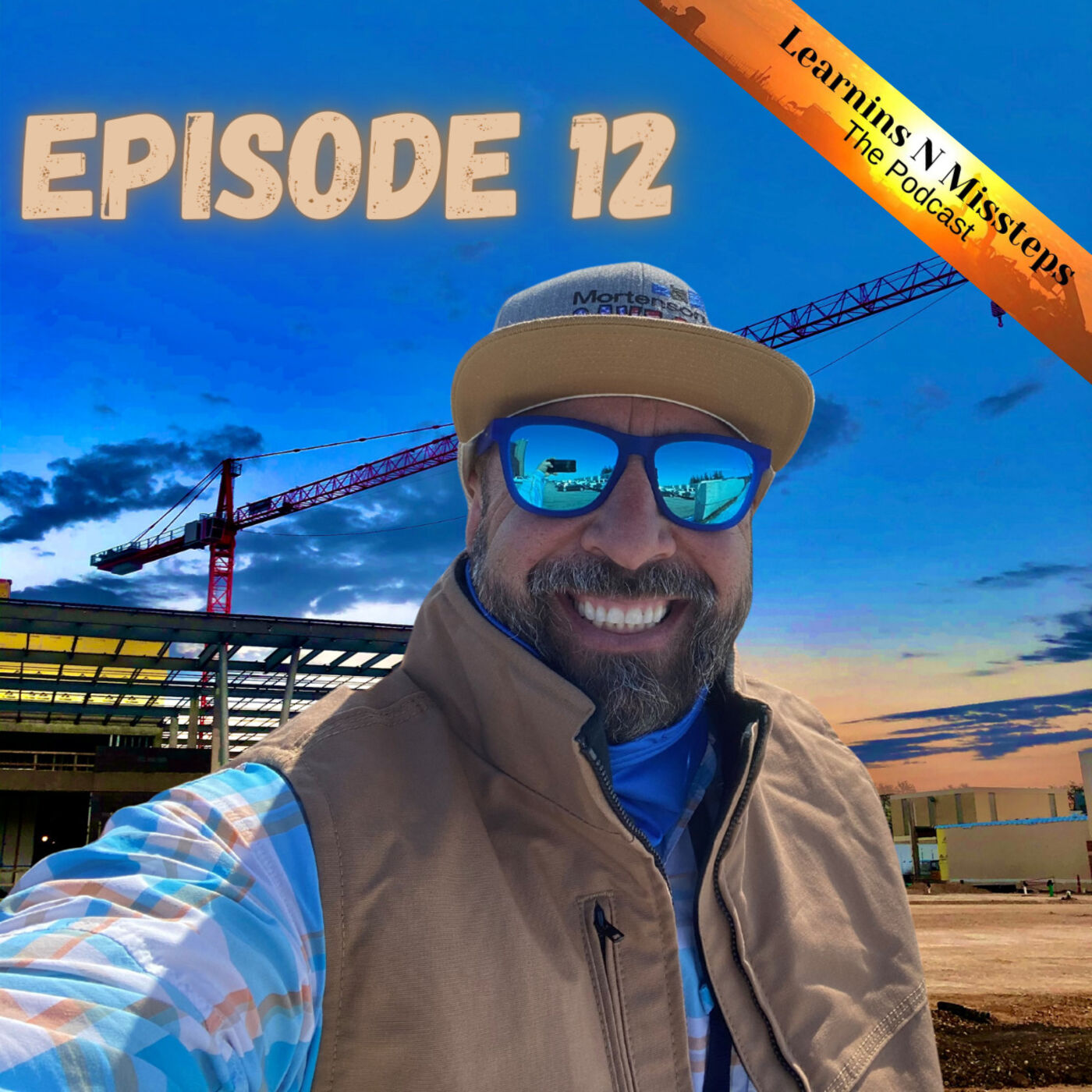
Episode 12: Calibrating work ethic for a career in the trades- A veteran's perspective on climbing the construction career ladder and a life of service. Tune in for Jarrod Tomassi, safety director on fire.

 Apple Podcasts

 Spotify

 Overcast

 Castro

 PocketCasts

 RSS Feed

 Amazon Music

 Audible

 iHeartRadio
Listen in as Jesse discusses what's holding individuals back from the next level with Jarrod Tomassi, a safety director and veteran of the U.S. armed forces. Growing up Jarrod developed steely courage that he combined with skill to open doors. Discover how he transitioned from the mean streets to putting his life on the line to living a life above the line.
Connect with Jarrod at:
https://www.linkedin.com/in/%F0%9F%87%BA%F0%9F%87%B8-jarrod-tomassi-gsp-ms-veteran-%F0%9F%87%BA%F0%9F%87%B8-abaa7850/
Connect with us at:
https://www.facebook.com/learninsn.missteps.1/
https://www.instagram.com/learninsnmissteps/?hl=en
https://www.linkedin.com/in/learnins-n-missteps-6525b41b7/
https://www.youtube.com/channel/UC4yLjr8swfqCt_vMp74oiXA
Contribute to the mission at:
https://www.patreon.com/learninsnmissteps
Resources:
Drama Triangle: https://www.youtube.com/watch?v=ovrVv_RlCMw
You're listening to the Learnins and Missteps podcast, where we intend to change the image of careers in the trades. We celebrate the real men and women who have built careers in the construction industry by bringing their personal stories straight to you. I began my career as a plumber's apprentice in the late 1900s. Over the last 26 years, I've had the fortune of meeting some of the most resilient, intelligent, and inspiring people who happen to be construction workers. My career path as a plumber has provided me with experiences and opportunities I thought were inaccessible. And I want you to know that the trades are a place where dreams can come true. These stories are brought to you by three brothers who share a mother. I am Jesse, your host. Our in-house writer is Ernest, aka La Vos. Hello. And our co-host, Renee. What's up? Y'all ready? Yes, sir. Welcome and super happy to have you. I got a question for you. Can you think of a time when you were in an environment that no longer served you? Felt a little trapped, felt a little suffocated. I know I have. And our guest, Jared Tomasi, who's an EHS professional, veteran, fireman, superhero, he's gonna share his formula for breaking out of this type of situation. Renee Caterpillar Duron was not present for this video. He's a family man, he's got two young babies, beautiful wife, Areli. We love you, Areli. And he he was spending time with his family when Jared and I did the interview. But as the conversation goes, you're also gonna get a new set of lenses to see veterans through that will definitely build your empathy muscle. And you're gonna want to listen real close to the whole conversation because we uncover a connection between courage and vulnerability. As a young man, I thought those things were completely separate and independent things. As I get more highlights and more gray hair, it becomes clear that they're absolutely not separate. And before we kick off this episode, I want y'all to join me in sending some love to Felipe Engineer Manriquez. He is the host of the EBFC show. Check him out. He's on the YouTube and the podcast apps and LinkedIn and Twitter. Felipe is our very first builder level patron. And so what that means is he has sparked the flame. And we know it's just gonna keep growing. You're invited to join the mission and access some exclusive content. If you want to get the details about it, check out patreon.com/slash learnins and missteps. We have multiple levels where you can do different behind the scenes exclusive content and contribute financially. So if you have the resources, and by resources I mean money and time, and are driven to do so, please sign up. And if not, enjoy this episode. All right, we're here with Mr. Jared Tomasi. And you know, before we got on here, Jared, I thought I thought I knew what you were doing, but I learned that you're doing all kinds of new stuff all of a sudden. Well, what are you up to now?
SPEAKER_00Um, yeah, man, you and I go way back, dude. And I first of all I just want to say it was it was a really good time working with you. Um you always made me smile and and and and you just bought a really cool culture wherever you went. So um yes. Yeah, you got it. So yeah, I left I left uh Turner and uh moved over to uh from San Antonio and uh moved over to uh Orlando and was working with uh a large remote medical uh company. And right around the time where um I arrived here in Orlando, I got recruited back into um a mega project uh back in the data center world. And so I still have a Texas driver's license.
SPEAKER_02Of course, of course, yeah.
SPEAKER_00I I didn't have a chance to get it to Florida, and now um I've got to get it in Illinois.
SPEAKER_01Wow. So you went from Texas to Florida now to Illinois, like eight months. That's what I was just gonna say. That was like in a very short period of time, but I guess when you got skills, people want you, huh? Man, I don't know.
SPEAKER_00I I the doors opened. Um, I guess I had the right skills, and it it just made sense, and so there's always a leap of faith when you make these transitions, especially you know, at my point in career, but it felt right. So we just did it, and with my wife's um support, we walked through the door.
SPEAKER_01Nice, nice, and so how how is the family adjusting to these um opportunities?
SPEAKER_00So Texas was amazing, right? Hill country, uh uh weather was good, and then we caught the Florida, and they were like, wow, like this is amazing. The two of six of us are excited to make snow angels. Okay, the other four are in support of moving to be together, but I don't think they're as excited to make snow angels as the other two.
SPEAKER_01So, are y'all moving to Illinois? Like that's the next plan.
SPEAKER_00Yeah, yeah. I've been traveling back and forth for a while, and um, it just got to the point where we want to be back together. Uh, and the timing's right. So the the first phase of the of the project has been very stressful, requiring a lot of hours and a lot of focus. And now I feel like it's it's a it's a it's a right time to bring them up there and kind of have that normal family life back.
SPEAKER_01I'm assuming you're serving in the EHS role at this new mega project.
SPEAKER_00Yeah, yeah. So I'm the safety director for the general contractor side, uh, working very closely with the customer and and partners with every other team out there. There's six of us um direct, and then there's about 25 uh indirect safety professionals, and then you know, the on-site clinics, and then your wellness coaches, and there's a lot of a lot of cool support.
SPEAKER_01Man, that's a monster team out there. And I know the energy that you bring, and I bet it's just contagious with them. They're like, Where'd this guy come from? This this dude's on fire. We like this.
SPEAKER_00They're like they're like from the Midwest. They're like, Oh my goodness.
SPEAKER_01You need to turn you to turn it down a notch, yeah, yeah, yeah. They don't know Fiesta like we do in San Antonio, huh?
SPEAKER_00I was gonna say, with a little bit of California flavor and the fiesta, man, it's just too much for them. So I had to slow down.
SPEAKER_01Throttle it back. And so, what do you want our listeners to know about you?
SPEAKER_00Oh man, I you know, I was thinking a lot about this question, and there's so many things that came to mind, but for for me, it is really the survivor, but not the victim. And I'll unpack that a little bit. So I was born in a very, very poor family in East Los Angeles. I mean, very poor. Okay, you know, here I am today with a with a beautiful family and a great career because of just hard work. And I think the message for me to share is more of like a testimony of no matter where you're at, there's nothing really stopping you from getting to the next level except hard work. And I just don't feel that there was much luck at all uh during that whole process. I feel like uh there's a lot of faith. That hard work opened doors, and that's what is the byproduct of hard work. Looking back, I know that there's been some real blessings, but but no one took me and my family from phase to phase just because. I I really feel happy where I'm at, and I think I could actually end my career uh here at this level because it it makes a lot of sense to me. Now I'm not stopping and I'm not saying that I wouldn't walk through the next door, but if I stayed right here, I have accomplished a lot from being that little boy in the uh streets of LA to you know being well educated and in a great, great position to make a make a major changes and along with with amazing team members and and then the end result are mega projects that are legacies, yeah, connecting the world, you know. That's just it's not to brag, it's just to say, man, just keep going, don't stop.
SPEAKER_01So, where did this this work ethic that you're talking about, where did that come from? How did can you think back and talk tell us how you developed that?
SPEAKER_00Yeah, you know, it's really weird because I watched my family, and there was one thing I chose at a young age, is I said, I think a lot of folks may uh find it easier just to become like what they see. And I chose at a young age to and I said, I'm never gonna be like them. I just I was like, I was just the one that I don't remember. I was so young at 16, I had already dropped out of high school. I was working to help buy my own clothes and shoes and food. I I think it was like accept this lifestyle or fight every second to get out of it. And I I just joined the army, and I think that's where the work ethic came from, uh, is the army. Um really. Uh and then it just, you know, I have to admit that a lot of the the anxieties of ever going back to that also started driving that, right? So it just, you know, it's like for me, it was like, I know what that looks like, and I don't ever want to go back there. Then new things happened in my life that, you know, I started accomplishing tasks, and I realized that courage and hard work was really the only recipe that needed to get to those next steps. And then, of course, the most amazing things started happening, like my marriage, and then my kids, and that became my new driving passion to make sure that they never go back to what I went through. And so they're my number one driving factor, my number one.
SPEAKER_01Okay, so your your family's the driving force, there's a fuel in your engine, and you talked about the hard work. You know, I think I'm sure you're you're familiar with Bobby Knight. Okay, he was the the coach for I guess he ended his career at Texas Tech, or his career was ended at Texas Tech, whichever way you want to look at it. You know, I read something that he wrote and he talked about when he recruited players, most of the play he could almost bet that the players he recruited from inner city low-income schools were the ones that were without a doubt gonna make it through his program. Whereas the other kids that came from not that, not that, they didn't live like they don't know that life, they would struggle. And and I he attributed it to the fact like the definition of of convenience or the definition of hard. The kid and it sounds like you live if you were 16 years old having to fend for yourself, like most a lot of people don't know what that's like being taken care of and and supported, like we all want that, but having to do it on your own, you don't know what that's like until you've done it, and it just it reshapes your your lens on the world, and that explains a lot, right? Because I think you and I kind of connected right out of the gate, and and I'm like, oh, because we both roll the same, right? We I mean I didn't have to fend for myself at 16, but I didn't have a lot of um creature comforts, you know. What what a lot of people think is hard, it's like, no man, that shoot, that's a dream. I'd love to have that. But you mentioned courage, hard work and courage.
SPEAKER_00What do you mean by courage? Yeah, so even when things are scary or or hard, you know, and and um I love that story about the coach because you know the inner city folks have nothing to go back to. So you lose there is no there is no uh you know, there is no security. We're we're we're trying to escape it, right? But but even leaving the small comforts of the little little apartment with the little little bit of food to go into the big bad world with no real skill skills and probably a lot of insecurity issues because you didn't have you know the right upbringing, being able to take that step. Like the army, like I didn't have many choices, and that that's a lot of courage. I mean, you gotta remember, I wanted to escape jail or death. And I'm talking, I'm serious. I was it, I I got scared walking to school every day and walking back. There were certain routes you took, and you knew that certain corners you would almost kind of like try to like be unseen, you know. But yes, no eye contact. And if they caught you and they were in that mood today, it you know, you're running or you just have to deal with them catching you. Yeah, and so I left that to go to the army. And if you really think about it, in 95 for $600 a month to potentially go to war and lose my life there. Yeah. Like, like so, I know, but that's the reality of the military, right? And and they don't, it's not just for fun, that was courageous in itself, and then leaving all that I knew, right? Even if it was scary there, it's all I knew. And once I left, I knew I would never go back. And I was basically really crossing a bridge and then never going back, and that bridge disappeared when I left. And so there was no turning back, it was one way, you know, and it was alone uh until until I met my wife, you know.
SPEAKER_01So the independence making decisions that weren't guaranteed, laid out independently with without that security, like you mentioned, that backup plan, the backup plan was death or prison. Right? I mean, that wasn't your choice, but that's what everybody around you was dealing with. The exception was success, right?
SPEAKER_00So I'm a success story. Absolutely. Um fortunately, uh, but but I don't even have a friend left that isn't uh hasn't gone to prison or experienced some traumatic stuff in their lives. Um, I do have some buddies from the army from 25 years ago, but not from the hood.
SPEAKER_01It's real, right? We see it in the movies, it's for real. It's for real. Yeah, it it's man. I'm having flashbacks of some of my buddies. Yeah. So here's a here's a thing. As you were kind of shedding, breaking through the friction of that environment, that lifestyle. I mean, naturally, you have friends and family. Did you experience any judgment or critique or pushback about you making this the decisions to get out?
SPEAKER_00Well, I didn't share my my um my plans because I knew there was gonna be some major peer pressure, and actually they'll they'll scare you to stay. Um, I just I just did it all in secret and then left. Um I had to, right? I just you don't talk about it because um they'll they'll they'll try and make it not happen. But then when I got into the military, I found 90% of the people there were just like me. Doesn't matter what color or what gender or whether they're from New York or Alabama or Florida or you know, even California, we all had the same story. You know, the the young farm boy trying to get out of the young farm or the small farm town where his parents didn't make a lot and he just didn't want to be stuck there like they were for 50 years, uh, and just thought I'm stuck. You know, the New York kid who, you know, was in tough neighborhoods and and uh he just wanted to get out of New York. And you know, the Florida kid, you know, was raising the trailer, and and and I know it sounds funny, it's not I'm I'm being very serious about these little you know, personalities, and uh we all had a story. We were we were going there to serve our country, but to utilize that option to to escape our our past. And so we bonded really quickly, yeah, because we were united by the military and then united uh like-minded from our past. So it wasn't easy, hard to transition. The funny thing is, all of us young kids in those lifestyles were looking for families, right? And so that was that brotherhood, that sisterhood. But it was a it was a it was a uh brother and sisterhood of of crime, right? Uh and so in the military was a brother and sisterhood of of the good side. We were on the good side now, you know. Right, right. So it was cool, man. That was easy after that.
SPEAKER_01So you're you're pretty active on social media. I'm trying to take your lead because I the stuff you do you put up there is engaging. And I've seen quite a bit of stuff about your regarding your veteran advocacy. Tell us something about that.
SPEAKER_00Yeah, there's so much stigma around veterans. Um, well, so first of all, the minority of a veteran is hard to recognize. So if if if you saw me uh and I was walking you know downtown, you probably wouldn't know that I had a minority or a protected status. I'm I'm a I'm a white dude, you know, I'm uh five six, uh I don't have army tattooed across my forehead. It's uh very difficult to be recognized as a minority. Now, with that, um the other cool thing about so uh veterans is we're the only minority that has every single minority in it, right? Yeah, right. So every single minority is is a can be a veteran, but not every minority has veterans. So it's it's a super, super inclusive and unrecognizable. Um, have a hard time because the the short and fast of it all is we were trained to be soldiers. Yes. So you took a you know, basically an 18-year-old kid with no parenting, and the army became my dad. And then I was a combat, right? So it was do this this way, this is how you're gonna do it, don't talk back, and execute. Now we had some good times after that at night, so we had fun, we all hung out, but there was it was very, very direct, very unemotional, uh, very, very good, effective communication, not a lot of opportunities for interpretation in that type of communication. Because on the battlefield, you know, it's like I need you to go to the that. Go there now. And you don't get to go, well, you know, it's my break time, I'm very uncomfortable with the way you said that. You know, can you can you talk to me a little bit more about what that means? Um, you know, I just don't think you know, this is very confrontational. So so you didn't get to do any any of that, right? It was if you did, like like someone's you got shot. Like, yeah, there was a reason like oh he talked too much. Like uh that wasn't very smart. You go there now. When I came back, I came out into becoming EMT and a paramedic and then a firefighter. And I could hide my personality in there because they were all very much like that, too. Do that, innovate this, you know, compressions now, drop this medication, go to the first floor, fight the fire, you know. And it was no time to like discuss. You just did it. Transitioned into the corporate environment. Uh this is where the minority becomes a minority. Because we were trained from basically adolescence, one way, and they don't just train you, they make you become a soldier. Okay, and so people are looking at you and too, like, man, this guy, dude, what's up with this guy, man? He's super intense. He's I love this passion, but man, he just talks very direct, you know? And so that's hard to navigate. Um, now, over time, through a lot of mentors and instructors and trainers, even corporate leadership um guidance, it's it's starting to change, right? It's starting to change and it's it's becoming easier. Why did I go there? A lot of folks are dealing with more than just it's not just suicide, you know. That's that's a sad story. Veterans are dealing with not understanding how to fit in the team dynamics because the team. Look different than what they're used to. Right? It was very aggressive for two hours during the battle. And then we went home and we're like, ah, and when we say we go home, we went to the tent where we all hung out and eating each other the next day. So it's hard, man, man, because people look at me across the table and go, this guy's dirt. And it's not personal ever. You know, it can be because you're like, so what about this? And you're like, they're like, whoa, we can't just ask it. Yeah, yeah.
SPEAKER_01So how much um calibration did you have to take on transitioning into the corporate world?
SPEAKER_00Major calibration.
SPEAKER_01Yeah. Major.
SPEAKER_00Yeah, yeah. And and I, you know, and and I don't know because I've never walked a day in any other uh minority shoes. But if you were to like maybe ask you know a female how much calibration did it take for them to be in a male dominated, or how much even a Latino and maybe uh uh a Caucasian dominated or or any other um uh mosaic, we're dealing with the same difficulties, but you don't see our minority, unless we are a minority, uh, of of identity, right? Like you can see it. So that's hard because people don't get that, you know. So it's been tough. It's been tough, but it's harder to ask all of them to change for us than it is for us to learn to learn to to change in a healthy direction. But that's what inclusion is all about is is taking that that relationship and finding the middle ground, you know. Um interesting ride, brother. It's interesting. Yeah.
SPEAKER_01Well, I I think you said that made an important point. In in your situation or in a in the situation of veterans, it's not just for veterans, right? The the idea of it's easier for me to change than it is for everybody else to change, like that's a universal principle. If I can like I have more influence over myself than I do anything else, and I use the word influence specifically because I can't even control myself, but I can influence myself, right? And and when I'm working with groups of people and in any manner, it's easy for me to say, well, damn it, if everybody would just listen to me, right? That's not gonna happen, like that don't happen. So, how do I adjust and calibrate so that I can achieve my purpose? And and so taking ownership of that instead of pushing it onto others, yes, people need to adjust, but I've got I've got greater influence over me than I do them. So if I adjust, it can be easier and may uh motivate them to adjust also, right? Because they can see, like, okay, he's trying, and then back and forth, there's that reciprocal relationship of people trying to learn how to how to work together.
SPEAKER_00Yeah, I love that, dude. I I really love that you said that influence, because that's exactly right. You're you're really trying to almost look in the mirror all day long, right? So, how did that come out? Was it was it uh said correctly? Was it the you know, um, even body language? Yeah, yeah, you know, you go to the old drill sergeant thing and it's it's this, you know, it's bah bah bah. Yep, nice, yeah, yeah. So yeah, and and then you you hit it the nail on the head. Once you become more vulnerable and break down the barriers and try to become more influential over being intentional, people start to move move in the direction that meets you in the middle. They start to accept you and your personality, but not all of it, right? And then you start to accept their personality or the their culture, and that relationship really becomes healthy. And that's where I'm at, right? I really am uh there. I feel like it's like I have those little spurts, but I catch it, I drop back, and uh I recalibrate and then engage again, you know.
SPEAKER_01So it's evident, dude. Like I said, you and I uh connected, and I'm like, this dude, like he's he's he ain't playing, he's here to make something happen. But also I could see the um what would I say? The checks, like you're checking. Am I doing this? Am I offensive? Am I, you know, you said it, right? I mean, me with my beautiful tan, if people can't tell, I'm Hispanic, right? And and we learn, like we go into these environments, and we gotta learn those unwritten rules. Or not, we can fight it, and that's not fun. But learning the unwritten rules, it creates this kind of weird thing where you say what you what's on your mind, and then you kind of like, uh oh, that didn't look like it landed right. Shit, what did I say? What do I do next time? How do like in the moment, right? It's it's all of this micro um micro adjustments, uh, that yeah, like you said earlier, man. Women, I could not imagine the kind of the kind of BS that they've got to go through. And then we complain about them, right? Like they they they got so much running in their head. Well, because they have to. We kind of created that.
SPEAKER_00I couldn't imagine, man. You know, going back to to courage, you know, we just had a uh all hands meeting, and I basically said, Where are the ladies at? There's 800 people, and there's like it just felt like there was four of them, you know. Just yeah, I'm sure there was 50, but I just felt like I saw four, you know. I'm like, her. I'm like, where are the ladies at? And it was like, woo. And I told him, I said, ladies, we are so proud of you, of your courage, your professionalism to navigate all this every day, and your leadership. Like, really, like, think about how much courage and self-control, which is leadership, it takes to go all day long like that. You know what I mean? And so I just hats off to them right now. All right now, take this. What about what about a female of color from the military? Like one on my team.
SPEAKER_01Yeah, so you guys are what she's dealing with. I mean, are you mentoring her specifically?
SPEAKER_00Absolutely. She she so she's in the women's committee, she's in the veterans committee, okay. Uh, she works directly with me. I like protect her, professionally protector, not as a you know, as a as a male protector lady, but like as a friend and as a partner and a coach. That's been fun, man. It's cool watching her blossom.
SPEAKER_01And applause to you, sir, for doing the good work, for doing the right thing. Uh, we need we need a lot more of that. So you mentioned coming into the corporate world. Was there a transition from corporate to construction?
SPEAKER_00My first corporate change was in 2014. I had just spent six years in Africa as the site emergency medical services uh manager on a on a large refinery on an island in the in the west coast of Africa. And I that's when I noticed that's when I knew that I wanted to transition into safety. And so I had just so basically I was asked to, you want to come on our team? We'll we love your personality, yeah, but you don't have the education, like you don't, uh-huh, right? So remember the we were talking about doors opening and luck. You know, I was hoping they were gonna go, look, we'll just waive the education part. Yeah, yeah. But but that's the truth, right? So here it is. Okay, you're oh how old was I then 10 years ago? So 34, and now with probably three kids at that time, it's work and go to school. Yeah, there's more courage, more work hard, right? Yes, yes. Um, and I did it. I spent four years and got my bachelor's degree, and that's when Marathon Oil brought me on as a safety professional. Okay, and so that was the first transition. Now, lucky for me, we were on a refinery in the middle of Africa, where I spent um uh three years on shore and then two years offshore, about around a bunch of rough necks. So they were all, you know, talk the way you needed to talk. Yeah, it was it was it was West Texas, Louisiana, and then a lot of British, yeah, from the from the um from the North Sea, all tough, uh, very professional, very smart people. But um, I could hide amongst them, you know.
SPEAKER_01Yeah, you you mixed in with them very well.
SPEAKER_00Yes. But then when I transitioned to the data center work, we're we're um I started having uh direct reports who were not either of those military or um from the uh oil and gas industry. And then working with the customer who is very corporate, right? Tech. Yeah, oh yeah. We're talking, we're talking uh very, very uh important to them is is uh making people uh feel like they're safe and direct and aggressive. What looks like aggressive, so in a veteran's mind, I'm like, shoot, that was me being nice. You know, like I was like, wow, that's toned down. So I was like, I had a long way to go. But um to them, they that you have to transition. This is the culture we want, this is the culture that that that um that works for us, and so that transition really started happening mostly the last three years, four years.
SPEAKER_01Yeah. So what kind of resources did you access to help? I would I'm gonna call it uh soften those edges because I have the same issue. Yeah, I've had the same issue for a very long time. Now I'm not a veteran, I'm just a jerk. What kind of resources did you access to to smooth that over?
SPEAKER_00The first thing I did is I was reading a lot of leadership books, okay. Um, but but I did something wrong, and I don't mean to offend anybody, but I was reading a lot of these military leadership books, like You Can't Hurt Me, Extreme Ownership. Yeah, yeah. And and they're great books, but they're also very heavy and direct. So between between people who have never been in the military, so in but in leadership positions, uh, vice presidents and um, you know, maybe like area directors of a sort, I started really receiving some mentorship off them. But the best thing that ever happened to me was getting an executive coach. Ah, okay. She she changed me more than I've ever been changed in six weeks. Wow. I mean, I tried to be me on the phone with her, and she she took me, it's what's called being above the line. Okay. Um, and so there's this triangle, it's called the drama triangle. And everybody wants to either be it wants to be one of those at um corners of the triangle, and one of those corners is the hero. Look, this is what I'm doing for everybody. Look at what I can do. I'm valuable to you, you know. Uh I don't know why, you know, you don't listen to me. Then there's the victim. Uh, you know, he's it's his fault. It I they're always picking on me. Uh, I try my best, you know, and then there's the influencer, which is basically like uh those two got issues, uh, you know, and right yeah, yeah. Yeah, so so being any one of those isn't really accepting responsibility uh and being above the line. And so getting above the line is actually another step in courage where it is having conversations that are uncomfortable, but but very factual. Yep. Oh, you know, hey Jesse, uh uh, you know, I noticed the other day you weren't wearing your safety glasses, and you know, I approached you, man, and and you know, from the bottom of my heart, it made sense to get you to wear them. And you know, you really gave me some some some attitude. And, you know, I I get I get that you might have been having a bad day, but man, it affected me. Like it hurt my feelings too. Like, because I don't get it. I don't get why you wouldn't want to follow the rules, and I felt like you were making it personal. And so I just want to chat with you about this and see what why you made that decision. And now that sets a totally different tone. Yeah, it wasn't look, dude, you're wrong. It's not your fault, it's my fault, your fault. No, and then you and then it's like, whoa, bro, well, you don't get it. You know, I've been wearing my COVID mask all day, and all this it keeps fogging up. And to be honest, the safety glasses I feel are more of a hazard uh to wear with and fogging than it is to do the work without them. And you know, whatever that is, and then there's solutions to that, sure. And then you go, oh, okay, I get I get that. And then if you start having more conversations like that, conversations start to become just normal. But the problem is it takes courage to talk like that, yeah. Where a lot of people can just hide behind, bro, put your safe glasses on, it's a rule. The other problem with that conversation is it feels like it takes longer. So to the busy leader, um, you're like, look, man, I can just be direct to get it done. But but if you have a few conversations like that, questions in the future become automatic because there's respect, there's trust. So the bottom base of another triangle is trust. Yes, you can't build on anything until you have that trust. Yes, and she taught me this over six weeks, and I was like, Whoa, like I didn't, I wouldn't, I don't. She's like, Yeah, because every time, dude, so I'm gonna I'm gonna share this more with you because it really changed my life. Every time I get on there and I'd be like, Yeah, he's doing this, I understand why. This is that, this is it. I know he does that. And she's like, Yeah, you're right. Um, have you talked to him? Uh and I'm like, You just didn't hear what I said, like he's makes me uncomfortable and he frustrates me. And she's like, Well, I can't fix that for you. You have to have that conversation with him. Yeah, and it's gonna be tough, but you gotta take those four steps. Invite him into your world, ask him if he has some time or her, open up, tell them, tell them how you made it feel, see how they felt, and then come up with a solution at the end and agree to it. Done. So it was cool. It is cool.
SPEAKER_01Yeah, well, you you say courage, but it seemed like courage is displayed when you're you're being vulnerable, right? To have that conversation and say, hey bro, like you you got up on you got all up in my face, and I didn't like the way that felt. I was a little intimidated, you know. I you hurt my feelings, that's vulnerability, right? Because you're exposing everything, and because you're exposing everything and and open inviting them in, asking them how they feel, that's courage, right? Leaving yourself open for whatever could happen, that step, that simple step, it's not a simple one, right? That big giant intimidating step, that's courage. And but on the other side of it, man, like it's golden, huh?
SPEAKER_00Dude, well, that's it, is dude. I mean, that's exactly right, right? So it takes career courage to be vulnerable, yes. And I don't think, well, I can't I have not encountered anybody that was like you got your pillars hurt, yeah. But you know why? Because they they know that it takes a stronger person to do what you just did. Yes, where you walk up and you sit down and you just make everybody feel comfortable and you go, Hey, I'm about to have a conversation with you that's important. I want to know if you if you got some time for me. Um, because I got to get something off my chest.
SPEAKER_02Yeah, yeah.
SPEAKER_00And then just lay it out there, but stay above the line, right? It's not a he said, she said, it's more of this is what happened. What happened? Like I tried this, you did this, I tried this. How come we didn't agree at the end? And it's stay above the line. Don't become a victim, don't try to be an influencer, don't try to be the hero. All right, all right, this is whatever, whatever. And that's some pretty good secret sauce there, dude. Dude, uh, drama triangle. Great video on YouTube. They're like six minutes uh or less.
SPEAKER_01All right, I'm gonna put that in the show notes. Drama Triangle. YouTube. I'm gonna check it out because I could just check it out. So what you know, you've told us 16 years old, you moved out, joined the military, worked oil field, now you're in construction, data center life. When you were a youngin', what did you want to do? What were you thinking? Like, this is what I want to do when I grow up.
SPEAKER_00Yeah, so I wanted to be a firefighter. Okay, and you did that. Yeah, I got that one, man. At 30 years old, I became a Los Angeles City fireman, paramedic. Was that tough? Every step of the way. I mean, when I tested for Los Angeles City, so first of all, you know, you've you've got to have something that to offer. So by the time I became um a firefighter, uh, you needed to have a degree. You needed to be a paramedic and academy, uh, mostly from a community college or a veteran. Uh well, I didn't have a degree, but my veteran and paramedic was was basically what helped me stand out amongst 3,000 people. Now, I you still had to score against the best, but they were looking for certain skills like the veteran leadership style and then the the paramedic, because a lot of departments were transitioning from basic life support to uh advanced life support. Yeah, after about four and a half years of of school and academies and um paramedic school and testing and polygraph tests and background checks and uh another academy, man. I landed in LA City. That was a whole nother ride. Yeah, yeah. I you know, I was actually close to some of the ghettos uh working in those big beautiful fire engines and trucks and uh some of the some of the ghettos that I grew up in, man. Okay. So I got to look out the window down at kids that maybe looking up at me going, man, I hope I can do that someday. So that was really cool.
SPEAKER_01So there's a consistent thread with you. I mean, if you wanted to be a fireman when you're a little kid in East Los and joined the military, now you're EHS. Where do you think that came from?
SPEAKER_00You know, something was put into me about serving. Now, servant leadership is different than serving others, of course. So they're two different things. So I was willing to risk my life, and that reward of going home and helping people was enough for me. Um, that was an act of service, and I don't know where that came from, man. I I don't know if it was my first dad, the army, that taught me that because I didn't I didn't see it, or maybe it was just me saying, dude, people can hurt, and I've seen what hurt looks like, and I have enough strength and courage and work ethic to to to maybe get someone home uh safe that day. You know, honestly, man, I'll keep it simple. I just think I had the ability to do it. Yeah, you knew it, you had it in you, and you went after it. Nothing, I don't remember getting it. I just had the ability. I wanted to be a firefighter um because they were heroes to me, and maybe selfishly I wanted to become a hero myself, but the reward that dude is, I mean, yeah, you can't, there's no price you could put on that, you know. I say that humbly because I think there's some selfishness behind it, but not a lot.
SPEAKER_01So, what would you say to to a youngster, say middle school, yeah, let's say middle school, about if they were considering a job in in the construction industry specifically? What advice, what advice and warning would you give them?
SPEAKER_00Wow. One of the things I wish I got early on, but I didn't have that influence in my life, whether it was a mom or a dad or an uncle or something that had a craft. Behind them, a trade. Oh man, I wish I had a trade because something I could even give to my my children, you know, something that could always have this independence. Um, so I would say, first of all, find that interesting trade. Even become if you're want to become a safety professional and you have an opportunity, do something in the trades first. Become really good at earthwork or become really good at you know, heavy equipment operator, or become good at scaffolding or painting or drywalling or electrical. Grab a trade first. That would really help you transition into the culture of what construction is. Then you can transition into different parts of construction if you're interested in becoming leadership where you would maybe become a project manager or senior project manager or project executive or safety professional into safety engineering or go to school to become an engineer, but get that trade first. Um I think it's valuable. Some of the best safety professionals I've ever hired came through the trade. I would say that. Now, construction is not easy at all. Uh, so first of all, yeah, first of all, just like oil and gas, you're gonna have your, you know, your 10-year uh downs, you know, decade to 15 years, there's some risk and stuff that happens with the market, you know. So always remember that. But then again, there's stuff that happens in every market. Um, but healthcare, nursing, I don't think they're ever gonna go away. Firefighters, you know, aren't ever gonna so what I'm saying is you got there, you have to expect some ups and downs there. And then you just gotta remember you're probably getting up at five o'clock with the rest of us. And you're gonna be, uh if you're truly on a project, you're gonna go through all three seasons or four seasons, whatever. Illinois has two seasons, Florida has one, but you're gonna go through all of those phases of seasons while trying to make something materialized. And so if you're looking for an easy career, I would suggest not jumping into construction.
SPEAKER_01No, that's that's for real, man. Like, takes a certain type of personality, and I I have a theory, uh like that sounds all official, right? You know, when I was in school, I couldn't, I was the kid that was I was always in trouble. I liked the tension, but I also had too much energy. So I'm sitting in and the teachers teaching, it's like, okay, I got it. Like, what's next? Give me something else to do. So there was I was always in the principal back in the day when you could get paddled. I got paddled in high school so much that the vice principal, when he saw me come to his office, he just said, you know what, dude, just sit down. Like, I'm not, it doesn't work. I'm not gonna do, I'm not gonna paddle you anymore. Like, I wore him out. So, my point is I was not thinking about a uh career as a plumber, right? My dad was a plumber, like that was the last thing on my mind. But the very first time I walked on that job site, it was a commercial job site, I was like, dude, like this, it was like Disneyland, man. Like there was so much going on, noise, right? All the equipment, people working, building things, carrying things, kind of like you talked about earlier, right? When you were in the oil field, you were able to kind of blend in. That's how I felt. Like, I like all my nerve, not nervous, but well, all my damn energy that used to get me in trouble, didn't get me in trouble anymore. Like nobody even noticed it. And so I think about those kids that that because there's a lot of them, right? A lot of them are my friends that struggled with standing in line and keeping their hands up to the side and sitting up and you know, following all those little rules that I still don't understand them, right? Like they don't make sense to me. I get it, right? We need to have some kind of order, but come on, man. Um so those kids that struggle with that type of environment, like I gotta do homework if I already understand the concept. What the hell is that? You know, I think those kids are perfect for the construction and like the construction industry is perfect for them, I should say. But you gotta have that the the want to get physical and be accustomed to dealing with the elements. I I used to the my previous employer, I used to recruit high school students, right? And so the the teachers or the administrators' counselors were like, you know, they they wanted to give me their straight A, their honor roll students. I'm like, yeah, like those kids don't they're gonna struggle. And like, okay, so what are you looking for? I say, look, if they've been in band, sports, shop, like anything that required them to do stuff super early in the morning, exposed to the elements, and work with other people, I don't care what their grades are. If they do that, they're going, they're gonna have a better chance of being successful in this industry. And the the number one complaint from you know those younger students that we were getting was being at the job site at seven in the morning. Like, man, this everything's awesome. I get paid once a week, like this is great. But I hate waking up at five in the morning.
SPEAKER_00You nailed it, man. I when you said Disneyland, I mean, look, uh, you gotta love what you do. But if my kids retire tomorrow, I I'm I'm sorry, I'm not one of those who would continue working. But right, you know, but if you're going to, you know, man, I get up, I jump in the truck, I go to work, I grab my coffee, I fire up my computer, I throw it underneath my my arm, and uh I get back in the truck and I'm scraping off the window with snow, and I'm stomping around in my boots, and I've got these jeans on and this vests, and this, you know, this stuff. I get in the truck, I drive to the work site, you know, there's mud and there's snow, and I'd show up to the first meeting, and we're all sitting in there with our coffees, waking up for the day, building a mega project, you know, and I'm undressing because it's hotter in there, and I'm sitting there, my phone's already blowing up, emails are popping, and uh I'm I'm multitasking, you know, and and then I get back in that truck and I go visit the project and I'm making calls and I'm trying to, you know, just put out fires as proactively as I can, but but it doesn't stop all day. Then it's prepare for a meeting, but really prepare. You don't just get to show up. You're gonna probably have to engage, answer questions, be prepared for some feedback, have actionable items, address them, and then move on. And then there's engagements all day long. So then there's corrections and and positive observations, and it doesn't stop. And so for those of us who are kind of you know the ones that got bored, you know, or or felt that we needed to be, I think we're more exhilarating. I don't, I don't know, some just I needed I needed something engaging me all the time. And I was no no no uh gamer, you know, I just was like that. Every time there was a you know a vacant lot, I I find scrap wood around the neighborhood and just build a fort and do something. I just couldn't, you know. So yeah, if you're like that, that personality, it's a good spot for them, huh? Yeah.
SPEAKER_01So the finale question, Jared, what mark do you want to leave on the world?
SPEAKER_00Well, oh man. So as as deep and complex as that may sound, it's very simple to me. I just want people to remember that I tried my best and that I was always there to help. And that uh if they ever needed anything, that I was um I would always take the shirt off my back. But the biggest thing for me is is is raising good children, man. You know, spending the rest of my life with with my wife and retiring as a good husband. And and that really truly is being a good father and a good husband is is is my number one goal. Leading the way through um this industry uh with courage and strength is really why I do this for them. Husband, father, friend. Yeah, it sounds simple. No, I mean that's sounds simple. It sounds. Yeah, but it is extremely hard to achieve all those.
SPEAKER_01So, how many you I got to meet your wife and got to see the couple young ladies peek in? Uh, how many, how many kids? Four. Four, woohoo!
SPEAKER_00Yeah, that's what happens when you go back and forth to Africa. Married for 14 years in August.
unknownWow.
SPEAKER_00Um, turning 44 tomorrow.
SPEAKER_02Congratulations, man.
SPEAKER_00Thanks, brother. Uh, I've got a son who's 13, uh, a daughter who's 11, uh, a little girl who's turning eight, and another one turning six. And so I got three little girls and one boy. Um, and we're known as the Tomasi Posse.
SPEAKER_01Tomasi Posse in the house. That's awesome, man.
SPEAKER_00I'm gonna go back to my Islos days and get it in old English on my like stomach.
SPEAKER_01Yeah, baby. Like yeah, you gotta represent, right? Yeah, dude. Thank you for everything that you shared. I I think really I'm grateful uh for your time. Uh and you know, I I feel valued that you would even consider being on the podcast. And I think the thoughts that you've shared are gonna be valuable for other people. Uh and that's really what motivated like, yeah, we need to do this, not to produce a podcast, but to help people. And your message, man, I think is gonna pay dividends for for some of our listeners out there. Uh I think it can impact and change their life. There's a lot of reality back to the vulnerability. You've been very vulnerable in sharing your message and and sharing your experiences, and hopefully our listeners will catch that and take it forward. Well, y'all, that was a pretty intimate conversation that we just had with Mr. Jared Tomasi. Uh, and I'm really glad that I was able to share that experience with you guys. I want to give a shout out to our listener, Stepan, S-T-E-P-A-R-N, who left us a review in Apple Podcasts. Stepan says, What a great listen. I love that they are very practical and relatable. It's like listening to old friends with real work experiences. This is a great way to get our kids a broader view on the possibilities in the construction industry. Thank you, Steparn, and like mega thank you, because that is exactly what we're trying to do. The whole purpose of this podcast is to help everybody out there understand that there is more than one option to acquiring a higher quality of life. A career in the construction industry, a career in the trades is absolutely an option. The feedback is extremely meaningful to us, and we appreciate you taking that extra time out of your day to go down there and click on the stars you believe we've earned from you, and going further to type in uh this review for us. It's gonna help us get the word out there to more people. The rest of you, please, you're always invited to leave us a review, let us know what you think good, bad, ugly, and all of the above. Man, you are one dedicated listener, sticking with us all the way through to the very, very end. Please know that this podcast dies without you. And we invite you to share how the episode is impacting you, along with your thoughts, questions, and suggestions. You have been gracious with your time, so we added social media links in the show notes to make it super easy for you to connect with us. Be kind to yourself, stay cool, and we'll talk at you next time.


